
Films
1 film
About Chōjūrō Kawarasaki
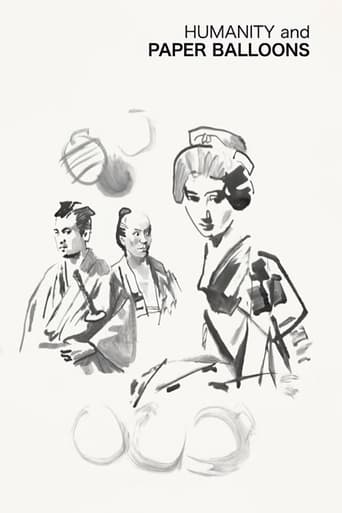
Japanese actor active during the late 1930s, best known for his role in the critically acclaimed film 'Humanity and Paper Balloons' (1937). He worked during a transformative period in Japanese cinema, transitioning from the silent era to early sound films. Kawarasaki was part of the studio system that dominated Japanese filmmaking before World War II, likely working with major studios of the period such as P.C.L. (Photo Chemical Laboratory), which later became Toho. His appearance in 'Humanity and Paper Balloons' represents his most documented film role, suggesting he may have had a relatively brief career or primarily worked in supporting roles that were not extensively recorded. The film itself, directed by the master filmmaker Sadao Yamanaka, is considered one of the greatest achievements in Japanese cinema history, though Yamanaka died young in military service the following year. Kawarasaki's contribution to this important work places him within the context of Japan's golden age of cinema, though detailed records of his broader filmography and life remain limited in available historical documentation.
The Craft
Milestones
- Appeared in 'Humanity and Paper Balloons' (1937), directed by Sadao Yamanaka
- Participated in one of Japan's most significant pre-war films
- Worked during the transition from silent to sound cinema in Japan
Best Known For
Iconic Roles
Must-See Films
Working Relationships
Worked Often With
Why They Matter
Impact on Culture
Chōjūrō Kawarasaki's cultural impact is primarily tied to his participation in 'Humanity and Paper Balloons,' a film that has achieved legendary status in Japanese cinema history. The film, directed by the brilliant but short-lived Sadao Yamanaka, is celebrated for its humanistic portrayal of samurai and common people, its sophisticated narrative structure, and its social commentary. Although Kawarasaki's individual contribution to the film cannot be fully assessed without more detailed records of his role, his involvement places him within the context of one of Japan's most important cinematic achievements of the 1930s. The film itself has influenced generations of filmmakers and is frequently cited as a masterpiece that was tragically ahead of its time, given that Yamanaka died at age 28 in military service just a year after its release.
Lasting Legacy
Chōjūrō Kawarasaki's legacy is primarily preserved through his association with 'Humanity and Paper Balloons,'. While his personal legacy may be limited due to the scarcity of information about his broader career and life, his contribution to this landmark work ensures his place in film history. The film itself has been preserved and studied by film scholars worldwide, and actors who participated in such significant works from Japan's golden age are remembered as part of the artistic foundation that influenced subsequent generations of Japanese filmmakers. The tragic circumstances surrounding the film's director, Sadao Yamanaka, and the film's delayed recognition have only enhanced its mystique and the historical significance of all who contributed to its creation.
Who They Inspired
Due to the limited documentation of Chōjūrō Kawarasaki's career and specific contributions, it is difficult to assess his direct influence on other actors or filmmakers. However, his participation in 'Humanity and Paper Balloons' connects him to the broader influence of Sadao Yamanaka's work, which has been acknowledged by later Japanese masters such as Akira Kurosawa. The film's realistic approach to period drama and its humanistic perspective represented an important alternative to the more stylized jidaigeki films of the era, influencing the direction of Japanese cinema in subsequent decades.
Off Screen
Very limited information is available about Chōjūrō Kawarasaki's personal life. Historical records from this period of Japanese cinema are often incomplete, especially for actors who may have had brief careers or primarily worked in supporting capacities. Like many actors of his era, detailed biographical information was not systematically preserved, particularly given the disruptions of World War II and the subsequent changes in Japanese society and the film industry.
Did You Know?
- Appeared in what would become Sadao Yamanaka's final completed film
- Worked during a pivotal period when Japanese cinema was transitioning from silent films to talkies
- 'Humanity and Paper Balloons' was considered lost for many years before a print was rediscovered
- The film was banned by Japanese military authorities for its 'unpatriotic' content
- Sadao Yamanaka, the film's director, died in military service in Manchuria at age 28, just one year after the film's release
- The film was only 79 minutes long but is considered a masterpiece of Japanese cinema
- Yamanaka directed only 22 films before his death, with many now lost
- The film was one of the last made before Japan's film industry came under strict military control
- Chōjūrō Kawarasaki's name appears in the credits of one of cinema's most historically significant yet tragically overlooked masterpieces
Frequently Asked Questions
Who was Chōjūrō Kawarasaki?
Japanese with credits in this catalog.' His career appears to have been brief, with this film being his most documented work, though he may have had other roles that were not extensively recorded in historical archives.
What films is Chōjūrō Kawarasaki best known for?
Titles linked here include Humanity and Paper Balloons (1937).
When was Chōjūrō Kawarasaki born and when did he die?
Unfortunately, detailed biographical information about Chōjūrō Kawarasaki's birth and death dates is not available in historical records. This is not uncommon for actors from this period of Japanese cinema, especially those who may have had brief careers or worked primarily in supporting roles.
What awards did Chōjūrō Kawarasaki win?
There are no documented awards or nominations specifically for Chōjūrō Kawarasaki. The film he appeared in, 'Humanity and Paper Balloons,' has received significant critical acclaim and recognition in retrospect, but individual awards for cast members from this period are not well documented.
What was Chōjūrō Kawarasaki's acting style?
Due to limited documentation of his work beyond 'Humanity and Paper Balloons,' it is difficult to assess Chōjūrō Kawarasaki's specific acting style. However, the film itself was known for its realistic and humanistic approach to period drama, suggesting that the performances, including his, likely adhered to this naturalistic style rather than the more theatrical presentations common in some Japanese films of the era.