


Humanity and Paper Balloons
"he'll meet Mr. Mouri tomorrow"
Keys: Space play/pause · ←/→ 10s · F fullscreen · M mute · </> speed
About this film
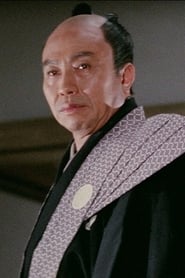
Set in feudal Japan during the 18th century, an era known as the Edo period. It depicts the struggles and schemes of Matajuro Unno, a rōnin, or masterless samurai, and his neighbor Shinza, a hairdresser. A scene from the film The story begins in a slum where poor families perform menial jobs.
Cast & crew
More films like this
More Drama films
View all →







More about this film
About the production
Release dateAugust 25, 1937 (Japan)
Box officeLimited commercial release, no significant box office records available from the period
ProductionP.C.L. (Photo Chemical Laboratory) - which later became Toho Company
Filmed inTokyo, Japan - studio filming at P.C.L. studios
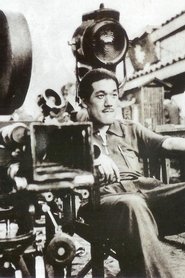
This was Sadao Yamanaka's final film before his tragic early death at age 28. The film was shot in a remarkably short period typical of Japanese studio productions of the era. Yamanaka was known for his efficient shooting techniques and ability to extract powerful performances from his actors. The production faced some censorship challenges due to its critical portrayal of social hierarchy, though it ultimately passed the censors with minimal changes. The film's title refers to the fragility of human dreams and dignity, symbolized by paper balloons that can be easily destroyed.
Themes
Social injustice and class inequalityHuman dignity in the face of povertyThe fragility of hope and dreamsConflict between personal feelings and social obligations (ninjo vs. giri)The dehumanizing effects of rigid social hierarchies
Themes & topics
roninslum lifekidnappingsocial hierarchypovertyhonorredemptionEdo periodclass strugglehuman dignitytragedyensemble castsocial injusticemasterless samuraidesperation
Historical background
Humanity and Paper Balloons (1937) emerged during the studio era and wartime cinema. Set in feudal Japan during the 18th century, an era known as the Edo period. Archival records and catalog entries help place the work within film-history surveys of the period.
Why this film matters
Preserved under Wikidata ID Q3372891, Humanity and Paper Balloons is valued as a screen drama within catalog and archive collections. Wikipedia's "Humanity and Paper Balloons" entry connect it to broader histories of cinema exhibition and restoration.
Making of
The making of 'Humanity and Paper Balloons' represents both the pinnacle of Sadao Yamanaka's brief but brilliant career and the tragic end of one of Japanese cinema's most promising talents. Yamanaka was part of a group of young directors at P.C.L. studios who were revolutionizing Japanese cinema with their realistic approach and social commentary. The film was shot with remarkable efficiency, as Yamanaka was known for his meticulous preparation and ability to complete scenes in minimal takes. Working with a mix of professional film actors and kabuki theater performers, Yamanaka created a unique acting style that blended traditional Japanese theatrical techniques with naturalistic film performance. The production team faced significant pressure from studio executives and government censors who were increasingly sensitive to social criticism during Japan's militarization period. Despite these challenges, Yamanaka managed to infuse the film with subtle but powerful commentary on class injustice and human dignity. Tragically, shortly after completing the film, Yamanaka was drafted into the Japanese army and sent to Manchuria, where he died of disease, leaving behind a small but influential body of work that would only be fully appreciated decades later.
What critics said
Survival status shapes reception: Humanity and Paper Balloons is discussed mainly in preservation and film-history literature rather than in wide contemporary review columns.
Did you know?
- Director Sadao Yamanaka died of dysentery in a Japanese military hospital in Manchuria just months after this film's release, at the age of 28, making this his final completed work
- Only three of Yamanaka's films survive today out of the 26 he directed, with 'Humanity and Paper Balloons' being considered his masterpiece
- The film was rediscovered and restored in the 1970s by film enthusiasts who found a print in remarkably good condition
- Japanese master director Akira Kurosawa cited Yamanaka as a major influence on his work, particularly praising his humanistic approach to storytelling
- The film's Japanese title 'Ninjo kami fusen' literally translates to 'Humanity Paper Balloons' - 'ninjo' being a key Japanese concept referring to human emotions, compassion, and the conflict between personal feelings and social obligations
- Chōjūrō Kawarasaki, who played the ronin Mokichi, was a renowned kabuki actor making a rare appearance in film
- The film was initially banned by Japanese military censors during World War II for its 'defeatist' themes and critical view of social hierarchy
- Despite its critical acclaim today, the film was not particularly successful upon its initial release and was quickly forgotten until its rediscovery decades later
- The paper balloon motif appears throughout the film, both literally and metaphorically, representing the fragile hopes and dreams of the characters
- The film's ensemble cast approach was unusual for Japanese cinema of the 1930s, which typically focused on single protagonists
Awards & recognition
- No major awards were given to the film upon its release in 1937
Visual style
The cinematography by Minoru Miki is characterized by its remarkable visual poetry and restrained elegance, perfectly complementing Yamanaka's humanistic vision. Miki employs a naturalistic visual style that avoids the artificiality common in many jidaigeki films of the period, instead creating an authentic sense of the slum environment. The camera work is notably fluid and unobtrusive, with long takes that allow performances to unfold naturally. Miki makes effective use of deep focus to capture the crowded living conditions of the slum, often composing shots that reveal multiple layers of social interaction. The lighting is particularly noteworthy, creating a somber, atmospheric mood that enhances the film's tragic elements without becoming overly dramatic. Visual motifs, particularly the paper balloons of the title, are woven throughout the cinematography, creating symbolic resonance. The film's visual language influenced later Japanese directors, particularly in its ability to convey deep emotion through subtle visual means rather than overt techniques.
Innovations
While 'Humanity and Paper Balloons' may not showcase obvious technical innovations, its achievements lie in the masterful refinement of existing film techniques to serve its artistic vision. The film's editing, likely supervised by Yamanaka himself, demonstrates remarkable rhythm and pacing, particularly in its handling of multiple narrative threads. The sound recording quality was advanced for its time, capturing subtle nuances of dialogue and ambient sound that contribute to the film's realism. The film's production design authentically recreates the Edo period slum environment with meticulous attention to historical detail while avoiding romanticization. Perhaps most significantly, the film represents a technical achievement in its seamless integration of kabuki theater techniques with cinematic realism, creating a unique performance style that serves both historical authenticity and emotional truth. The preservation of the film's visual quality through its restoration is itself a technical achievement, allowing modern audiences to appreciate the cinematography in nearly its original condition.
Music
The film's music was composed by Seiichi Suzuki, who created a score that perfectly balances traditional Japanese musical elements with Western-influenced film scoring techniques. The soundtrack is notably restrained, using music sparingly to enhance emotional moments rather than dominate scenes. Traditional Japanese instruments like the shakuhachi (bamboo flute) and shamisen are incorporated, grounding the film in its historical period while creating a timeless emotional quality. The score's most memorable theme is a melancholic melody that recurs throughout the film, representing the fragile hopes of the characters. Sound design in the film is particularly effective in creating the atmosphere of the crowded slum, with background noises of daily life adding authenticity to each scene. The film makes minimal use of non-diegetic music, instead relying more on natural sounds and the power of silence, which was innovative for its time. This restrained approach to sound and music enhances the film's realism and emotional impact, making the musical moments more powerful when they do occur.
Famous quotes
Even in this world, some things are more important than money." - Mokichi the ronin, expressing his commitment to honor over material gain
A paper balloon flies high, but the slightest wind can destroy it." - Reflecting on the fragility of human hopes and dreams
We are all just paper balloons in the wind of this world." - The film's central metaphor for human vulnerability
In this slum, even dignity is a luxury we cannot afford." - Capturing the film's theme of poverty's dehumanizing effects
To be human is to suffer, but to be human is also to endure." - Expressing the film's view of human resilience
Memorable scenes
- The opening sequence establishing the slum environment, with its intricate choreography of daily life and introduction of multiple characters
- The tense confrontation between the ronin and his potential employer, where social hierarchy and personal dignity collide
- The kidnapping scene, where the hairdresser's desperation and moral conflict are powerfully conveyed through subtle performance
- The climactic scene where multiple storylines converge, revealing the interconnectedness of all the characters' fates
- The final image of paper balloons floating against the sky, symbolizing both the fragility and persistence of human hope
What audiences thought
Initial audience reception to 'Humanity and Paper Balloons' was limited, as the film had a modest theatrical run and quickly disappeared from public view. Japanese audiences in 1937 were more drawn to escapist entertainment during the increasingly tense pre-war period, and the film's somber tone and social criticism may have been challenging for some viewers. Following its rediscovery and restoration in the 1970s, audience reception has been overwhelmingly positive. The film now enjoys cult status among cinema enthusiasts and is regularly screened at film festivals and cinematheques worldwide. Modern audiences particularly respond to the film's timeless themes of human dignity and social injustice, as well as its emotional power and visual beauty. Online film databases show consistently high ratings from viewers, with many praising the film's ability to create profound emotional impact without sentimentality. The film has developed a reputation as a 'hidden gem' that viewers discover and then passionately recommend to others, contributing to its growing reputation as an essential masterpiece of world cinema.
Film connections
Influenced by
- Kabuki theater traditions
- Contemporary Japanese social realist literature
- Earlier jidaigeki films by directors like Daisuke Itō
- German expressionist cinema's visual techniques
- Soviet montage theory's approach to social commentary
This film influenced
- Akira Kurosawa's 'The Lower Depths' (1957)
- Kenji Mizoguchi's later social critiques
- Masaki Kobayashi's 'The Human Condition' trilogy
- Nagisa Ōshima's social realist films
- Shohei Imamura's films about lower-class Japanese
Film restoration
The film is preserved and has been digitally restored. It is one of only three surviving films by director Sadao Yamanaka out of 26 he made. The restoration was conducted in the 1970s when a print was discovered in good condition. The restored version is now held by film archives including the National Film Center of Japan and has been released on home video by Criterion Collection and other specialty distributors. The preservation status makes this film particularly precious as it represents one of the few surviving examples of Yamanaka's work.
Where to watch
- The Criterion Collection (Blu-ray/DVD)
- The Criterion Channel (streaming)
- MUBI (streaming platform)
- Film Movement (DVD/Blu-ray)
- Various film archive screenings and cinematheque presentations
- Specialized streaming services focusing on classic cinema