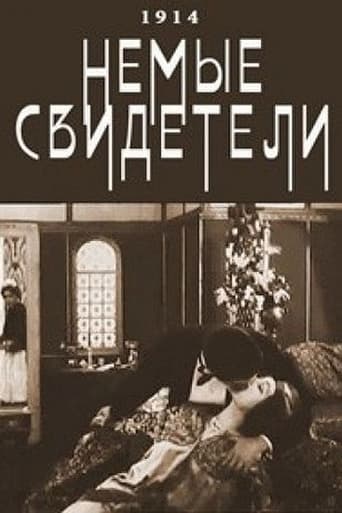
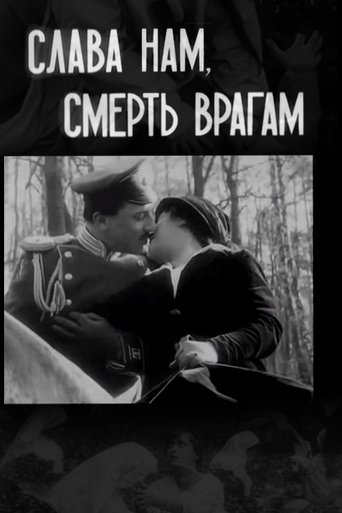
Films
2 films
About Dora Tschitorina
Actress during the early Russian silent film era,: entire known filmography consists of two films released in 1914. Her career, though remarkably brief, placed her at the very beginning of the burgeoning Russian film industry, a period that would soon produce cinematic masters like Sergei Eisenstein and Vsevolod Pudovkin. Dora appears in the films 'Silent Witnesses' (1914) and 'Glory to Us, Death to the Enemy' (1914), both of which were characteristic of the patriotic and dramatic themes prevalent in Russian cinema before the Revolution. Very little is documented about her life, training, or how she came to be cast in these productions, making her a somewhat enigmatic figure from cinema's formative years. Her work represents the contribution of countless actors and actresses who participated in the art form's infancy but whose names have been largely lost to history due to the limited record-keeping of the time and the loss of many films. Her brief a single, pivotal year before she vanished from the historical record, leaving behind only these two cinematic artifacts as testament to her involvement in the art.
The Craft
On Screen
Given the era and the dramatic nature of her films, her acting style was likely aligned with the theatrical, pantomimic techniques common in silent cinema. This involved exaggerated gestures and facial expressions to convey emotion and narrative to the audience without the aid of synchronized dialogue. Her performances would have been integral to the melodramatic and patriotic tones of her films, relying on visual storytelling to engage viewers.
Milestones
- Debuted in the silent film 'Silent Witnesses' in 1914
- Appeared in the patriotic drama 'Glory to Us, Death to the Enemy' in 1914
- Participated in the nascent Russian film industry during its formative pre-revolutionary period
Best Known For
Must-See Films
Working Relationships
Studios
Why They Matter
Impact on Culture
Dora Tschitorina's cultural impact is primarily historical rather than artistic. As one of the early actresses in Russian cinema, her work contributes to our understanding of the industry's development in the pre-World War I era. Her films, particularly 'Glory to Us, Death to the Enemy,' serve as examples of the nationalistic sentiment and cinematic language of the time. While not an influential figure herself, she represents the collective body of performers who formed the foundation of Russian film, a legacy that paved the way for the internationally acclaimed Soviet directors and actors who would follow. Her story highlights the ephemeral nature of fame for many early film pioneers.
Lasting Legacy
The legacy of Dora Tschitorina is that of a cinematic ghost, a name preserved only in the annals of filmographies. Her legacy is not one of individual achievement but of representation. She stands for the hundreds, if not thousands, of early film actors whose contributions were vital but whose personal stories have been erased by time. Her surviving film credits provide valuable data points for film historians studying the scope and personnel of the Russian silent era, making her a small but important piece in the larger puzzle of cinema history.
Who They Inspired
There is no evidence to suggest that Dora Tschitorina directly influenced other actors or filmmakers. Her extremely brief career and the lack of documentation surrounding her work mean that her influence was likely limited to the immediate productions she was involved in. Her indirect influence lies in her participation in an art form that would evolve dramatically, serving as a precursor to the more celebrated figures of Russian and Soviet cinema.
Off Screen
There is no available information regarding the personal life of Dora Tschitorina. Her existence is known only through film credits, and details about her family, relationships, or life outside of her brief film career have not been documented in historical records.
Did You Know?
- Her entire known film career consisted of only two films, both released in the single year of 1914.
- Both of her known films were produced by Khanzhonkov and Co., one of Russia's first major film studios.
- The film 'Glory to Us, Death to the Enemy' (1914) was a patriotic drama reflecting the national mood on the eve of World War I.
- She is one of many early Russian film actors whose biographical details have been completely lost to history.
- Her name, 'Tschitorina,' is a relatively uncommon surname, making identification in historical records potentially easier, yet no further information has surfaced.
- Her career began and ended during the peak of the pre-revolutionary silent film boom in Russia.
- Like many films from this era, it is possible that the actual films she appeared in are now lost, with only their titles and credits remaining.
Frequently Asked Questions
Who was Dora Tschitorina?
Russian actress who worked exclusively during the silent film era. She is known to have appeared in two films in 1914, 'Silent Witnesses' and 'Glory to Us, Death to the Enemy,' before disappearing from the historical record.
What films is Dora Tschitorina best known for?
Titles linked here include Silent Witnesses (1914), Glory to Us, Death to the Enemy (1914).
When was Dora Tschitorina born and when did she die?
The birth and death dates for Dora Tschitorina are unknown. All that is certain is that she was active as an actress in the year 1914.
What awards did Dora Tschitorina win?
There are no records of Dora Tschitorina receiving any awards or nominations. She was a working actress during the very early days of Russian cinema, long before formal award ceremonies were established.
What was Dora Tschitorina's acting style?
While no specific reviews of her performance survive, her acting style was likely typical of the silent era. This would have involved theatrical gestures and expressive facial acting to convey emotion and story to the audience without dialogue.
Why is so little known about Dora Tschitorina?
The lack of information is common for many early film personalities, especially from Russia. Record-keeping was not as comprehensive, many archives were lost during the political upheavals of the 20th century, and the fame of supporting actors was often fleeting and poorly documented.