Films
2 films
About Nikolai Panov
The 1916 film The Queen of Spades is the only title linked here for Nikolai Panov. His career coincided with the golden age of Russian silent cinema, just before the revolutionary upheavals that would dramatically transform the country's film industry. Panov worked under the direction of Yakov Protazanov, one of Russia's most important early filmmakers, appearing in adaptations of classic Russian literature. His roles in 'The Queen of Spades' (1916) and 'Father Sergius' (1918) placed him among the actors who helped bring Pushkin's and Tolstoy's works to the silver screen during this formative period of Russian cinema. Like many actors of his era, Panov's career was likely cut short or redirected by the dramatic social and political changes following the Russian Revolution. The limited documentation of his work reflects the broader challenges of preserving film history from this tumultuous period in Russian cultural history.
The Craft
On Screen
While specific details about Panov's acting style are not extensively documented, as a Russian silent film actor of the 1910s, he likely employed the theatrical, expressive acting style typical of the period. Russian silent cinema was known for its psychological depth and emotional intensity, with actors often drawing from the rich traditions of Russian theatrical performance. His work in literary adaptations suggests he was capable of handling complex characterizations drawn from classic Russian literature.
Milestones
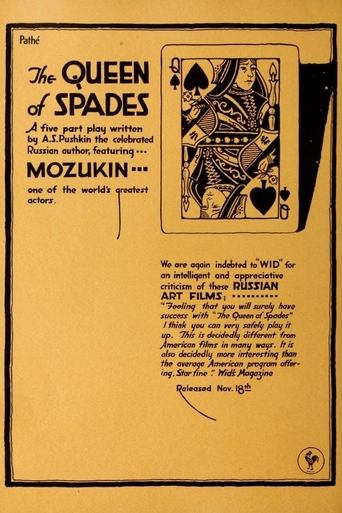
- Appeared in 'The Queen of Spades' (1916) directed by Yakov Protazanov
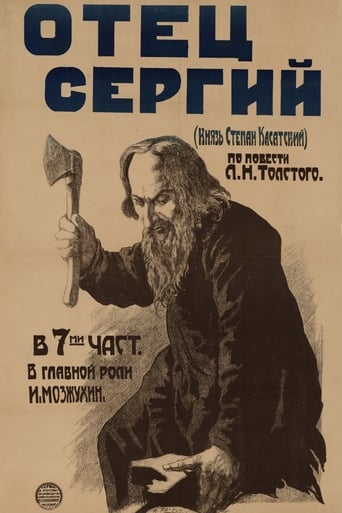
- Starred in 'Father Sergius' (1918) based on Tolstoy's novella
- Worked during the peak of Russian silent cinema
- Participated in literary adaptations of classic Russian authors
Best Known For
Iconic Roles
Must-See Films
Working Relationships
Worked Often With
Studios
Why They Matter
Impact on Culture
Nikolai Panov's contribution to Russian cinema, while limited in scope, represents the important work of actors who helped establish Russian film as a serious artistic medium during the silent era. His participation in adaptations of Pushkin and Tolstoy placed him among those who brought Russia's rich literary heritage to the emerging art form of cinema. The films he appeared in, particularly 'The Queen of Spades' and 'Father Sergius,' are considered significant achievements in early Russian cinema, demonstrating the country's early commitment to literary adaptation and psychological storytelling. Though his individual legacy may be obscure, his work contributed to the foundation upon which later Russian masters like Eisenstein, Pudovkin, and Dovzhenko would build.
Lasting Legacy
Nikolai Panov's legacy is primarily preserved through his surviving film work in two important Russian silent films. While detailed biographical information about him may be lost to history, his performances remain part of the foundational canon of Russian cinema. His work shows the actors who helped establish film as a legitimate art form in Russia, bridging the gap between theatrical tradition and cinematic innovation. The films he appeared in continue to be studied by film historians as examples of early Russian cinematic achievement.
Who They Inspired
Due to the limited documentation of Panov's career and the obscurity of his specific contributions, it's difficult to trace his direct influence on subsequent generations of Russian actors. However, his work in literary adaptations during this formative period contributed to the tradition of bringing serious literature to the screen that would become a hallmark of Russian cinema throughout its history.
Off Screen
Very little is documented about Nikolai Panov's personal life, which is common for actors from this period of Russian cinema. The political upheavals of the Russian Revolution and subsequent Soviet period resulted in the loss of many personal and professional records from the pre-revolutionary film industry.
Did You Know?
- Appeared in two films directed by Yakov Protazanov, one of Russia's filmmakers
- Both of his known films were adaptations of works by Russia's greatest literary figures - Pushkin and Tolstoy
- His entire known filmography spans only two years (1916-1918), coinciding with the Russian Revolution
- Like many early Russian film actors, detailed biographical information about him is scarce
- The Queen of Spades (1916) is considered one of the masterpieces of early Russian cinema
- Father Sergius (1918) was one of the last major pre-revolutionary Russian films
- His career represents the transition period between Imperial Russian cinema and Soviet film industry
- Both films he appeared in have been preserved and are considered important artifacts of film history
Frequently Asked Questions
Who was Nikolai Panov?
Russian with credits in this catalog. He worked under director Yakov Protazanov in adaptations of classic Russian literature, including Pushkin's 'The Queen of Spades' and Tolstoy's 'Father Sergius'.
What films is Nikolai Panov best known for?
Titles linked here include The Queen of Spades (1916), Father Sergius (1918).
When was Nikolai Panov active as an actor?
Nikolai Panov's known film career spans from 1916 to 1918, placing him at the end of the Imperial Russian cinema period and during the time of the Russian Revolution. This was a transformative and often turbulent time for the Russian film industry.
What was significant about the films Panov appeared in?
Both films Panov appeared in were literary adaptations of works by Russia's most celebrated authors - Alexander Pushkin and Leo Tolstoy. They represent the early Russian cinema's commitment to bringing high literature to the screen and are considered important artifacts of film history.
Why is there limited information about Nikolai Panov?
The scarcity of information about Nikolai Panov is typical for actors from early Russian cinema. Many records were lost during the political upheavals of the Russian Revolution and subsequent Soviet period, making comprehensive documentation of pre-revolutionary film personalities challenging.