No Poster
Edward Puchalski
Director
Born: 1874 in Warsaw, Poland Died: 1942 Active: 1911-1939 Birth Name: Edward Józef Puchalski
Films
2 films
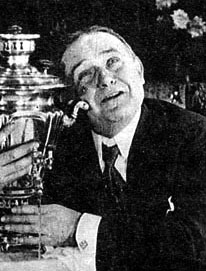
About Edward Puchalski
Polish film director who emerged as figures in early Polish cinema during the silent era. Born in 1874, he began his filmmaking career in the early 1910s, establishing himself as a versatile director capable of handling various genres. His 1916 film 'Antosha, Ruined by a Corset!' showcased his ability to create comedic social commentary, while his 1922 historical epic 'Rok 1863' demonstrated his skill in grand-scale productions dealing with Polish national themes. Puchalski worked extensively during the turbulent period of World War I and the interwar years, helping to establish a national film identity for Poland. He was known for his technical innovation and his ability to adapt literary works to the screen, often focusing on stories that resonated with Polish audiences. His the transition from the Russian Empire's control over Polish territories to independent Poland, making him a witness to and participant in the birth of Polish national cinema. Puchalski continued directing into the early sound era before his death in 1942 during the Nazi occupation of Poland.
The Craft
Behind the Camera
Puchalski was known for his melodramatic yet socially conscious directing style, often incorporating elements of Polish national identity and historical themes into his films. His technique emphasized visual storytelling typical of the silent era, with careful attention to composition and the use of intertitles to convey narrative. He had a particular talent for blending comedy with social commentary, as evidenced in 'Antosha, Ruined by a Corset!' where he used humor to critique social norms. In his historical films like 'Rok 1863,' he employed grand scale productions with large crowd scenes and elaborate sets to create epic narratives about Polish history. His directing style evolved from early simple productions to more sophisticated techniques as Polish cinema matured through the 1920s and 1930s.
Milestones
- Directed 'Antosha, Ruined by a Corset!' (1916), one of the earliest Polish comedy films
- Created the historical epic 'Rok 1863' (1922) about the January Uprising
- Established one of the first Polish film studios
- Pioneered film techniques in Poland during the silent era
- Adapted numerous Polish literary works to the screen
Best Known For
Must-See Films
Accolades
Won
- Order of Polonia Restituta (Polish state decoration)
- Golden Cross of Merit (Polish civil decoration)
Special Recognition
- Recognized as one of the pioneers of Polish cinema
- Films preserved in the National Film Archive in Warsaw
- Honored in Polish film history retrospectives
Working Relationships
Worked Often With
Studios
Why They Matter
Impact on Culture
Edward Puchalski played a crucial role in establishing Polish national cinema during a period when Poland was fighting for and finally achieving its independence. His films, particularly historical epics like 'Rok 1863,' helped shape Polish national consciousness and cultural identity during the early 20th century. By adapting Polish literary classics and historical events to the screen, Puchalski contributed to the preservation and popularization of Polish culture at a time when the nation's existence was threatened. His work bridged the gap between Polish theatrical traditions and the emerging art of cinema, helping to create a distinctly Polish film language. Puchalski's films were among the first to reach international audiences, putting Polish cinema on the global map during the silent era. His dedication to telling Polish stories through the medium of film inspired subsequent generations of Polish filmmakers to explore national themes and identities.
Lasting Legacy
Edward Puchalski's legacy as a pioneer of Polish cinema endures through his contributions to establishing a national film industry in Poland. His films are considered important historical documents that capture the aesthetic sensibilities and social concerns of early 20th-century Poland. Many of his works have been preserved by the National Film Archive in Warsaw and are studied by film historians as examples of early Polish cinematic art. Puchalski's techniques in adapting literary works to the screen influenced subsequent generations of Polish filmmakers, including masters like Andrzej Wajda and Roman Polanski. His emphasis on Polish historical themes and national identity helped create a foundation for the Polish Film School movement of the 1950s and 1960s. Today, film scholars recognize Puchalski as a crucial figure in the development of European cinema, particularly in how national cinemas emerged in the aftermath of World War I.
Who They Inspired
Puchalski influenced Polish cinema by demonstrating that films could serve as vehicles for national expression and cultural preservation. His success in adapting Polish literature to the screen established a precedent that many Polish directors would follow. His technical innovations in the silent era, particularly his use of location shooting and historical reenactments, influenced subsequent Polish historical epics. The directors who emerged in the interwar period and after World War II, including those of the Polish Film School, built upon Puchalski's foundation of creating cinema that was both artistically ambitious and nationally relevant. His work also influenced how Polish cinema approached historical themes, establishing a tradition of using film to explore and reinterpret Polish history. Puchalski's integration of comedy with social commentary in films like 'Antosha, Ruined by a Corset!' created a template for Polish satirical cinema that would be developed by later directors.
Off Screen
Edward Puchalski was deeply involved in the Polish cultural scene during a period of significant political upheaval. He witnessed Poland's transition from partitioned territories under Russian, Austrian, and Prussian control to independence after World War I. His personal life reflected the challenges faced by Polish artists during this era, including censorship under foreign rule and later the difficulties of maintaining artistic integrity during the interwar period. Puchalski was married and had children who continued his legacy in Polish culture. He died during the Nazi occupation of Poland in 1942, a victim of the devastating impact of World War II on Polish intellectual and artistic life.
Education
Studied at the Warsaw Technical University and attended film courses in Paris and Berlin
Family
- Zofia Puchalska (married 1900-1942)
Did You Know?
- Puchalski was one of the first Polish directors to work with the legendary actress Pola Negri before she became an international star
- His film 'Rok 1863' was
- During World War I, Puchalski had to navigate between German and Russian censorship to continue making films
- He helped establish the first Polish film school in Warsaw in the 1920s
- Puchalski's early films were shot on location despite the technical challenges of the era
- He was known for his meticulous attention to historical accuracy in his period films
- Many of Puchalski's films were lost during World War II, making surviving prints extremely valuable
- He was fluent in multiple languages, which helped him collaborate with international film technicians
- Puchalski experimented with early color processes in some of his later films
- He was a member of the Polish Filmmakers Association and helped establish professional standards for the industry
In Their Own Words
Cinema is not merely entertainment; it is the mirror of our nation's soul and the keeper of our collective memory.
To make a Polish film is to tell the world that we exist, that we have our stories, our heroes, our destiny.
The camera must capture not just images, but the very spirit of the Polish people.
In every frame of film, we must ask ourselves: does this serve our art, our nation, our truth?
Silent films speak the loudest when they speak from the heart of a nation struggling to be heard.
Frequently Asked Questions
Who was Edward Puchalski?
Polish on YTB.my. He is considered one of the founders of Polish national cinema, known for directing historical epics and comedies that reflected Polish culture and identity.
What films is Edward Puchalski best known for?
Titles linked here include Antosha, Ruined by a Corset! (1916), Rok 1863 (1922).
When was Edward Puchalski born and when did he die?
Born 1874; died 1942.
What awards did Edward Puchalski win?
Puchalski received the Order of Polonia Restituta and the Golden Cross of Merit, both significant Polish state decorations recognizing his contributions to Polish culture and cinema.
What was Edward Puchalski's directing style?
Puchalski's directing style emphasized visual storytelling typical of the silent era, with a focus on Polish national themes and historical subjects. He was known for blending social commentary with entertainment, particularly in his comedies, and creating grand-scale historical epics that celebrated Polish heritage.
How did Edward Puchalski influence Polish cinema?
Puchalski established many foundational elements of Polish cinema, including the adaptation of Polish literature to film, the creation of historical epics exploring national identity, and the development of a distinctly Polish film aesthetic that influenced subsequent generations of filmmakers.
What happened to Edward Puchalski's films during World War II?
Many of Puchalski's films were lost or destroyed during World War II, making the surviving prints extremely valuable to Polish film history. His death in 1942 during the Nazi occupation cut short a career that had helped establish Polish cinema as a significant cultural force.