Films
1 film
About I. Dedintsev
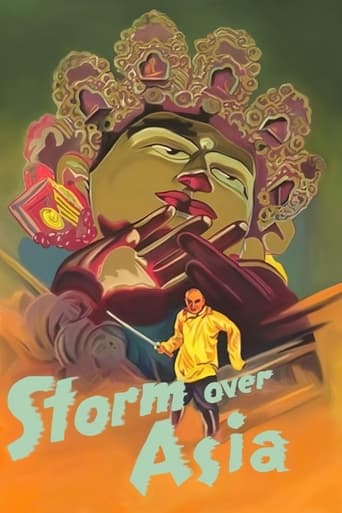
The 1928 film Storm Over Asia is the only title linked here for I. Dedintsev. As an actor in the Soviet film industry during its formative years, Dedintsev was part of a generation of performers who helped establish the revolutionary cinema aesthetic that would become influential worldwide. His brief only the year 1928, suggesting he may have been a character actor or someone who had a very limited involvement in the film industry. The film 'Storm Over Asia' was a significant production in Soviet cinema, exploring themes of colonialism, nationalism, and revolution through the story of a Mongolian hunter who discovers he is a descendant of Genghis Khan. While Dedintsev's specific role in the film is not extensively documented, his participation places him within the important context of early Soviet cinema's golden age. The film itself was notable for its location shooting in Mongolia and its powerful visual storytelling techniques typical of Pudovkin's work.
The Craft
Milestones
- Appeared in Vsevolod Pudovkin's 'Storm Over Asia' (1928)
Best Known For
Iconic Roles
Must-See Films
Working Relationships
Worked Often With
Studios
Why They Matter
Impact on Culture
As a participant in 'Storm Over Asia,' I. Dedintsev contributed to. The film itself was a significant work in the revolutionary cinema tradition, using the medium to explore political themes of anti-colonialism and class struggle. The film's innovative editing techniques and powerful visual language influenced filmmakers internationally and helped establish Soviet cinema's reputation for artistic excellence. While Dedintsev's individual contribution may have been small, he was part of a collective effort that created a lasting cinematic masterpiece that continues to be studied by film scholars today.
Lasting Legacy
I. Dedintsev's legacy is primarily tied to his participation in 'Storm Over Asia,' a film that remains an important artifact of Soviet cinema and revolutionary art. The film has been preserved and restored multiple times, ensuring that the work of all its contributors, including Dedintsev, continues to be accessible to future generations. His name appears in film credits and historical documentation of Soviet cinema, representing the many actors who contributed to the golden age of Soviet film but whose individual stories have been lost to time.
Who They Inspired
Due to the limited documentation of I. Dedintsev's career and specific contributions, his influence on other actors or filmmakers cannot be definitively established. However, as part of the ensemble that created 'Storm Over Asia,' he indirectly contributed to the film's impact on international cinema and its role in demonstrating the artistic potential of film as a medium for political expression.
Off Screen
Very little is documented about I. Dedintsev's personal life, which is common for many Soviet actors from the silent era who had brief careers or minor roles.
Did You Know?
- 'Storm Over Asia' was also known internationally as 'The Heir to Genghis Khan'
- The film was shot on location in Mongolia, unusual for its time
- Director Vsevolod Pudovkin was
- The film was part of a trilogy by Pudovkin that included 'Mother' (1926) and 'The End of St. Petersburg' (1927)
- Many Soviet actors from this period used initials instead of full names in credits
- The film's print was restored by the British Film Institute in the 1970s
- The film explores themes of identity, nationalism, and revolutionary consciousness
- Pudovkin's films were known for their psychological depth and character development
- The film was banned in some countries for its revolutionary themes
- Soviet cinema of the 1920s was considered among the most innovative in the world
Frequently Asked Questions
Who was I. Dedintsev?
Soviet with credits in this catalog.' His career appears to have been very brief, with only this one documented film credit from 1928.
What film is I. Dedintsev best known for?
I. Dedintsev is known exclusively for his role in 'Storm Over Asia' (1928), directed by Vsevolod Pudovkin. This film is considered a masterpiece of Soviet revolutionary cinema and.
When was I. Dedintsev active in film?
I. Dedintsev's film career appears to have been limited to the year 1928, with his only known credit being 'Storm Over Asia.' This suggests he may have been a character actor or had a very brief involvement in the film industry.
What was the significance of 'Storm Over Asia'?
'Storm Over Asia' was a landmark Soviet film directed by Vsevolod Pudovkin that explored themes of colonialism and revolution through the story of a Mongolian hunter. It was innovative for its time, featuring location shooting and advanced editing techniques that influenced international cinema.
What style of acting characterized Soviet silent films?
Soviet silent film acting, particularly in revolutionary dramas like 'Storm Over Asia,' often emphasized physical expression and symbolic gestures. Directors like Pudovkin focused on creating psychologically complex characters whose inner states were conveyed through movement and expression rather than dialogue.