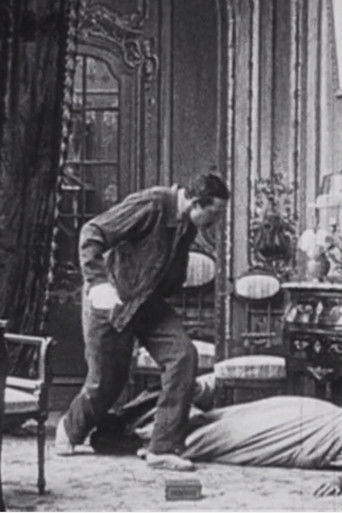
Marguerite Brésil
Actor
- Active
- 1908-1908
Films 1
About Marguerite Brésil
Marguerite Brésil is a very obscure early French screen performer whose surviving film record is extremely limited. She is credited as an actor in the 1908 short The Man with White Gloves, placing her in the formative years of European silent cinema, when performance style was still closely tied to theatrical pantomime and the short film was the dominant format. Beyond that single known credit, readily verifiable information about her life, training, and later career is scarce, which is common for many performers from the earliest years of motion-picture production. She appears to have worked during a transitional period when film credits were often incomplete or inconsistent, making it difficult to reconstruct full biographies for lesser-documented figures. No reliable evidence was found for a sustained later film career, and she may have appeared only briefly on screen or worked under records that have not survived. Because of the limited archival footprint, Marguerite Brésil remains primarily a name in early film history rather than a widely documented public figure.
More about Marguerite Brésil
On screen
No direct contemporary description of Marguerite Brésil's acting style survives in readily available sources. Given the year of her known film credit, her performance would likely have followed the expressive, gesture-driven conventions of early silent cinema, emphasizing clear physical movement, facial expressiveness, and legible pantomime rather than subtle psychological realism. However, this remains an inference based on the period rather than a documented critical assessment of her individual technique.
In film history
Marguerite Brésil's cultural impact is best understood as part of the larger foundation of early French cinema rather than through a large surviving body of work. Performers like her helped populate the rapidly developing silent-film industry during a period when cinematic storytelling was being invented in real time, and even brief appearances contributed to the language of screen acting. Although she is not a major documented star, her credit in a 1908 film connects her to the earliest phase of film history, when many modern conventions of performance, editing, and screen narrative were still emerging. Her presence in film records also underscores how many women participated in early cinema yet remain underrepresented in later histories due to incomplete preservation and documentation.
Later reputation
Her legacy lies primarily in historical documentation: she is one of the many early performers whose names survive in filmographies even when personal details do not. For historians and archivists, such figures are important because they reveal the breadth of participation in silent-era production and the extent to which early cinema depended on a wide pool of actors whose contributions were often uncredited or only partially recorded. Marguerite Brésil therefore represents the fragile memory of the silent era, reminding modern audiences that film history is composed not only of major stars but also of many little-documented contributors. Her name persists as a small but meaningful trace of the earliest years of screen acting.
Influence
There is no verifiable record showing that Marguerite Brésil directly influenced later actors or directors in a documented way. Her significance is indirect: like many early silent performers, she formed part of the collective practice that helped establish screen acting conventions in France and Europe. The cumulative work of performers from her era influenced the transition from stage-like performance toward the more refined visual language that later silent and sound cinema would refine.
Off screen
No reliable biographical records were found that document Marguerite Brésil's personal life, including family background, marriages, or later activities outside film. This lack of information is typical for some early silent-era performers, especially those whose screen careers were brief or whose names were recorded inconsistently across archival sources. At present, there is no verifiable evidence available about her private life.
Education
No verifiable information found regarding her education or acting training.
Credits
- Appeared in the 1908 silent film The Man with White Gloves
- Represents one of the many early French screen performers documented from the first decade of cinema
- Worked during the pioneering period of short-form silent production in Europe
Roles
- Role in The Man with White Gloves (1908)
Films
- The Man with White Gloves (1908)
Notes
- Her known film credit dates from 1908, one of the earliest years of narrative filmmaking.
- She is associated with French silent cinema.
- No confirmed birth or death dates are readily available in standard reference sources.
- Her surviving screen record is currently limited to a single known film credit.
- She is an example of how many early cinema performers remain historically obscure despite appearing in preserved filmographies.
- Her surname may appear in archival lists even when broader biographical data is absent.
- She worked during a period when film credits were not always standardized.
Questions
Who was Marguerite Brésil?
Marguerite Brésil was an early French screen actor known from the silent-film era. Her surviving film record is extremely limited, with her name currently associated with the 1908 film The Man with White Gloves. She remains an obscure but historically relevant figure from the formative years of cinema.
What films is Marguerite Brésil best known for?
She is best known for The Man with White Gloves (1908), which is the only readily verifiable film credit currently associated with her. Because her archival footprint is so small, no broader list of significant titles can be confidently confirmed.
When was Marguerite Brésil born and when did she die?
Her birth and death dates are not currently verified in accessible historical sources. The surviving record is too limited to confidently establish those details, and she may have been one of many early performers whose personal history was not fully preserved.
What awards did Marguerite Brésil win?
No awards or formal honors are known or verifiable for Marguerite Brésil. That is not unusual for performers active in the earliest years of cinema, when the modern awards culture had not yet developed and many actors worked in anonymity.
What was Marguerite Brésil's acting style?
There is no direct contemporary critical description of her individual acting style that can be reliably cited. Based on the period, she would likely have performed in the expressive, gesture-based style typical of early silent films, using clear physical movement and facial expression to communicate emotion and narrative.
What is Marguerite Brésil's legacy in film history?
Her legacy is primarily archival and historical. She represents the many lesser-documented performers who helped build early French cinema and whose names survive only in fragmentary records. For film historians, such figures are important because they show how extensive and collaborative the earliest film industry really was.