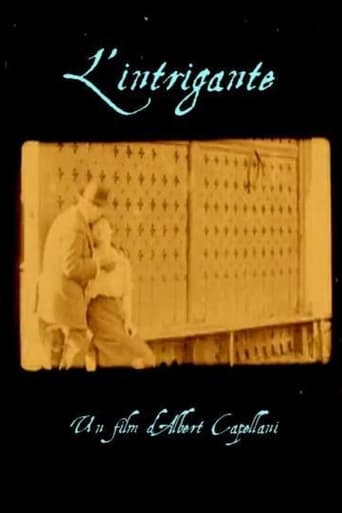
The Man with White Gloves
"null"
Plot
M. Rasta is introduced as a polished, high-society confidence man who moves easily among the wealthy and respectable, concealing his criminal associations behind impeccable manners and conspicuous white gloves. When he is accused of a crime he did not commit, the story turns on the contrast between outward respectability and actual guilt, drawing him into a web of suspicion, social intrigue, and danger. As the accusation threatens to ruin him, he must navigate a world of deception where appearances can be manipulated as easily as identities. The film builds toward the revelation of the true culprit and restores M. Rasta’s standing, but only after exposing the fragility of reputation and the ease with which society can be deceived by surface civility.
About the Production
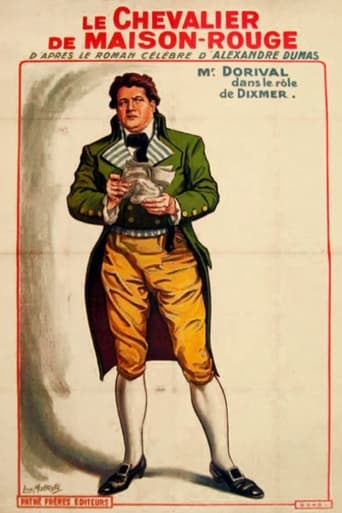
This is an early French silent crime film made during the rapid expansion of Pathé Frères’ short-subject production program. Like many 1908 releases, it was staged economically with studio-bound sets and theatrical blocking rather than elaborate location work, and it relied on expressive pantomime and visual clarity to tell the story without intertitles carrying excessive exposition. Albert Capellani was one of Pathé’s most important directors in the pre-feature era, and the film belongs to the period in which French narrative cinema was becoming more sophisticated in terms of continuity, character motivation, and melodramatic plotting. Precise budget, surviving production paperwork, and original exhibition materials are not readily available in standard modern references.
Historical Background
The film was produced in 1908, at a formative moment in cinema history when the medium was shifting from novelty attraction toward structured narrative storytelling. In France, Pathé Frères was central to this transformation, producing large numbers of shorts and helping set international standards for cinematic style, distribution, and genre development. Crime and melodrama were especially popular because they translated readily into visual terms and allowed audiences to read moral conflict through costumes, gestures, and social settings. The film also reflects Belle Époque anxieties about social appearance, fraud, and urban respectability, themes that resonated strongly in a rapidly modernizing society.
Why This Film Matters
Although not a famous surviving landmark title, the film is culturally significant as part of the early development of the crime film and the wrongful-accusation melodrama in French cinema. It shows how early filmmakers used a compact narrative to explore issues of class performance, credibility, and moral disguise—concerns that would remain central to detective and suspense genres for decades. Albert Capellani’s work in this era contributed to the maturation of narrative technique before the feature-length form fully dominated world cinema. For film historians, the title is valuable as evidence of the breadth of Pathé’s production and the sophistication of pre-1910 genre filmmaking.
Making Of
The Man with White Gloves was made at a moment when Pathé Frères was standardizing a highly efficient production system for short narrative films, and Albert Capellani worked within that industrial framework while giving stories greater dramatic coherence. Films from this period were typically shot with a fixed or lightly varied camera, theatrical gestures, and carefully arranged tableaux, so the filmmaking emphasis would have been on staging, costume, and readable social contrast rather than montage-heavy action. The story’s premise suggests a production designed to play on class markers and visible propriety, with the white gloves functioning as a strong visual cue for character and reputation. Surviving archival references do not provide detailed shooting anecdotes, but the film is representative of the kind of polished, compact melodramas Capellani was directing for Pathé in the late 1900s.
Visual Style
The cinematography would have been characteristic of 1908 French narrative film: mostly static framing, composed tableaux, and clear spatial organization so that audience members could follow the action without synchronized sound. Visual storytelling likely depended heavily on costume contrast—especially the symbolic white gloves—along with expressive body language and stage-like blocking. Capellani’s films from this period are generally associated with increasingly careful scene construction and more refined narrative legibility than many contemporaneous shorts. While no detailed shot-by-shot analysis is widely preserved for this specific title, it belongs to the tradition of early Pathé productions that prioritized clarity, decorum, and dramatic readability.
Innovations
The film does not appear to be associated with any single headline technical innovation, but it is significant as part of the early refinement of narrative continuity in French cinema. Its achievement lies in the efficient communication of a wrongful-accusation plot through visual means alone, using costume, gesture, and staging to make character motives immediately legible. As a Pathé production from 1908, it also reflects the company’s industrial standardization of genre filmmaking and export-ready storytelling. The film belongs to the era when cinema was learning to sustain character-centered drama within short running times.
Music
As a 1908 silent film, it had no synchronized soundtrack. In original exhibition, it would typically have been accompanied by a live pianist or small ensemble, with music chosen by local exhibitors or drawn from stock cue sheets if available. No specific original score is known to survive for this title.
Famous Quotes
null
Memorable Scenes
- The central dramatic setup in which M. Rasta, a figure of elite polish and apparent propriety, is publicly or socially identified as a suspect in a crime he did not commit.
- The film’s visual emphasis on the white gloves as a symbolic detail of status and concealment, likely used as a recurring motif to underline the tension between appearance and truth.
- The climactic unraveling of the accusation, in which the story restores M. Rasta’s innocence and exposes the real source of the crime.
Did You Know?
- The film is a French silent crime short from the pre-feature era, when many narrative films were only a few minutes long.
- Albert Capellani was one of Pathé’s most significant directors and later became known for helping develop more elaborate cinematic storytelling before leaving France.
- The title refers to the visual symbol of white gloves, which in early cinema often suggested elegance, social status, concealment, or ironic hypocrisy.
- M. Rasta is described as a high-society con man, a character type that fit well with turn-of-the-century crime melodramas and urban society anxieties.
- The film survives in filmographic records and catalog references, though detailed production documentation is sparse compared with later feature films.
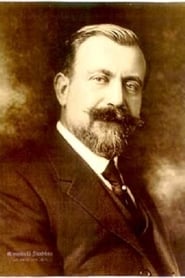
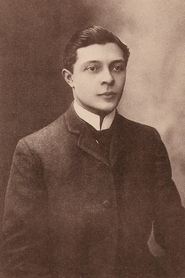
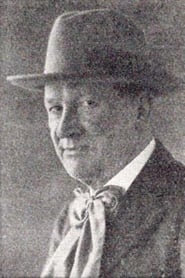
- Because the cast is known only from surviving database records, performance details for the credited actors are largely inaccessible in modern documentation.
- The film belongs to a time when Pathé was one of the dominant international suppliers of short films, distributing French productions widely across Europe and beyond.
- Early crime films like this one often emphasized visual recognition and moral contrast rather than complex detective procedures.
- The known plot point that the protagonist is accused of a crime he did not commit places it among early examples of the wrongful-accusation melodrama.
- No original marketing tagline is securely documented in the available reference record for this title.
What Critics Said
Contemporary critical reviews are not readily documented in surviving mainstream sources, which is common for many short silent films of 1908. At the time, such films were usually reviewed briefly in trade notices, exhibition listings, or local program announcements rather than in long-form criticism. Modern evaluation tends to place the film within Albert Capellani’s early body of work and within the broader evolution of French crime melodrama, rather than treating it as a widely seen standalone masterpiece. Its interest today is mainly historical: it illustrates the visual storytelling methods and popular genre patterns of pre-feature cinema.
What Audiences Thought
Direct audience-response records do not survive in accessible form for this title, so its reception must be inferred from the general popularity of Pathé crime shorts in the period. Films like this were designed for broad popular consumption in nickelodeon-style and vaudeville-era exhibition contexts, where concise stories, recognizable situations, and dramatic reversals were highly effective. The premise of an unjust accusation against a refined con man likely provided immediate dramatic hooks for audiences accustomed to melodramatic intrigue. Its distribution by Pathé suggests it was intended for wide circulation and repeat programming rather than prestige exhibition alone.
Film Connections
Influenced By
- French theatrical melodrama
- Early Pathé crime films
- Urban crime fiction and sensation narratives of the Belle Époque
This Film Influenced
- Later wrongful-accusation crime melodramas
- Subsequent French silent crime serials and feature-length detective dramas
You Might Also Like
More Crime Films
View allMore from Albert Capellani
View allFilm Restoration
Preservation status is uncertain in widely accessible modern references; the film appears to be documented through catalog and filmographic records, but a complete surviving copy is not clearly established in standard public sources. It may survive in archive holdings or be partially extant, but definitive restoration or widely available archival access is not well documented.