
The Cabinet of Dr. Caligari
"Du musst Caligari werden!"
Keys: Space play/pause · ←/→ 10s · F fullscreen · M mute · </> speed
About this film
Francis recounts from an asylum garden how a fairground mountebank, Dr. Caligari, awakened the sleepwalker Cesare to commit murder. Jane's abduction and Francis's investigation collapse when the framing story reveals the doctor as asylum director and Francis himself as a patient.
Cast & crew
More films like this

More Drama films
View all →







More from Robert Wiene
View all →
More about this film
About the production
Release dateFebruary 26, 1920 (Marmorhaus, Berlin premiere)
BudgetApproximately 20,000-25,000 Reichsmarks (modest for the time)
Box officeHighly successful commercially, both in Germany and internationally, though exact figures are not documented from the period
ProductionDecla-Bioscop AG
Filmed inTempelhof Studios, Berlin, Germany
The film's revolutionary expressionistic sets were designed by Hermann Warm, Walter Reimann, and Walter Röhrig, who came from the expressionist art movement. Sets were constructed from painted canvas with distorted perspectives, jagged angles, and artificial shadows painted directly onto the surfaces. Director Robert Wiene insisted on this stylized approach to externalize the characters' psychological states. The film was shot in only six to seven weeks during the winter of 1919-1920, with the cast working long hours in the uncomfortable, cramped sets. The famous twist ending was not in the original script by Hans Janowitz and Carl Mayer but was added by producer Erich Pommer and Fritz Lang to make the film more commercially acceptable.
Themes
Madness and sanityAuthority and rebellionReality versus illusionThe nature of perceptionPost-war trauma
Themes & topics
expressionismsomnambulistasylummurderhypnosistwist endingframe storypsychological thrillerfairgroundcabinetprophecyabductioninvestigationdelusionGerman Expressionism
Historical background
Shot in 1919–1920 amid Weimar instability, Das Cabinet des Dr. Caligari channeled postwar mistrust of authority into painted sets that rejected photographic realism.
Why this film matters
Expressionist design, the twist ending, and Cesare's image influenced horror, noir, and art cinema worldwide; the film is routinely taught as a founding text of German Expressionism.
Making of
The production was marked by intense creative conflicts between the writers, who wanted a straightforward anti-authoritarian story, and the producers, who demanded the frame story to soften the political message. Directors Fritz Lang and Ernst Lubitsch were initially considered before Robert Wiene was chosen. The set designers, all members of the Berlin avant-garde art scene, rejected realistic sets in favor of painted canvases that reflected the characters' psychological states. The actors had to adapt their performances to match the stylized environment, with Werner Krauss creating an exaggerated, jerky movement style for Caligari and Conrad Veidt developing a fluid, almost mechanical grace for Cesare. The film was shot during a period of severe economic hardship in post-WWI Germany, with the cast and crew working for minimal wages in unheated studios. The famous scene where Cesare carries Jane through the distorted town required Veidt to carry Lil Dagover for hours while navigating the deliberately treacherous set design.
What critics said
German critics were divided in 1920; international praise was stronger. Modern consensus ranks it among the essential silent features, with extensive restoration and scholarly commentary.
Did you know?
- The film was inspired by a real-life experience of writer Hans Janowitz, who was allegedly mistreated by a military psychiatrist during World War I
- Conrad Veidt as Cesare had to wear heavy makeup and was required to perform his own stunts, including climbing a ladder while in a hypnotic trance
- The film's sets were deliberately designed to have no right angles to create a sense of unease and madness
- The Cabinet of Dr. Caligari was one of the first films to use a twist ending, a device that would become commonplace in cinema
- Despite being a German film, it was initially more successful in Japan and the United States than in Germany
- The original script ended with Caligari being captured and institutionalized, revealing him as the mad one, not Francis
- The film's title was inspired by a sideshow attraction at the Berlin Wintergarten called 'The Cabinet of Dr. Caligari'
- Werner Krauss, who played Caligari, was so convincing in the role that audiences often believed he was actually insane
- The film was banned in several countries for its 'subversive' content and potential to incite madness
- The expressionistic style was so influential that it created an entire genre of German Expressionist cinema
Visual style
The cinematography by Willy Hameister and Hermann Kirchhoff was revolutionary for its time, employing techniques that directly supported the film's expressionistic vision. The camera work featured unusual angles and compositions that mirrored the distorted sets, creating a cohesive visual language of psychological unease. The cinematographers used dramatic lighting effects, with harsh contrasts and deep shadows that prefigured the film noir style. Many shots were composed to emphasize the jagged, unnatural lines of the sets, with characters often positioned at odd angles to enhance the sense of disorientation. The camera movement was deliberately limited, with static shots that forced viewers to confront the bizarre environments head-on. The use of iris shots and other optical effects helped create a dreamlike, nightmarish quality. The black and white photography was enhanced by tinting in original release prints, with different scenes colored to enhance their emotional impact - blue for night scenes, amber for daylight, and red for moments of violence or passion.
Innovations
The film's most significant technical achievement was its revolutionary approach to production design, which essentially created a new visual language for cinema. The painted sets with their distorted perspectives and artificial shadows represented a complete departure from the realistic sets that dominated cinema of the era. The film pioneered the use of mise-en-scène to externalize psychological states, a technique that would influence countless future films. The innovative use of lighting, with shadows painted directly onto sets, created a controlled visual environment impossible to achieve with natural lighting alone. The film's narrative structure, with its frame story and unreliable narrator, was groundbreaking for its time and influenced the development of psychological thrillers. The makeup and costume design, particularly for Cesare, created iconic looks that would influence horror character design for decades. The film's success demonstrated that cinema could be a medium for serious artistic expression, helping elevate the status of film from popular entertainment to art form.
Music
As a silent film, The Cabinet of Dr. Caligari was originally accompanied by live musical performances that varied by theater and region. The original German score was composed by Giuseppe Becce, though many theaters used their own arrangements of classical music. The music was crucial to establishing the film's atmosphere, with dissonant chords and minor keys reflecting the psychological tension. Modern restorations have featured new scores by various composers, including Timothy Brock, who created a faithful reconstruction of the original 1920s style, and more contemporary interpretations by electronic artists. The 2014 restoration featured a score by the Alloy Orchestra that used both period-appropriate instruments and modern techniques to bridge historical authenticity with contemporary sensibilities. The absence of dialogue actually enhanced the film's universal appeal, allowing the visual storytelling and musical accompaniment to create a purely cinematic experience that transcended language barriers.
Famous quotes
I must know everything. I must penetrate the heart of his secret!
Sleep in death-like sleep... Cesare, can you hear me? Awaken!
You must become Caligari!
I know that Cesare will answer my question!
He has been sleeping for twenty-three years. Now I will awaken him.
Tomorrow you will die!
These are not the confessions of a madman, but the revelations of a soul tormented by injustice.
I am Caligari!
Memorable scenes
- The opening scene in the distorted asylum garden where Francis begins his story, immediately establishing the film's expressionistic visual style and framing device
- Cesare's dramatic awakening from his death-like sleep, with Werner Krauss as Caligari commanding him to rise while the audience sees the somnambulist's eyes snap open
- The murder sequence where Cesare stalks Alan through the twisted, angular streets, with shadows painted on walls creating a maze of psychological terror
- The scene where Cesare abducts Jane, carrying her through the impossible architecture of the town while villagers pursue him through the distorted landscape
- The final revelation in the asylum where the camera pulls back to show the reality of the situation, transforming the entire narrative into Francis's delusion
What audiences thought
Contemporary audiences were both fascinated and disturbed by the film's unconventional style and dark themes. The film was a commercial success in Germany and particularly popular in France, Japan, and the United States, where it played for extended runs in major cities. Some audience members reportedly fainted during screenings due to the intense psychological impact, while others were so intrigued they attended multiple times to understand the complex narrative. The film's word-of-mouth reputation as a shocking and innovative experience helped drive attendance. In the decades following its release, it developed a cult following among film enthusiasts and art house audiences. Modern audiences, particularly those interested in film history and horror, continue to be drawn to its unique aesthetic and psychological complexity, with restored versions regularly playing in revival cinemas and film festivals.
Film connections
Influenced by
- German Expressionist art movement
- Edvard Munch's paintings
- The works of Franz Kafka
- Sigmund Freud's psychoanalytic theories
- Post-WWI German literature
- Gothic literature tradition
- Sideshow and carnival culture of the early 20th century
This film influenced
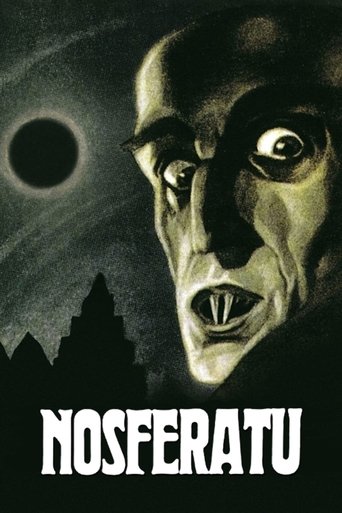
- Nosferatu (1922)
- Metropolis (1927)
- M (1931)
- The Third Man (1949)
- Psycho (1960)
- Blade Runner (1982)
- Batman (1989)
- The Matrix (1999)
- The Sixth Sense (1999)
- Shutter Island (2010)
- Inception (2010)
Film restoration
The Cabinet of Dr. Caligari is well-preserved with multiple versions existing in archives worldwide. The most complete version is held at the Bundesarchiv-Filmarchiv in Berlin. The film has undergone several restorations, most notably in 2014 by the Friedrich Wilhelm Murnau Foundation, which used elements from various international copies to create the most complete version possible. Some scenes remain lost, particularly from the original German release, but the film is essentially intact and viewable. The film entered the public domain in many countries, which has both helped its preservation through wide distribution and complicated restoration efforts due to the proliferation of inferior copies. The 2014 restoration was scanned in 2K resolution from the best available elements and features tinting that approximates the original release colors.
Where to watch
- The Criterion Channel
- Kanopy (with library card)
- MUBI
- YouTube (public domain versions)
- The Internet Archive
- Various Blu-ray releases from Criterion, Kino Lorber, and Eureka Entertainment
- Tubi (free streaming)
- Amazon Prime Video (for rent or purchase)
- Google Play Movies
- Apple TV