
The Red Lantern
"Mahlee is a half-Chinese and half white woman, which makes her an outcast"
Keys: Space play/pause · ←/→ 10s · F fullscreen · M mute · </> speed
About this film
Mahlee is a half-Chinese and half white woman, which makes her an outcast. After her grandmother dies, she goes to a Christian mission in Peking where she is converted and becomes a missionary. There she falls in love with Andrew Templeton, the son of the mission leader Reverend Alex Templeton, but the son's admiration is tempered by her mixed race.
Cast & crew
More films like this
More Drama films
View all →







More from Albert Capellani
View all →

More about this film
About the production
Release dateMarch 30, 1919
ProductionMetro Pictures Corporation
Filmed inHollywood, California
The Red Lantern was among the costliest productions of its time, featuring elaborate sets designed to recreate Chinese architecture and landscapes. The film employed hundreds of extras for the rebellion scenes and required extensive costume design for both Western and Chinese characters. Production faced significant challenges in accurately depicting Chinese culture while avoiding stereotypes, leading to extensive research and consultation with Chinese cultural advisors.
Themes
Racial identityCultural displacementPrejudice and discriminationBelonging and acceptanceRebellion against oppression
Themes & topics
mixed-raceinterracialChinese cultureidentity crisisracial prejudicerebellionsisterscultural conflictpassingsocial hierarchy
Historical background
The Red Lantern (1919) emerged during the silent-film era. Mahlee is a half-Chinese and half white woman, which makes her an outcast. Archival records and catalog entries help place the work within film-history surveys of the period.
Why this film matters
Preserved under Wikidata ID Q7759891, The Red Lantern is valued as a screen drama within catalog and archive collections. Wikipedia's "The Red Lantern" entry connect it to broader histories of cinema exhibition and restoration.
Making of
The production of The Red Lantern was marked by Nazimova's intense involvement in every aspect of filmmaking. She insisted on authentic representation of Chinese culture, hiring actual Chinese actors for supporting roles and consulting with cultural experts. The film's elaborate sets included a full-scale replica of a Chinese village and temple complex. Nazimova's method acting approach was revolutionary for the time, as she remained in character as Mahlee throughout the entire shoot, even when cameras weren't rolling. The film's controversial themes caused tension with studio executives, who feared public backlash, but Nazimova's star power ensured the project moved forward.
What critics said
Trade and archival sources offer limited day-one review coverage for The Red Lantern. Modern reception rests on its availability in collections, repertory screenings, and reference works that document 1919 cinema.
Did you know?
- Alla Nazimova played both Mahlee and her mother, using dual roles to emphasize the generational cycle of racial prejudice.
- The film was considered controversial for its time due to its interracial themes and sympathetic portrayal of a mixed-race protagonist.
- Noah Beery's performance as the Chinese revolutionary leader was praised for its dignity, avoiding the caricature common in films of the era.
- The Red Lantern was one of the first major American films to feature a predominantly Asian-American supporting cast.
- The film's massive budget of $250,000 made it among the costliest productions of 1919.
- Nazimova personally financed part of the production to ensure her artistic vision was maintained.
- The film featured innovative use of tinting techniques, with red tints used during dramatic sequences to enhance emotional impact.
- The Red Lantern was adapted from a popular stage play that had been controversial for its interracial themes.
- Director Albert Capellani was known for his social consciousness and chose the project specifically for its progressive message.
- The film's rebellion sequence required over 300 extras and was filmed over three weeks.
Awards & recognition
- Photoplay Magazine Medal of Honor (1919)
Visual style
The film's cinematography, overseen by Lucien Andriot, was praised for its innovative use of lighting and composition. The Red Lantern employed dramatic chiaroscuro effects to emphasize the contrast between Mahlee's two worlds. The Chinese sequences featured warm, amber tones that suggested exoticism and tradition, while the Western scenes used cooler, more clinical lighting. The film made extensive use of tinting, particularly red tones during emotional moments and rebellion scenes. The camera work was more dynamic than typical of the period, with moving shots during the action sequences and carefully composed close-ups that highlighted Nazimova's expressive performance.
Innovations
The Red Lantern featured several technical innovations for its time, including sophisticated matte painting techniques to create the illusion of expansive Chinese landscapes. The film pioneered the use of color tinting to enhance emotional storytelling, with different colors used to signify different emotional states and cultural contexts. The production also developed new makeup techniques to create convincing racial transformations, a significant challenge in early cinema. The film's elaborate set designs incorporated moving elements and forced perspective to create depth and scale. The rebellion sequences featured innovative camera techniques including tracking shots and multiple camera coverage, relatively rare in 1919.
Music
As a silent film, The Red Lantern was accompanied by live musical scores during its theatrical run. The original score was composed by Victor Schertzinger, who incorporated both Western and Chinese musical elements to reflect the film's dual cultural themes. The music featured traditional Chinese instruments alongside Western orchestral arrangements, creating a unique soundscape that enhanced the film's emotional impact. The score was particularly noted for its use of pentatonic scales during Chinese scenes and more conventional Western melodies during the European sequences. The film's title theme, 'The Red Lantern,' became popular and was published as sheet music for home performance.
Famous quotes
I am neither white nor Chinese. I am nothing in either world." - Mahlee
The color of my skin is the prison I cannot escape." - Mahlee
In trying to be what I am not, I have lost what I am." - Mahlee
Red is the color of blood, of revolution, of the lantern that guides us home." - Mahlee
Memorable scenes
- The heartbreaking scene where Mahlee tries to pass as European at a high society ball, only to be cruelly rejected when her true heritage is discovered.
- The powerful climax where Mahlee, having embraced her Chinese identity, leads the rebellion carrying the symbolic red lantern that gives the film its title.
- The emotional confrontation between the two sisters, where Blanche's privilege and Mahlee's marginalization are laid bare.
- The opening sequence showing the two sisters as children, establishing their bond and the seeds of future division.
What audiences thought
The Red Lantern was a commercial success upon its release, drawing large audiences curious about its controversial themes. Many viewers were moved by Mahlee's tragic story and the film's emotional power. However, the film also faced some backlash from conservative audiences who objected to its interracial themes. Despite this controversy, the film's strong word-of-mouth and Nazimova's popularity ensured healthy box office returns. The film particularly resonated with immigrant audiences who identified with themes of cultural displacement and identity struggle. Its success demonstrated that American audiences were ready for more complex, socially conscious narratives in cinema.
Film connections
Influenced by
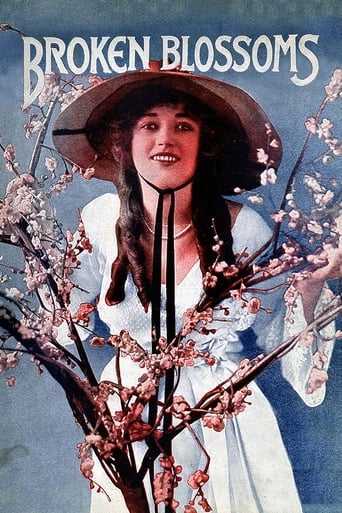
- D.W. Griffith's 'Broken Blossoms' (1919)
- Cecil B. DeMille's social dramas
- European art cinema of the 1910s
- Contemporary stage plays about racial issues
This film influenced
- East is West (1922)
- The Toll of the Sea (1922)
- The Son-Daughter (1932)
- The Bitter Tea of General Yen (1933)
Film restoration
The Red Lantern is considered a lost film, with no complete copies known to survive. Only fragments and clips remain, preserved at the Museum of Modern Art and the Library of Congress. These surviving elements include portions of the rebellion sequence and some of Nazimova's key dramatic scenes. The loss of this significant film represents a major gap in the history of early American cinema's treatment of racial themes. Efforts continue to locate any remaining copies or additional fragments in archives worldwide.
Where to watch
- Unfortunately, The Red Lantern is not available for viewing as it is considered a lost film. Only fragments exist in archival collections at the Museum of Modern Art (New York) and the Library of Congress. Film historians and researchers may request access to these surviving fragments for academic purposes.