


The Reign of Terror
"silent era intrigue and the"
Keys: Space play/pause · ←/→ 10s · F fullscreen · M mute · </> speed
About this film
Through the streets of silent era life, the scene takes place in Paris in March 1793 during the Reign of Terror. The Knight of Maison-Rouge, posing as Citizen Morand, is organizing the escape of Queen Marie-Antoinette. He is assisted in his undertaking by Dixmer, a master tanner who passes himself off as an ardent revo
Cast & crew
More films like this
More History films
View all →


More from Albert Capellani
View all →
More about this film
About the production
Release dateFebruary 1914
Box officeNot documented - box office tracking was not standardized in 1914
ProductionPathé Frères
Filmed inParis, France, Pathé Studio, Joinville-le-Pont
This film was part of Pathé's prestigious series of literary adaptations, utilizing elaborate sets and costumes to recreate Revolutionary Paris. The production employed hundreds of extras for crowd scenes depicting revolutionary mobs. The tunnel sequences were particularly challenging to film in the confined spaces of early studio sets. The film was shot during the early months of World War I, which created additional production difficulties and limited its international distribution.
Themes
Revolution and political upheavalForbidden love and sacrificeLoyalty versus dutyClass struggle and social changeThe cost of political ideals
Themes & topics
French RevolutionMarie AntoinetteReign of TerrorHistorical dramaPrison escapeForbidden romancePolitical conspiracyTunnelGuillotineRoyal rescueRevolutionary ParisKnightUnderground passageHistorical epicSilent film
Historical background
Made in 1914, The Reign of Terror belongs to the silent era and carries the visual and narrative habits of its time.
Why this film matters
For collectors of early and classic cinema, The Reign of Terror illustrates the range of subjects and styles that reached theaters in 1914.
Making of
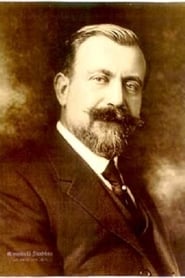
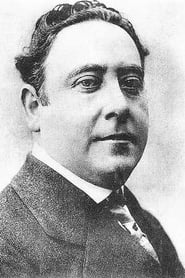
The production was one of Albert Capellani's most ambitious projects for Pathé, requiring extensive research into Revolutionary period details. The director insisted on historical accuracy, consulting with historians and utilizing authentic period documents for set design. The tunnel sequences presented significant technical challenges for the cinematography team, who had to work with primitive lighting equipment in cramped conditions. The casting of Paul Escoffier as the Knight of Maison-Rouge was considered a coup, as he was one of France's most respected stage actors transitioning to cinema. The film's production was rushed to completion before the anticipated European conflict, which indeed erupted later in 1914 and dramatically affected the film industry. The romantic subplot between Geneviève and Lindey was expanded from Dumas' original novel to appeal to contemporary cinema audiences.
What critics said
Critics writing near 1914 focused on how The Reign of Terror compared with rival titles in the same season.
Did you know?
- Based on Alexandre Dumas' 1846 novel 'Le Chevalier de Maison-Rouge' (The Knight of Maison-Rouge)
- Director Albert Capellani was one of the pioneering figures in French cinema, known for his literary adaptations
- The film was released just months before the outbreak of World War I, which severely impacted its distribution and reception
- Pathé Frères invested heavily in this production as part of their strategy to compete with theatrical productions
- The film featured one of the earliest detailed recreations of the French Revolution period on screen
- Many of the costumes and props were reportedly authentic or meticulously reproduced from historical sources
- The film was part of a wave of pre-war French historical epics that influenced later international productions
- Contemporary advertisements emphasized the film's 'authentic historical details' and 'dramatic intensity'
- The original French title was 'Le Chevalier de Maison-Rouge' rather than 'The Reign of Terror'
- The film's release coincided with heightened interest in French revolutionary themes due to contemporary political tensions
Visual style
The cinematography by an uncredited Pathé cameraman utilized the advanced techniques available in 1914, including location shooting in Paris for establishing shots and elaborate studio sets for interior scenes. The film employed chiaroscuro lighting effects to create dramatic tension, particularly in the tunnel sequences and night scenes. Camera movement was relatively static, typical of the period, but the composition of shots was carefully planned to emphasize the grand scale of the Revolutionary settings. The cinematography successfully captured both the intimate moments of the romantic subplot and the epic scale of the historical events, demonstrating Pathé's technical capabilities at the height of the pre-war French film industry.
Innovations
The film demonstrated advanced set construction techniques for its period, with detailed recreations of Revolutionary Paris including the Tower of the Temple prison. The tunnel sequences required innovative camera setups and lighting solutions to film effectively in confined spaces. The production utilized Pathé's advanced film stock and processing techniques, resulting in relatively high image quality for the era. The crowd scenes involving hundreds of extras showcased sophisticated coordination and staging capabilities. The film's editing, while basic by modern standards, employed cross-cutting between parallel storylines to build dramatic tension, representing an advanced narrative technique for 1914.
Music
As a silent film, it would have been accompanied by live musical performance in theaters. The original score, likely composed by Pathé's house musicians, would have featured dramatic classical pieces appropriate to the historical setting. French theaters typically employed pianists or small orchestras for such prestigious productions. The music would have emphasized the romantic elements during the Geneviève-Lindey scenes and created tension during the rescue attempts. Contemporary orchestral arrangements of revolutionary songs like 'La Marseillaise' were likely incorporated to enhance the historical atmosphere. No recordings of the original musical accompaniment survive.
Famous quotes
No surviving intertitles or dialogue cards are documented from this lost film, making direct quotes unavailable. Contemporary promotional materials emphasized themes of 'Love stronger than the guillotine' and 'Courage in the darkest hour of France.'
Memorable scenes
- The dramatic tunnel-digging sequence where conspirators work secretly beneath Revolutionary Paris to reach the imprisoned queen
- Geneviève's narrow escape from arrest and her first meeting with Lieutenant Lindey
- The failed rescue attempts from the Tower of the Temple, showcasing the desperation of the plot
- The climactic scenes depicting the threat of Marie-Antoinette's impending execution
- The romantic moments between Geneviève and Lindey set against the backdrop of revolutionary chaos
What audiences thought
Initial French audiences responded positively to the film's dramatic storytelling and spectacular elements, particularly the crowd scenes depicting revolutionary Paris. The romantic subplot between Geneviève and Lindey proved especially popular with contemporary viewers. However, the film's theatrical run was cut short by the outbreak of World War I, which led to the closure of many cinemas and redirection of public attention to the war effort. The film's themes of patriotism and sacrifice took on new meanings during the wartime period, though distribution became severely limited. Post-war screenings were rare as the film industry struggled to rebuild and audiences' tastes had shifted.
Film connections
Influenced by
- Alexandre Dumas' novel 'Le Chevalier de Maison-Rouge'
- Contemporary French theatrical traditions
- Earlier Pathé historical productions
- Stage melodramas of the Belle Époque
- Romantic literature of the 19th century
This film influenced
- Later adaptations of Dumas' works
- French historical epics of the 1920s
- Silent era prison escape films
- Revolutionary dramas of the 1930s
- Historical romance films
Film restoration
The film is considered lost or partially lost. Like many films from this era, particularly French productions affected by World War I, complete copies have not survived. Some fragments or still photographs may exist in archives such as the Cinémathèque Française, but a complete version is not known to survive. The loss represents a significant gap in the documentation of Albert Capellani's work and pre-war French cinema achievements. Preservation efforts for films from this period continue, but the chances of recovering a complete print are considered very low.
Where to watch
- No known complete versions are available for viewing. Film archives and cinema museums may hold fragments or still photographs. The Cinémathèque Française in Paris and other major film archives should be consulted for any existing materials. Academic film history books and documentaries about early French cinema may contain clips or images from the production.