Tamara Karsavina
Actor
- Born
- March 9, 1885, St. Petersburg, Russian Empire
- Died
- May 26, 1978
- Active
- 1902-1925
- Birth name
- Tamara Platonovna Karsavina
Films 1
About Tamara Karsavina
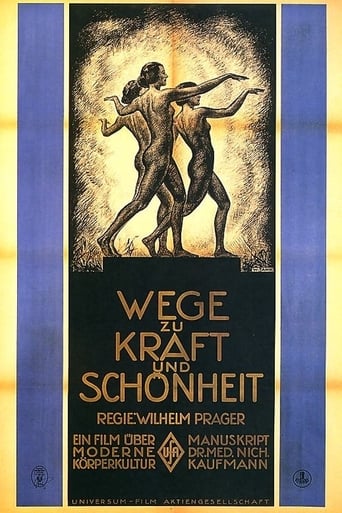
Tamara Platonovna Karsavina was a celebrated Russian ballerina and an important figure of early cinema through her appearance in the 1925 short film Ways to Strength and Beauty. Born in St. Petersburg into a distinguished theatrical family, she trained at the Imperial Ballet School and rose to international fame as one of the leading dancers of the Ballets Russes under Sergei Diaghilev. Karsavina became known not only for her technical brilliance but also for the expressive, poetic style that helped define early 20th-century ballet performance. Her film work was very limited, and she is not primarily remembered as a screen actor, but her inclusion in Ways to Strength and Beauty reflects the period's interest in capturing major stage artists on film. She married diplomat and scholar Henry James Bruce and later lived in Britain, where she continued to influence ballet through teaching, writing, and coaching. Karsavina's long career bridged imperial Russian ballet, the modernist European stage, and the cultural world that intersected with silent-era cinema. She died in London in 1978, leaving a major legacy as a performer, teacher, and chronicler of ballet history.
More about Tamara Karsavina
On screen
Although not a conventional film actor, Karsavina's performance style was famed for its lyricism, precision, intelligence, and expressive musicality. She combined refined classical technique with dramatic subtlety, making her stage presence highly cinematic even before she appeared on film. Her movement style emphasized clarity of line, graceful phrasing, and emotional transparency rather than overt theatrical exaggeration. In the silent-film context, her artistry would have translated through highly controlled gesture, poise, and a strong visual presence.
In film history
Tamara Karsavina was one of the defining artists of the Ballets Russes, a company that transformed ballet from an elite court tradition into a major modern art form with international reach. Her performances helped establish the expressive possibilities of narrative ballet in the early 20th century, and her interpretations of new works became reference points for dancers and historians alike. In cinema history, her appearance in Ways to Strength and Beauty links her to the silent era's interest in filming distinguished performers from the stage, preserving their artistry for new audiences. Though her filmography is extremely small, her presence on screen symbolized the prestige that major theatrical artists could bring to early film projects. Her memoirs and teaching also made her a key intermediary between the imperial Russian ballet tradition and the Western European ballet institutions that followed.
Later reputation
Karsavina's legacy is strongest in ballet history, where she is remembered as one of the great interpreters of the Ballets Russes repertory and a vital bridge between classical Russian training and modern performance aesthetics. She preserved first-hand knowledge of a formative artistic era through her writings, interviews, and instruction, making her an indispensable source for scholars of dance and early 20th-century performance culture. Her influence continues through reconstructions of Ballets Russes works, where her interpretations remain part of the repertory imagination even when not directly preserved on film. In cinema history, her name endures as an example of how silent-era and early screen culture occasionally intersected with major stage traditions. Because her screen appearances were rare, her importance lies less in film stardom than in the prestige, artistry, and historical continuity she brought to the broader world of visual performance.
Influence
Karsavina influenced generations of dancers by demonstrating that classical technique could be fused with dramatic nuance and psychological expressiveness. Her interpretations helped shape the modern understanding of ballerina artistry, especially in roles created during the revolutionary period of Ballets Russes innovation. Teachers and performers in Britain and elsewhere drew on her example as both a performer and a pedagogue, ensuring that her approach to line, phrasing, and stage intelligence persisted beyond her active years. In the film context, her presence contributed to the early idea that cinema could document elite artistic performance, not just theatrical spectacle. Her influence was therefore both practical and symbolic: practical in pedagogy, symbolic in the prestige she lent to preserved performance.
Off screen
Tamara Karsavina came from a family deeply connected to the Russian theatrical and artistic world; her father, Platon Karsavin, was a dancer and teacher. She married Henry James Bruce, a British civil servant and diplomat, and after the upheavals of the Russian Revolution she settled largely in Britain. Her personal life became closely tied to the preservation and teaching of ballet, and she remained an authoritative voice on dance long after her performance career slowed. She wrote memoirs that provided insight into both her own life and the artistic circles around Diaghilev, Stravinsky, and the Ballets Russes. No widely documented children are generally associated with her in standard film or ballet references.
Education
Imperial Ballet School, St. Petersburg
Credits
- Trained at the Imperial Ballet School in St. Petersburg and entered the Mariinsky Theatre, becoming one of the leading classical dancers of her generation
- Rose to international prominence as a star of Sergei Diaghilev's Ballets Russes, helping bring modern Russian ballet to audiences across Europe and beyond
- Created and popularized major roles in landmark productions such as The Firebird and Petrushka, shaping the performance history of early 20th-century ballet
- Appeared in the 1925 film Ways to Strength and Beauty, one of the few screen appearances associated with her name
- After leaving the stage, became an influential teacher, writer, and authority on ballet technique and interpretation
- Published memoirs and essays that remain valuable historical sources on the Ballets Russes and the artistic world of pre-revolutionary Russia
Roles
- The Firebird in The Firebird
- The Ballerina in Petrushka
- Nikiya in La Bayadère
- Aurora in Sleeping Beauty
- Giselle in Giselle
Films
- Ways to Strength and Beauty (1925)
Honors
- Recognized internationally as one of the great ballerinas of the Ballets Russes era
- Honored in ballet history as a foundational interpreter of early 20th-century Russian dance
- Widely celebrated through commemorations, retrospectives, and ballet scholarship rather than formal film industry awards
Collaborators
- Sergei Diaghilev
- Mikhail Fokine
- Igor Stravinsky
- Vaslav Nijinsky
- Boris Anisfeld
Studios
- Ballets Russes
- Mariinsky Theatre
Family
- Henry James Bruce (married 1917-1971, his death)
Notes
- She was far better known as a ballerina than as a film actress, and her screen work was extremely limited.
- Her appearance in Ways to Strength and Beauty reflects a 1920s trend of filming celebrated stage artists for documentary or prestige purposes.
- Karsavina was one of the signature stars of the Ballets Russes, alongside names such as Nijinsky and Pavlova in the broader Russian ballet world.
- She was instrumental in the early history of modern ballet through her association with landmark works by Fokine and Stravinsky.
- After leaving Russia, she became an important figure in British ballet culture and helped shape the development of ballet education in the UK.
- Her memoirs are frequently cited by dance historians for their vivid accounts of Diaghilev's company and pre-revolutionary Russian theatre life.
- She is often remembered for a style that balanced technical purity with dramatic intelligence.
- Her life spanned the imperial Russian era, the Revolution, two world wars, and the rise of modern international ballet institutions.
Quotes
I am not a theorist; I am a practical dancer. I speak from what I have felt in performance.
Ballet is not only steps, but the living meaning that gives the steps their purpose.
Questions
Who was Tamara Karsavina?
Tamara Karsavina was a renowned Russian ballerina of the Imperial Ballet and Ballets Russes, and she also appeared in the 1925 film Ways to Strength and Beauty. She is remembered primarily as a major stage artist rather than a film performer, and her influence on ballet history is far greater than her screen work.
What films is Tamara Karsavina best known for?
Her only widely noted film appearance is Ways to Strength and Beauty (1925). She is not known for a broad film career; her fame comes from ballet, where she was one of the most important interpreters of the early modern repertory.
When was Tamara Karsavina born and when did she die?
She was born on March 9, 1885, in St. Petersburg, Russian Empire, and died on May 26, 1978, in London, England. Her long life connected the world of imperial Russian ballet with the modern ballet institutions of the West.
What awards did Tamara Karsavina win?
She is not widely recorded as having won major film industry awards, and standard references do not list Academy Award-style honors. Her recognition came instead through international acclaim as a ballerina, influential teacher, and cultural figure.
What was Tamara Karsavina's acting style?
In a film sense, Karsavina's performance style would be described as refined, expressive, and highly controlled, shaped by her background in classical ballet. On stage, she was famous for combining technical precision with lyrical emotion and dramatic intelligence, qualities that made her especially memorable in narrative ballets.
What is Tamara Karsavina's legacy in film and culture?
Her film legacy is modest but historically interesting because it captures a major stage artist in the silent era. Her broader cultural legacy is enormous in ballet: she helped define the artistry of the Ballets Russes, preserved important memories of that era in writing, and influenced later generations through teaching and interpretation.