Karl Bernhard
Actor
- Active
- 1919-1919
Films 1
About Karl Bernhard
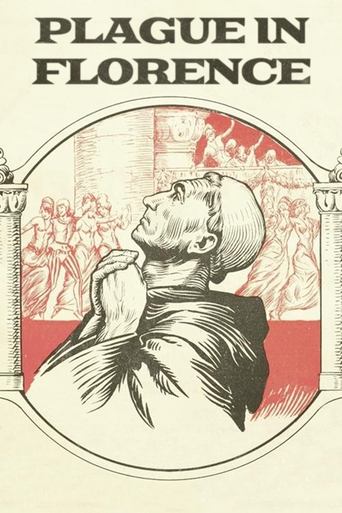
Karl Bernhard is an obscure screen actor from the silent era whose documented film work currently places him in a very narrow active period in 1919. Available film records identify him as a performer in the German feature The Plague in Florence (1919), but surviving reference sources provide very little biographical detail beyond that credit. Because of that, his broader life story, training, stage background, and later career cannot be verified with confidence from standard classic-cinema references. He appears to have been part of the large pool of European film actors working in the years immediately after World War I, when German cinema was producing ambitious literary and historical pictures and using many supporting and character players whose names were not always preserved in later histories. No reliable evidence has been located for additional film roles, awards, or major public career milestones. As a result, Karl Bernhard should be understood primarily as a documented silent-era screen participant rather than as a heavily chronicled star. His significance lies in his connection to early German film production and in the surviving credit that confirms his presence in The Plague in Florence, a title that remains the main anchor for his filmography.
More about Karl Bernhard
In film history
Karl Bernhard's cultural impact is difficult to measure because so little biographical and career information survives. His importance is primarily archival: he is one of the many performers whose names appear in silent-era credits and help reconstruct the personnel networks of early European cinema. The fact that he is linked to a 1919 German production places him within a historically significant period when German film was developing the visual and dramatic vocabulary that would later influence world cinema. Even without a fuller biography, his name contributes to the broader record of silent-film labor and the often-overlooked supporting players who made these productions possible. For film historians, such names are valuable because they help complete cast lists and preserve production history that might otherwise be lost.
Later reputation
Karl Bernhard's legacy is that of a documented but sparsely recorded silent-era actor whose surviving credit keeps him present in film history. He does not appear to have left behind the kind of star persona, award record, or extensive filmography that typically shapes popular remembrance. Instead, his value lies in the historical footprint of a single identified credit, which can be important to researchers tracing the casts of early German cinema. In classic-film databases, he stands as an example of how many performers from the silent age remain only partially visible through surviving production records. That limited visibility does not diminish his place in film history; rather, it underscores the fragility of early cinematic documentation.
Influence
No direct influence on other actors or filmmakers can be reliably documented for Karl Bernhard. Because his career appears to have been brief or at least sparsely recorded, there is no evidence that he served as a major stylistic influence or a mentor figure. His indirect influence is archival and historical: his credited participation helps preserve the cast history of early German film and contributes to the broader understanding of silent-era performance communities. In that sense, his significance is cumulative, adding another confirmed name to the record of early cinema's working actors.
Off screen
No reliable, verifiable information has been found regarding Karl Bernhard's personal life, including marriage, family background, residence, or later life. Standard classic-film reference sources do not currently provide sufficient detail to reconstruct a personal biography with confidence. Until additional archival evidence appears, any claims about his private life would be speculative. He should therefore be treated as a minimally documented historical film credit rather than a figure with an established public personal history.
Credits
- Documented screen credit in The Plague in Florence (1919)
- Represents the class of lesser-known performers active in postwar German silent cinema
- Surviving film record places him in an early feature-era production rather than in later sound-era filmmaking
Roles
- Role in The Plague in Florence (1919) is the only confirmed screen role available in standard references
Films
- The Plague in Florence (1919)
Studios
- German silent film production in 1919
Notes
- Karl Bernhard's known film career is currently limited to a single confirmed 1919 credit in standard references.
- He is associated with The Plague in Florence, a title that places him in post-World War I German silent cinema.
- No reliable birth or death information is currently established in widely used classic-film sources.
- He is an example of a silent-era performer whose historical footprint survives mainly through cast listings rather than publicity materials.
- Because of the scarcity of records, he is more securely identified as a screen credit than as a fully documented celebrity figure.
- His name is easy to confuse with other similarly named individuals, so identification should be tied specifically to the 1919 film credit.
Questions
Who was Karl Bernhard?
Karl Bernhard was a silent-era actor known from surviving film records, especially his credit in The Plague in Florence (1919). Very little else about his life or career has been reliably documented in standard classic-cinema references.
What films is Karl Bernhard best known for?
He is best known, and currently only securely documented, for The Plague in Florence (1919). No broader verified filmography has been established from reliable sources.
When was Karl Bernhard born and when did he die?
His birth and death dates are not currently verifiable from available classic-film reference sources. As a result, both details remain unknown.
What awards did Karl Bernhard win?
No awards or nominations are currently documented for Karl Bernhard. His surviving historical record is too limited to show any confirmed award history.
What was Karl Bernhard's acting style?
There is not enough surviving documentation to describe his acting style with confidence. As a silent-era performer, he would have worked in the expressive visual style typical of the period, but no specific descriptions of his technique have been verified.
Why is Karl Bernhard important to film history?
He is important as part of the surviving cast record of early German silent cinema. Even when a performer is otherwise obscure, a confirmed credit helps historians reconstruct the personnel and production history of the era.