The Plague in Florence
Plot
In medieval Florence, a mysterious and malevolent woman appears in the city and quickly ensnares Cesare, its ruler, and his son in a destructive web of desire. As both men become consumed by lust and jealousy, the son's obsession leads him to murder his father before the order to punish the woman can be carried out. With civic and religious order collapsing, he turns the city's churches into places of decadence and sexual corruption, extending the moral rot throughout Florence. The film builds toward a grim apocalyptic vision in which acts of greed, lust, and blasphemy invite a supernatural reckoning. Death ultimately arrives with a devastating plague, poised to punish the city for its sins and complete the film's allegorical descent into catastrophe.
About the Production
The film was a German silent production directed by Otto Rippert and made during the late phase of the expressionist era, when historical allegory, visual exaggeration, and moral symbolism were strongly associated with prestige cinema. It is based on the legendary Florentine plague narrative adapted into a dark, decadent screen allegory, with the city presented less as a realistic historical place than as a stylized moral landscape. Like many productions of the period, it likely relied on studio-built sets and theatrical lighting rather than location shooting to achieve its oppressive atmosphere. Surviving documentation on exact budget, detailed crew credits, and release pattern is limited, which is common for many German films from this era.
Historical Background
The film was made in Germany in 1919, immediately after the end of World War I and during the upheaval of the transition from Imperial Germany to the Weimar Republic. German cinema in this period often reflected social anxiety, moral dislocation, and fascination with apocalyptic imagery, all of which are present in the film's plague-and-corruption narrative. The choice of Florence as a setting invokes Renaissance Italy as a place of artistic brilliance shadowed by decadence, a familiar cultural shorthand in European art and literature. In this climate, plague could function not only as a historical catastrophe but also as a metaphor for societal guilt, collapse, and the fear of moral contagion spreading through modern life.
Why This Film Matters
Although not as famous as later German Expressionist landmarks, the film is significant as an example of early horror-inflected allegorical cinema from Germany. Its personification of Death, emphasis on erotic corruption, and vision of urban collapse anticipate themes that became central to horror and fantasy cinema throughout the 1920s and beyond. The film also illustrates how early German filmmakers used historical settings to explore contemporary anxieties about authority, sexuality, and social breakdown without directly referencing present-day politics. For modern film historians, it is part of the broader chain of works that helped establish the visual and thematic vocabulary of European silent horror.
Making Of
There is no widely documented behind-the-scenes record for this film comparable to the surviving production histories of major UFA-era classics, but its style and subject matter place it squarely in the world of late-1910s German studio filmmaking. Otto Rippert was working in an environment shaped by wartime scarcity, rapid industrial change, and a growing appetite for visually bold cinema that could compete with international productions. The film's emphasis on allegory suggests careful collaboration between direction, set design, and costume design to create a decadent historical fantasy rather than a naturalistic drama. Because so much silent-era production documentation has been lost, many details about casting process, shooting schedule, and set construction remain unavailable or only partially recorded in secondary sources.
Visual Style
The film is associated with the visual style of late German silent cinema, favoring highly composed frames, dramatic contrast, and a heightened, stage-like presentation of historical space. While specific shot-by-shot documentation is scarce, the film's likely studio-bound production would have allowed controlled lighting and stylized set construction suited to allegory and expressionist mood. The imagery implied by surviving descriptions suggests an emphasis on crowd scenes, ritualized movement, and striking symbolic tableaux, especially in the depiction of Death and the plague's impending arrival. Its cinematography would have served the story's moral extremes by making Florence feel both seductive and terminally diseased.
Innovations
The film's main achievement lies in its use of symbolic historical spectacle rather than in documented mechanical innovation. It appears to have relied on theatrical design, controlled studio photography, and possibly elaborate mass scenes to create its apocalyptic atmosphere. The personification of Death and the depiction of moral corruption spreading through the city show how silent cinema could externalize abstract ideas through costume, mise-en-scène, and performance. Even without evidence of a major technical breakthrough, the film demonstrates the maturity of German silent production values in handling large-scale allegorical material.
Music
As a silent film, it had no synchronized recorded soundtrack. Like most silent features of the era, it would originally have been accompanied by live music in theaters, likely ranging from a solo pianist or small ensemble to a more elaborate orchestral accompaniment depending on venue. No universally standardized original score is known to survive in published form for this title. Any modern screenings, if available, would typically use a reconstructed, newly commissioned, or improvised accompaniment.
Memorable Scenes
- The moment when the seductive stranger appears in Florence and immediately destabilizes the ruler and his son, setting the tragedy in motion.
- The son's murder of his father, a shocking turning point that transforms personal lust into open civic catastrophe.
- The desecration of the churches, where sacred spaces are converted into sites of sensual excess and social collapse.
- The arrival of Death herself, a chilling symbolic figure who announces the city's final reckoning through plague.
Did You Know?
- The film is a German silent horror-drama from the post-World War I period, when German cinema was becoming internationally influential through expressionist and allegorical works.
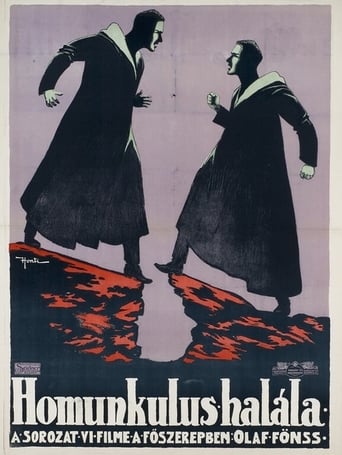
- Otto Rippert is better known today for directing the monumental serial 'Homunculus' (1916), and 'The Plague in Florence' fits his taste for grand, morally charged spectacle.
- The plot is not a straightforward historical recreation but a symbolic moral tale in which Florence becomes an emblem of corruption, decay, and divine punishment.
- The arrival of Death as a figure is a striking example of German silent cinema's fascination with personified abstractions and fatalistic imagery.
- The film is often discussed alongside early horror cinema because its imagery of plague, erotic excess, and death prefigures later horror and gothic traditions.
- As with many German silent films of 1919, the original release materials, intertitles, and production records are incompletely documented.
- The cast includes Marga von Kierska, Anders Wikman, and Theodor Becker, names that appear in early German film records but are less widely known today than the film's director.
- The title is sometimes encountered in reference works with slight variation in translation, but the commonly used English title is 'The Plague in Florence.'
What Critics Said
Contemporary reviews are not well preserved in readily accessible sources, so precise period critical response is difficult to reconstruct. In later scholarship, the film is generally treated as an interesting but obscure example of postwar German symbolic cinema rather than a canonical masterpiece. Its reputation rests more on its subject matter, historical context, and association with Otto Rippert than on widespread modern availability or fame. Where discussed, it is usually appreciated for its grim allegorical ambition, visual stylization, and contribution to the development of horror motifs in silent cinema.
What Audiences Thought
There is no detailed surviving audience-response record widely cited in modern references, which is typical for a 1919 silent film that was not preserved in the continuous popular repertory. The film likely played to audiences accustomed to theatrical, melodramatic, and sensational subject matter, especially in the turbulent postwar German market. Its combination of sex, sin, and plague would have made it provocative, memorable, and potentially controversial. Today, its audience is mainly film scholars, archive viewers, and silent-cinema enthusiasts rather than general theatrical audiences.
Film Connections
Influenced By
- Medieval and Renaissance plague legends
- Biblical morality tales
- German expressionist theatrical traditions
- Symbolist literature and allegorical drama
- European historical melodrama
This Film Influenced
- German silent horror and allegorical cinema of the 1920s
- Later plague and death-personification films
- Historical horror films using moral corruption as a central motif
You Might Also Like
More Drama Films
View allMore from Otto Rippert
View allFilm Restoration
The film is not widely available in mainstream circulation, but it is generally regarded as surviving only in limited archival form or as a rare silent title with incomplete access. Information on restoration and current holdings is sparse in commonly available reference sources, so its preservation status should be treated as partially documented rather than fully secure. It is not considered a readily accessible repertory title.