
Faust
"A soul on loan"
Keys: Space play/pause · ←/→ 10s · F fullscreen · M mute · </> speed
About this film
Murnau's Faust wagers his soul as heaven and hell contest for dominion over a medieval scholar. Lavish UFA effects visualize temptation, plague, and redemption in silent spectacle.
Cast & crew
More films like this
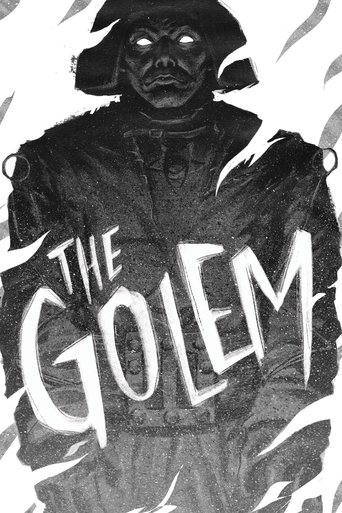
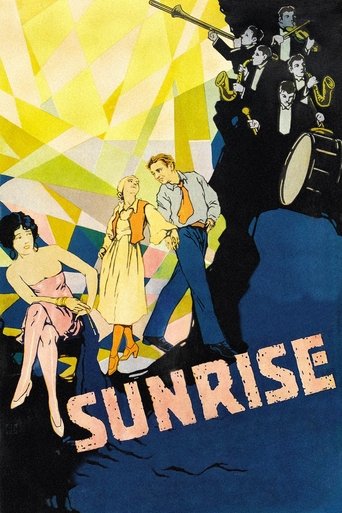
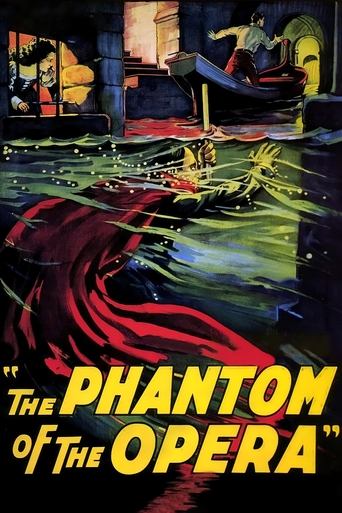
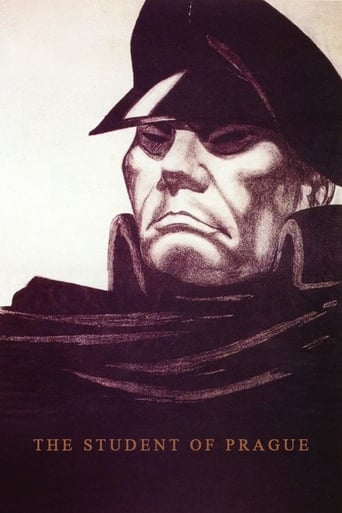
More Fantasy films
View all →

More from F. W. Murnau
View all →
More about this film
About the production
Release dateOctober 14, 1926 (Germany), December 1926 (United States)
BudgetApproximately 2 million Reichsmarks (equivalent to about $8-10 million USD today), making it among the costliest German films of its era
Box officeWhile exact figures are lost to history, the film was a commercial success in Germany and internationally, though it did not fully recoup its enormous production costs during its initial run
ProductionUniversum Film AG (UFA)
Filmed inUFA Studios in Babelsberg, Germany, Various locations in the Harz Mountains for exterior shots
The production was notoriously difficult and expensive, requiring groundbreaking special effects that took months to create. The famous transformation scenes used multiple exposures and camera tricks that were revolutionary for the time. Murnau insisted on authentic period costumes and massive, detailed sets that cost a fortune to construct. The plague sequence required hundreds of extras and elaborate makeup effects. The film's production timeline extended over six months, unusually long for the era.
Themes
The struggle between good and evilThe corruption of powerRedemption through sufferingThe limits of human knowledgeThe nature of faith and doubt
Themes & topics
pact with the devilalchemistsupernaturaltransformationbet with Godplagueinnocence corruptedredemptioneternal damnationblack magicagingsoul sellingheaven and hellmoral strugglegothic horror
Historical background
UFA's 1926 Faust was among the costliest German productions of its day, competing with Hollywood imports.
Why this film matters
Its lighting and miniature work influenced fantasy cinema and discussions of German Romantic screen style.
Making of
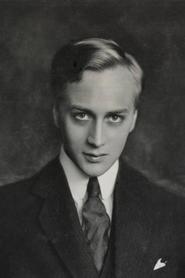
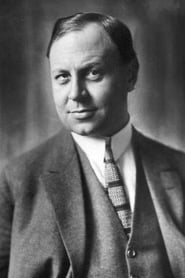
The making of 'Faust' was especially ambitious and costly productions of the silent era. Murnau, coming off the success of 'The Last Laugh' and 'Nosferatu', was given virtually unlimited resources by UFA to create his masterpiece. The production employed over 200 technicians and artists, including the cinematographer Carl Hoffmann. The special effects team, led by Ernst Kunstmann, pioneered techniques that would influence cinema for decades, including complex multiple exposures, forced perspective, and in-camera effects. The transformation sequences required Ekman to be filmed multiple times with different makeup and lighting, then composited together. The massive sets, particularly the town square and Faust's laboratory, were built full-scale and could be reconfigured for different scenes. Jannings, already a major star in Germany, was given creative freedom to develop his interpretation of Mephisto, contributing many of the character's distinctive gestures and expressions. The production was plagued by technical difficulties, with the primitive film stock of the era struggling to capture the complex lighting setups Murnau demanded.
What critics said
German critics debated its pacing; international revival audiences admire its visual scale and Jannings's Mephisto.
Did you know?
- This was F.W. Murnau's last German film before moving to Hollywood to make 'Sunrise' for Fox
- Emil Jannings' performance as Mephisto was so powerful that he was immediately offered a contract by Paramount, making him one of the first major European stars to work in Hollywood
- The special effects for the giant Mephisto looming over the town were created by having Jannings stand on a platform while the camera filmed through a painted glass plate
- The film's famous opening sequence with the four horsemen of the apocalypse was considered so terrifying that some theaters refused to show it uncut
- Gösta Ekman had to endure hours of makeup each day to transform from old to young Faust, using a combination of prosthetics and camera tricks
- The original negative was heavily damaged during World War II, and modern versions are reconstructed from multiple sources
- Murnau was obsessed with authenticity and hired actual alchemists as consultants for the laboratory scenes
- The film's budget was so massive that it nearly bankrupted UFA, leading to their financial takeover by Paramount and MGM
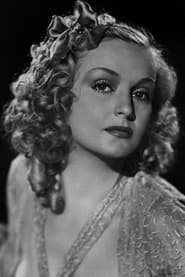
- Camilla Horn was discovered by Murnau while working as a secretary and this was her film debut
- The famous scene where Mephisto creates a cloak of bats used real bats trained to fly on cue
Awards & recognition
- Best Artistic Picture at the 1926 Venice Film Festival
- Best Foreign Film by the National Board of Review (1927)
Visual style
The cinematography by Carl Hoffmann represents among the leading innovative and influential visual achievements of silent cinema. Hoffmann employed groundbreaking techniques including complex multiple exposures, elaborate tracking shots, and revolutionary use of lighting to create the film's supernatural atmosphere. The famous opening sequence with the four horsemen was filmed using forced perspective and miniature models to create an epic scale. The transformation scenes required up to four separate exposures combined in-camera, a technical feat that was nearly impossible in 1926. Hoffmann and Murnau developed a system of using mirrors and prisms to achieve visual effects that would later require optical printers. The lighting design was particularly sophisticated, using chiaroscuro effects to emphasize the moral struggle between light and darkness. The camera movement was unusually fluid for the period, with sweeping crane shots and dynamic angles that enhanced the film's supernatural quality. Each major set had its own lighting scheme designed to reflect the emotional and moral state of the characters.
Innovations
'Faust' pioneered numerous technical innovations that would influence cinema for decades. The special effects team developed revolutionary techniques for creating supernatural transformations, including complex multiple exposures that allowed actors to appear transparent or change form on screen. The film's use of miniature models and matte paintings created epic scenes that were impossible to film practically. The camera department built custom equipment for achieving impossible camera movements, including early versions of crane shots and tracking shots. The makeup department, led by Wolfgang Lenz, created prosthetic effects for the aging sequences that were remarkably convincing for the period. The film's editing techniques, particularly its use of cross-cutting between heaven, earth, and hell, were innovative in their complexity and narrative sophistication. The lighting design employed new types of lamps and diffusion techniques to create the film's distinctive atmosphere. Perhaps most significantly, the film demonstrated how visual effects could serve narrative and emotional purposes rather than mere spectacle, establishing a principle that would guide special effects cinema thereafter.
Music
As a silent film, 'Faust' was accompanied by live musical scores during its original theatrical run. The German premiere featured a specially composed score by Hanns Eisler, though most theaters used their own compiled scores. The original American release used compiled classical music, particularly works by Wagner and Liszt that complemented the film's Germanic themes. Modern restorations have been accompanied by newly composed scores, most notably a 1995 version by Timothy Brock and a 2006 orchestral score by Bernd Thewes. The original cue sheets, which survive in archives, suggest Murnau wanted music that emphasized the film's emotional contrasts, using Wagnerian leitmotifs for the main characters and dissonant modern music for Mephisto's scenes. The film's rhythmic editing and visual composition demonstrate Murnau's sophisticated understanding of how music and image could work together, anticipating techniques that would become standard in sound cinema.
Famous quotes
Mephisto: 'I am the spirit that negates! And rightly so, for all that comes to be deserves to perish!'
Faust: 'I have studied philosophy, law, medicine, and even theology, yet I remain a fool!'
Mephisto: 'You seek power, old man? I can give you youth, wealth, and pleasures beyond your imagination!'
Gretchen: 'My heart is pure, but my love for you has made me a sinner!'
Archangel Michael: 'Though he has strayed, a good man's soul shall never be lost!'
Memorable scenes
- The epic opening sequence where Mephisto spreads his dark wings over the town, using revolutionary special effects to create a massive, shadowy figure that dwarfs the buildings below
- The plague sequence where Faust desperately tries to save his town, featuring hundreds of extras and disturbing makeup effects that were terrifying for 1926 audiences
- Faust's transformation from old man to young, achieved through multiple exposures and makeup that remains technically impressive even by modern standards
- The famous ride through the skies on Mephisto's magical cloak, which appears as a flowing cape of bats
- The final scene where Gretchen's soul ascends to heaven while Faust is redeemed, featuring beautiful lighting effects and emotional power that still resonates today
What audiences thought
Initial audience response was mixed, with many contemporary viewers finding the film's dark themes and disturbing imagery challenging. The plague sequence and Mephisto's supernatural appearances were particularly intense for 1926 audiences. However, the film's spectacular visuals and Jannings' charismatic performance attracted large crowds, especially in major European cities. American audiences were divided, with some finding the German Expressionist style too stylized, while others were captivated by its visual poetry. Over time, as the film gained historical significance, audience appreciation has grown tremendously. Modern audiences, particularly film enthusiasts and students, regard it as a essential viewing experience. The film's restoration and availability on home video and streaming platforms have introduced it to new generations, who continue to be amazed by its technical achievements and emotional depth.
Film connections
Influenced by
- Goethe's 'Faust' (Part I)
- Marlowe's 'Doctor Faustus'
- German Expressionist painting
- Gothic literature
- Nordic mythology
- Christian iconography
- Romantic literature
- Medieval alchemical texts
This film influenced
- The Devil and Daniel Webster (1941)
- Angel Heart (1987)
- The Ninth Gate (1999)
- Constantine (2005)
- Hellboy (2004)
- The Imaginarium of Doctor Parnassus (2009)
- Disney's Fantasia (The Night on Bald Mountain sequence)
- The Seventh Seal (1957)
- Rosemary's Baby (1968)
- The Exorcist (1973)
Film restoration
The film has been extensively restored, with the most comprehensive restoration completed in 2001 by the Friedrich-Wilhelm-Murnau-Stiftung. This restoration combined elements from five different sources, including original camera negatives held in archives around the world. The original German negative was heavily damaged during World War II, with about 15% of the film considered lost until various international copies were discovered and used for reconstruction. The restored version includes tinted sequences that replicate the original theatrical presentation, with different colors representing different emotional states (blue for night scenes, amber for daylight, red for hell sequences). The film is preserved in the collections of major archives including the Library of Congress, the British Film Institute, and the Bundesarchiv in Germany. Multiple high-quality digital versions exist, ensuring the film's survival for future generations.
Where to watch
- The Criterion Collection (Blu-ray/DVD)
- The Criterion Channel (streaming)
- Kino Classics (Blu-ray)
- MUBI (streaming)
- Kanopy (free streaming with library card)
- YouTube (official archive versions)
- Various public domain streaming platforms
- Film museums and cinematheques during special screenings
- Turner Classic Movies (occasional broadcasts)
- University film collections and archives