The Revenge of the Homunculus
Plot
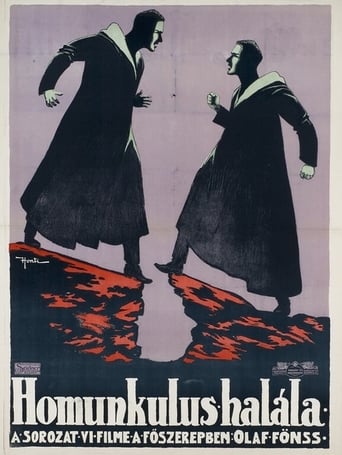
Richard Ortmann, the artificial being known as Homunculus, has risen to a position of immense corporate and political power, effectively becoming the head of a vast institution representing the country's capital and authority. Although he once sought human connection, he now rejects the possibility of love and emotional attachment, seeing human weakness as something to be eliminated rather than understood. His growing detachment hardens into a catastrophic objective: the destruction of mankind itself. As his ambitions expand, the film frames his revolt not simply as a personal vendetta but as a chilling metaphor for cold, mechanized power turning against humanity. The story develops as a dark vision of a society threatened from within by a being created by science and then corrupted by dominance, pride, and isolation.
About the Production
The film was part of the German serial cycle centered on the Homunculus figure, one of the major early science-fiction and horror concepts in European cinema. It was directed by Otto Rippert, a filmmaker closely associated with large-scale serial production and fantasy imagery in the German silent era. Surviving documentation on exact budgets, release strategy, and day-to-day production circumstances is limited, which is common for pre-1920 German serial films. Like many silent-era productions from World War I-era Germany, it was made under conditions of wartime scarcity and with a strong emphasis on stylized spectacle, symbolism, and melodramatic storytelling. The film is commonly discussed in relation to the broader six-part Homunculus cycle, though title variants and modern cataloguing can make identification and episode ordering complicated.
Historical Background
This film was made in 1917, during the final years of World War I, a period marked by severe social strain, political instability, and widespread uncertainty across Europe. German cinema in this period was developing rapidly under wartime conditions, with domestic production encouraged by isolation from foreign imports and by a growing appetite for visually striking entertainment. The Homunculus character reflects contemporary anxieties about science, mechanization, authority, and the consequences of creating life without moral responsibility. In historical retrospect, the film also stands as an early example of the German fascination with the artificial human, a motif that would later appear in more famous works and become one of the defining ideas of science-fiction cinema. Its themes of corporate power and anti-human domination give it lasting relevance, especially when viewed against the broader cultural atmosphere of industrial modernity and wartime dehumanization.
Why This Film Matters
The film is significant as one of the early milestones in cinematic science fiction and horror, especially within German silent cinema. It helped establish the artificial-man narrative as a powerful metaphor for technological ambition, ethical collapse, and the limits of human control. Film historians often regard the Homunculus cycle as a precursor to later German expressionist and dystopian traditions, influencing the visual and thematic vocabulary of mad-science stories, robotic or engineered beings, and apocalyptic speculation. Although not nearly as universally famous as later German classics, it occupies an important place in the genealogy of screen monsters and the broader evolution of horror and science fiction as serious cinematic genres. Its depiction of a created being who seeks to dominate or destroy humanity has remained culturally resonant because it anticipates enduring modern fears about science, power, and systems that turn against their creators.
Making Of
The Revenge of the Homunculus emerged from a period in German cinema when serial storytelling, supernatural spectacle, and philosophical allegory were often combined in ambitious productions. Otto Rippert, working with Deutsche Bioscop, helped shape a cinematic world in which a scientifically manufactured human could stand in for anxieties about industrialization, social control, and the loss of human values. The surviving historical record does not preserve detailed production diaries or extensive crew accounts, so many specific behind-the-scenes facts remain undocumented. Even so, the film is understood as part of a carefully designed serial concept in which the Homunculus figure becomes an evolving emblem of power, alienation, and catastrophe across multiple episodes. Its cast and production circumstances place it firmly within the network of German and Scandinavian silent-film talent circulating through European production culture during the First World War era.
Visual Style
The film's visual style is associated with the stylized, atmospheric approach common in German silent fantasy productions of the 1910s. Cinematography from this period typically emphasized strong contrasts, dramatic blocking, symbolic compositions, and expressive settings rather than naturalistic realism. In a film about an artificial man ascending to power, the visual language likely reinforced themes of cold authority and dehumanization through stark framing and theatrical imagery. While specific shot-by-shot technical descriptions are limited by the film's age and the survival status of documentation, it is understood as part of the visual tradition that would later mature into Expressionism, with an emphasis on mood, allegory, and visual psychology.
Innovations
The film's principal achievement lies in its early and influential use of the artificial-human premise within a serialized horror-science-fiction framework. Its significance is more conceptual and narrative than mechanically innovative, though it contributed to the cinematic development of fantastical spectacle, episodic suspense, and stylized visual storytelling. By dramatizing a created being who evolves into a political and existential threat, the film helped establish a model for later science-fiction villains and allegorical monsters. It also represents an important stage in the German film industry's experimentation with large-scale genre production during the silent era.
Music
As a silent film, The Revenge of the Homunculus did not have an original synchronized soundtrack. Like most films of its era, it would have been accompanied by live music in theaters, often varying according to venue, pianist, organist, or small orchestra. No universally standardized score is known to survive for the film. Modern screenings may use reconstructed or newly commissioned accompaniments, but these are not original to the 1917 production.
Memorable Scenes
- Homunculus revealing his complete emotional estrangement from human love and embracing a vision of pure destruction.
- The artificial being's rise to corporate and political authority, turning the machinery of power into an instrument of terror.
- The ominous progression from personal alienation to a full-scale plan for the annihilation of mankind, which gives the film its apocalyptic force.
Did You Know?
- The film belongs to the larger Homunculus serial cycle, an important early German example of science-fiction horror and artificial-life mythmaking.
- Otto Rippert was known for ambitious serials and fantasy films; this production fits neatly into the expressionist and proto-expressionist tendencies of German cinema before the formal peak of Expressionism after 1920.
- The central Homunculus concept draws on a long European literary and alchemical tradition of the artificially created human being, making the film part of a much older cultural lineage than cinema itself.
- The movie is often discussed alongside other early German films about dangerous science, authoritarian control, and dehumanized power, themes that became especially resonant in later film history.
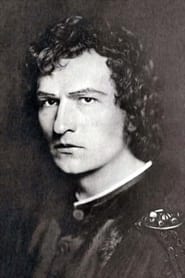
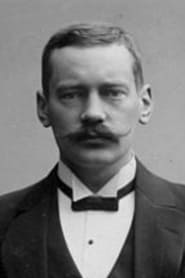
- The film's cast includes Maria Carmi, Aud Egede-Nissen, and Olaf Fønss, all of whom were prominent silent-era performers in European cinema.
- Because the film is associated with a serial, information about exact episode segmentation, surviving prints, and contemporary release forms can vary between archival and reference sources.
- The title is frequently rendered in English as 'The Revenge of the Homunculus,' but catalogues may also emphasize the figure simply as 'Homunculus' or list related episode titles from the serial cycle.
- The film reflects early cinema's fascination with modernity, corporate power, and the idea that a scientific creation could become morally or politically superior to humans and then turn destructive.
- As with many silent films from the era, complete preservation status is difficult to verify across all territories because prints and intertitles may survive in fragmented or restored form.
- Its reputation today rests more on film-historical significance than on mainstream popularity, making it a key title for scholars of early horror and science fiction.
What Critics Said
Contemporary critical reception is not well documented in surviving English-language sources, and much of what is known comes from later historical reassessment rather than detailed reviews from 1917. In its own time, it would likely have been received as a sensational and ambitious serial work, aimed at audiences drawn to mystery, spectacle, and melodramatic conflict. Modern critics and historians tend to view it as an important early horror-science-fiction hybrid rather than a polished canonical masterpiece, emphasizing its imaginative premise and its place within German genre development. Its reputation has grown mainly through archival scholarship, restoration work, and retrospective studies of pre-expressionist cinema. Today it is valued for its conceptual ambition, historical importance, and role in the evolution of the artificial-human myth in film.
What Audiences Thought
Specific audience response data from 1917 is not available, and no reliable box-office records have survived in a form that allows precise reconstruction. As a serial-linked fantasy and horror production, it was likely intended to attract audiences who enjoyed sensational dramatic turns, exotic visualizations, and larger-than-life villainy. Modern audiences who encounter it typically do so through archives, retrospectives, or scholarly screenings, where it is appreciated more as a historical artifact and an early genre landmark than as a mainstream entertainment. Its appeal today is strongest among viewers interested in silent cinema, early horror, German film history, and the development of science-fiction ideas on screen.
Film Connections
Influenced By
- The alchemical and literary homunculus tradition
- Mary Shelley's Frankenstein (1818)
- Late 19th-century mad-science and artificial-life fiction
- German stage melodrama and fantasy traditions
- Early cinematic serials
This Film Influenced
- Metropolis (1927)
- Frankenstein (1931)
- The Golem: How He Came into the World (1920)
- Alraune (1928)
- The Cabinet of Dr. Caligari (1920)
- Mad Love (1935)
You Might Also Like
More Horror Films
View allMore from Otto Rippert
View allFilm Restoration
The film is not widely considered a complete mainstream surviving standard, but it is not generally treated as wholly lost; it is associated with the broader Homunculus serial and may survive in archive materials, fragmentary form, or restored documentation depending on source. Because silent-era records are inconsistent, the safest assessment is that it has a complicated archival status and is known primarily through preservation references, scholarly discussion, and archival holdings rather than through universal commercial availability.