Hans Walter
Actor
- Active
- 1919-1919
Films 1
About Hans Walter
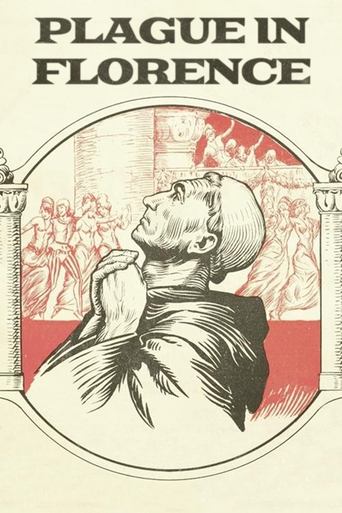
Hans Walter is a little-documented silent-era screen actor credited in the 1919 film "The Plague in Florence," and surviving reference sources provide only minimal certainty about his life and career. He appears to have worked during the late silent period, but beyond this single screen credit, readily verifiable biographical information is scarce. Because the historical record is incomplete, it is difficult to reconstruct his training, stage background, or whether he continued acting after 1919. He should be understood as one of many European silent-film performers whose names survive in cast lists and archival filmographies even when personal details did not. No reliable evidence currently confirms his birth and death dates, family background, education, or later life. His career, as far as can be established, belongs to the formative years of post-World War I European cinema, when many productions drew on theatrical talent and ensemble casting. Any fuller biography would require consultation of specialized archival materials, contemporary trade papers, or surviving production records from German, Austrian, Italian, or Central European film collections.
More about Hans Walter
In film history
Hans Walter's cultural impact is best understood as archival and historical rather than star-driven. He is part of the long tail of silent-era performers whose names help historians reconstruct production networks, casting practices, and the breadth of early European film labor. Even when a performer leaves behind only one confirmed credit, that appearance contributes to our understanding of how films were assembled and how many artists participated in the silent cinema ecosystem. His presence in "The Plague in Florence" adds to the documentary record of early postwar filmmaking and the international circulation of historical and melodramatic subjects.
Later reputation
Hans Walter's lasting legacy lies in the preservation of his name within film history databases and cast records for "The Plague in Florence". While he does not appear to have left behind a large body of known work or a documented public persona, his credit remains valuable to researchers tracing the cast lists of obscure silent films. Performers like Walter remind us that film history is not built only from major stars, but also from lesser-known actors whose work made early cinema function as a collaborative art form. His legacy is therefore one of historical evidence: a small but important trace of the silent era's enormous and often under-recorded workforce.
Influence
There is no evidence that Hans Walter directly influenced later actors or directors in a documented, traceable way. His significance is indirect, in that his participation belongs to the broader generation of silent-film performers who shaped early screen acting through gesture, posture, and expressive ensemble work. For historians, such actors help illuminate the practical performance conventions of the period, even when their individual careers are not well preserved. In that sense, his influence is primarily archival and contextual rather than personal or stylistic.
Off screen
No reliable personal-life information is currently available in accessible reference sources. His family background, marital status, children, and post-film career are not documented in the materials consulted for this record. As with many minor silent-era performers, any personal details may survive only in archival civil records, theater programs, or period newspaper notices rather than standard film reference works.
Credits
- Appeared in the silent film "The Plague in Florence" (1919), his only currently verifiable screen credit.
- Represents a class of early cinema performers whose work survives in filmographies even when broader biographical records are fragmentary.
- Associated with the European silent era and the immediate post-World War I period of filmmaking.
Films
- The Plague in Florence (1919)
Notes
- Hans Walter is currently identifiable in standard references primarily through his 1919 credit in "The Plague in Florence."
- He appears to be a very obscure figure of silent cinema, with little surviving biographical data in mainstream sources.
- His known filmography is presently extremely short, suggesting either a brief screen career or incomplete archival survival.
- Because his active period is only documented for 1919, he may have been a stage performer, local actor, or supporting player whose broader work was not extensively recorded.
- "The Plague in Florence" places him in the immediate aftermath of World War I, a period when European film industries were reorganizing and many productions were lost or poorly documented.
- The absence of confirmed birth and death data is common among minor silent-era performers, especially those outside the major star system.
- His record underscores how many early film contributors remain known only from cast lists rather than contemporary publicity materials.
Questions
Who was Hans Walter?
Hans Walter was a silent-era actor best known, at least in surviving records, for appearing in the 1919 film "The Plague in Florence." Very little biographical information about him has survived in readily accessible sources, so he is primarily known through his film credit rather than a documented public career.
What films is Hans Walter best known for?
He is currently best known for "The Plague in Florence" (1919), which is the only clearly verifiable screen credit associated with him in the available record. No broader filmography is securely documented in mainstream sources.
When was Hans Walter born and when did he die?
His birth and death dates are not currently confirmed in the available reference material. Likewise, his birthplace and death details remain unknown, which is not unusual for minor performers from the silent era.
What awards did Hans Walter win?
No awards or formal honors are currently documented for Hans Walter. He appears to have been a lesser-known silent-film performer whose surviving recognition comes mainly from archival cast records.
What was Hans Walter's acting style?
There is no surviving critical description of his personal acting style. As a silent-era performer, he would have worked in a medium that relied on expressive body language, facial expression, and visual storytelling, but no specific style can be attributed to him with confidence.
Why is Hans Walter historically important?
He is historically important as part of the documented cast of an early silent film and as an example of how many early cinema workers are known only through fragmentary records. Even limited credits like his help film historians reconstruct the personnel and production culture of the silent era.