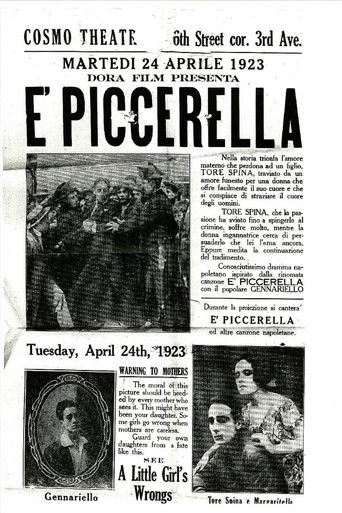
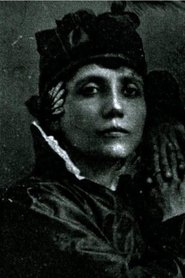
Elvira Notari
Director
Born: February 10, 1875 in Salerno, Kingdom of Italy Died: December 17, 1946 Active: 1906-1930 Birth Name: Elvira Coda
Films
1 film
About Elvira Notari
Elvira Notari (1875-1946) was an Italian film director, screenwriter, and producer who is considered prolific female directors of the silent era. Born in Salerno, Italy, she began her career as a milliner before transitioning to cinema, founding the film company Dora Film with her husband Nicola Notari in Naples in 1906. Over her remarkable career spanning more than two decades, she directed approximately 60 feature films and wrote or produced over 100 more, making her productive filmmakers of her time regardless of gender. Notari specialized in melodramas and neorealist-style narratives that often depicted the struggles of working-class Neapolitan life, with a particular focus on strong female protagonists. Her films were known for their authentic location shooting in the streets of Naples and their use of local non-professional actors, giving her work a documentary-like quality that was ahead of its time. Despite facing censorship from the Fascist regime in the 1920s, she continued to produce films until 1930, after which she transitioned to running a cinema until her death in 1946. Her work was largely forgotten for decades but has experienced a major critical reappraisal since the 1990s, establishing her as a crucial figure in early cinema history and feminist film studies.
The Craft
Behind the Camera
Elvira Notari's directing style was characterized by its raw realism and deep connection to Neapolitan culture. She favored authentic location shooting over studio sets, capturing the vibrant streets and neighborhoods of Naples with a documentary-like eye. Her films often featured non-professional local actors, lending an authenticity that was revolutionary for the time. Notari's visual approach emphasized emotional storytelling through close-ups and expressive performances, particularly focusing on the experiences of women and the working class. She incorporated elements of popular Neapolitan theater and music, creating a unique hybrid that appealed to local audiences while maintaining universal themes of love, sacrifice, and social injustice.
Milestones
- Founded Dora Film production company in 1906
- Directed over 60 feature films
- Pioneered location shooting in Naples
- Created the first female-led film studio in Italy
- Developed neorealist techniques decades before Italian Neorealism
- Produced films despite Fascist censorship
- Became one of cinema's earliest and most prolific female directors
Best Known For
Must-See Films
Accolades
Special Recognition
- Posthumously recognized as a female filmmaker
- Featured in major retrospectives at MoMA and Cineteca Italiana
- Honored in feminist film studies curricula worldwide
- Subject of academic research on early cinema
- Celebrated in Italian cultural heritage initiatives
Working Relationships
Worked Often With
Studios
Why They Matter
Impact on Culture
Elvira Notari's impact on cinema extends far beyond her impressive filmography, as she fundamentally challenged gender barriers in the film industry during an era when female directors were virtually nonexistent. Her work provided a crucial counter-narrative to the dominant male perspective in early cinema, centering stories around women's experiences and working-class life with unprecedented authenticity. Notari's use of location shooting and non-professional actors anticipated the Italian Neorealist movement by two decades, influencing filmmakers like Roberto Rossellini and Vittorio De Sica. Her films captured and preserved Neapolitan culture at a critical historical moment, documenting dialects, traditions, and social conditions that might otherwise have been lost. The rediscovery of her work in the 1990s sparked a reevaluation of women's contributions to early cinema and has made her an essential figure in feminist film studies, challenging the male-dominated narrative of film history.
Lasting Legacy
Elvira Notari's legacy as a female filmmaker has experienced a remarkable renaissance in recent decades, transforming her from a forgotten figure to. Her films, once thought lost, have been rediscovered and restored by institutions including the Cineteca Italiana and the Museum of Modern Art, introducing new generations to her work. Notari is now recognized as Italy's first female film director and. Her influence on later Italian cinema, particularly the neorealist movement, is increasingly acknowledged by film historians who see her as a crucial precursor to directors like De Sica and Rossellini. The Dora Film archive she created has become an invaluable resource for understanding early 20th-century Neapolitan culture and cinema. Today, Notari stands as a symbol of women's creative potential in filmmaking and continues to inspire discussions about gender representation in the film industry, with film festivals and academic institutions regularly celebrating her contributions to cinema.
Who They Inspired
Elvira Notari's influence on subsequent generations of filmmakers is both direct and indirect, spanning from her contemporaries in Italian cinema to modern feminist filmmakers worldwide. Her realistic approach to storytelling and use of authentic locations directly anticipated the Italian Neorealist movement, with directors like Roberto Rossellini and Luchino Visconti later employing similar techniques to depict postwar Italian life. The emphasis on strong female protagonists and working-class narratives in Notari's films paved the way for later Italian directors who focused on social issues, including Pier Paolo Pasolini and the Taviani brothers. In the realm of women's cinema, Notari became an inspiration for female directors who followed, from Italian filmmakers like Liliana Cavani to international directors such as Agnès Varda and Mira Nair. Her success in running her own production company demonstrated that women could thrive as independent filmmakers, encouraging the establishment of women-led production companies throughout the 20th century. Film scholars and feminist critics frequently cite Notari as evidence that women have always been integral to cinema's development, challenging the historical narrative that has marginalized female contributions to the medium.
Off Screen
Elvira Notari was born Elvira Coda in Salerno and moved to Naples where she met and married Nicola Notari, who became her lifelong collaborator. Together they built Dora Film into one of Southern Italy's most successful production companies, with Elvira serving as the creative force while Nicola handled cinematography. The couple had three children: Eduardo, who later worked in the family business, and two daughters. Despite facing personal and professional challenges, including the death of her husband in 1929 and increasing political pressure from the Fascist regime, Notari remained dedicated to cinema until her final years. She lived through two World Wars and witnessed the dramatic transformation of cinema from silent films to talkies, adapting her business model accordingly but never returning to directing after 1930.
Education
Limited formal education; trained as a milliner before entering film industry
Family
- Nicola Notari (1906-1929)
Did You Know?
- She was one of the first women to own and operate a film production company
- Her production company Dora Film was named after her mother
- Notari directed more films than any other woman in the silent era
- Many of her films were considered controversial by the Catholic Church
- She was forced to add 'moral' endings to her films to avoid censorship
- Her films were primarily distributed in Italy and Italian-American communities
- Notari often used local Neapolitan dialect in her films rather than standard Italian
- She was completely self-taught in filmmaking with no formal training
- Her work was rediscovered by film historian Giuliana Bruno in the 1990s
- Only about 20 of her 60+ films survive today
- She continued running a cinema after retiring from directing
- Her films often featured strong-willed female protagonists who defied social conventions
In Their Own Words
I make films about the people I know, the streets I walk, the life I live
A woman's perspective in cinema is not just different, it's necessary
The streets of Naples are my studio, the people are my actors
If they won't let women tell stories, then women must build their own stages
Every frame should contain truth, even when telling fiction
Frequently Asked Questions
Who was Elvira Notari?
Italian on YTB.my. She founded and ran the Dora Film production company in Naples and directed over 60 films, making her.
What films is Elvira Notari best known for?
Titles linked here include 'Nfama! (1917), A Piedigrotta (1920).
When was Elvira Notari born and when did she die?
Born February 10, 1875; died December 17, 1946.
What awards did Elvira Notari win?
During her lifetime, Elvira Notari did not receive formal awards or recognition, as her work was largely overlooked by the film establishment. However, she has been posthumously honored through major retrospectives at institutions like MoMA and is now celebrated as a figure in feminist film studies.
What was Elvira Notari's directing style?
Notari's directing style emphasized realism and authenticity, using location shooting in Naples streets and non-professional local actors. She focused on melodramatic stories about working-class life, particularly women's experiences, and incorporated elements of Neapolitan culture, music, and dialect into her films.