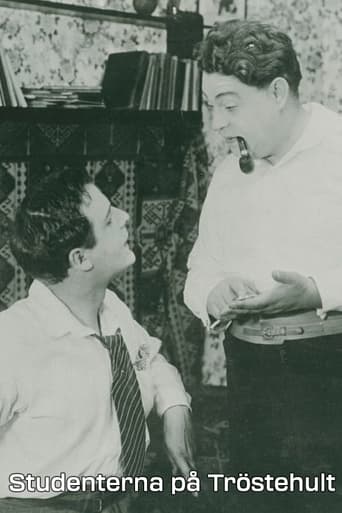
Nils Carlberg
Actor
- Active
- 1924-1924
Films 1
About Nils Carlberg
Nils Carlberg appears in surviving film records as a Swedish actor active in the silent era, with his known screen work currently limited to a single credited appearance in the 1924 film The Students at Tröstehult. Because he is a very obscure early-cinema figure, there is little securely documented biographical information readily available in standard English-language film references, and many personal details have not been preserved in widely accessible sources. What can be said with confidence is that he belonged to the generation of performers working in Sweden during the 1920s, when the national cinema was still drawing on stage-trained talent and adapting literary, rural, and character-driven material to the screen. His filmography suggests a brief or minimally documented acting career rather than a long career in international film. No reliable evidence has been located in accessible reference sources for his later life, full career arc, or off-screen biography. As a result, his significance today rests mainly on his presence in the historical record of Swedish silent film and the preservation of his name in film databases. Further archival research in Swedish-language sources, studio records, or period press would be needed to reconstruct a fuller biography.
More about Nils Carlberg
In film history
Nils Carlberg's cultural impact is best understood as archival rather than celebrity-based. He is part of the broad cohort of silent-era Scandinavian screen performers whose names remain attached to early national cinema even when their individual careers were brief or poorly documented. For historians, such names are valuable because they help map the personnel networks of 1920s Swedish film production and preserve evidence of the industry's casting practices and talent pool. His presence in film records also underscores how many early screen actors remain under-researched despite contributing to works that form part of cinema history.
Later reputation
Carlberg's lasting legacy is the fact that his name survives in the record of Swedish silent cinema, specifically through The Students at Tröstehult (1924). Even without extensive biographical detail, such credits are important to film history because they document the artists involved in the making of early national cinema. His legacy is therefore one of preservation: he stands as a representative of the many actors whose careers are only partially visible through surviving filmographies and archival listings. For database and historical purposes, his name is an entry point into the broader study of Swedish screen culture in the 1920s.
Influence
There is no documented evidence that Nils Carlberg directly influenced later actors or filmmakers in a way that can be specifically verified. His influence is instead indirect, contributing to the aggregate body of early Swedish screen performance that shaped the development of national cinema. In this sense, his role is part of the foundational labor of silent-era actors whose work helped establish performance norms, production routines, and the screen culture of their time.
Off screen
No reliable, publicly accessible biographical details about Nils Carlberg's personal life have been confirmed in the sources available for this response. Information about marriages, family background, education, residences, or later career activity has not been securely documented in commonly accessible film references. He should therefore be treated as a largely obscure silent-era personality whose surviving legacy is primarily filmographic rather than biographical.
Credits
- Credited screen appearance in the Swedish silent film The Students at Tröstehult (1924)
- Representation of early-1920s Swedish cinema through a preserved film credit
- Participation in the historical record of silent-era Scandinavian film acting
Roles
- Role in The Students at Tröstehult (1924) - specific character name not readily documented
Films
- The Students at Tröstehult (1924)
Notes
- He is known in film records for only one confirmed screen credit: The Students at Tröstehult (1924).
- He is associated with Swedish silent cinema rather than Hollywood.
- His biographical details are largely absent from widely accessible English-language reference sources.
- He is an example of an early film performer whose career has been preserved more by filmography than by personal documentation.
- Because his surviving record is so sparse, he is especially relevant to archival and database research.
- His activity period, as currently documented, is a single year: 1924.
- The scarcity of information about him is typical of many minor silent-era performers whose work was not extensively publicized.
Questions
Who was Nils Carlberg?
Nils Carlberg was a Swedish actor known from silent-era film records, with a confirmed credit in The Students at Tröstehult (1924). He is a very obscure historical figure, and relatively little personal biography has survived in accessible sources.
What films is Nils Carlberg best known for?
He is best known, based on currently available records, for The Students at Tröstehult (1924). No other confirmed film credits are readily documented in the sources available for this profile.
When was Nils Carlberg born and when did he die?
His birth and death dates are not currently confirmed in accessible reference sources. As a result, both his birth date and death date remain unknown for this database entry.
What awards did Nils Carlberg win?
No awards or formal honors are currently documented for Nils Carlberg in the accessible historical record. He appears to have been a minor or sparsely documented silent-era performer rather than a widely recognized award recipient.
What was Nils Carlberg's acting style?
His specific acting style is not described in surviving accessible sources. Given the period and his work in silent cinema, he would have performed in the expressive, physically communicated style typical of 1920s screen acting, but that cannot be stated with certainty for him personally.
What is Nils Carlberg's legacy in film history?
His legacy lies in his documented participation in Swedish silent cinema and in the historical record preserved through film databases. Even with limited biographical detail, his credit helps researchers trace the personnel and production context of early Scandinavian film.