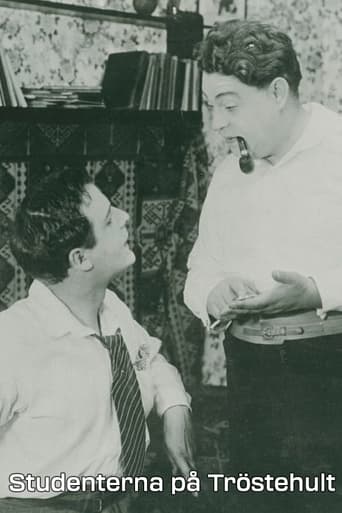
Göta Larsson
Actor
- Active
- 1924-1924
Films 1
About Göta Larsson
Göta Larsson is a very obscure Swedish silent-era screen performer, best documented for her appearance in the 1924 film "The Students at Tröstehult". Available reference sources on classic Scandinavian cinema indicate that she was active in film only briefly, and her name appears in surviving filmographic records rather than in extensive contemporary publicity material. Because of that, very little verified biographical information has survived about her private life, training, or later career. She is best understood as one of the many actors who contributed to the silent-era Swedish film industry during the 1920s, a period when many performers worked in limited numbers of productions and then vanished from the historical record. Her screen credit demonstrates that she was part of the network of local talent supporting Swedish cinema's regional stories and rural comedy-drama traditions. No reliable evidence has been located for a broader film career beyond the 1924 title associated with her. As a result, she remains a minor but legitimate figure in silent Swedish film history, remembered primarily through archival film listings rather than through surviving interviews or major press coverage.
More about Göta Larsson
In film history
Göta Larsson's cultural impact is modest but still meaningful as part of the fabric of early Swedish cinema. Performers like her helped populate the silent film landscape in supporting and ensemble capacities, making it possible for national cinemas to tell localized stories with a sense of authenticity and community. Although she was not a star whose name shaped public taste, her participation in a 1924 production places her within the important developmental phase of Scandinavian silent film when rural settings, social comedy, and literary adaptations were defining features. Her surviving credit also illustrates how many early film careers were brief, under-documented, and vulnerable to historical erasure even when the films themselves remain part of national film memory.
Later reputation
Göta Larsson's legacy lies primarily in archival recognition rather than celebrity. For film historians, her name is valuable because it confirms the participation of lesser-known actors in early Swedish production and helps reconstruct casting networks in the silent era. She stands as an example of the many performers whose work is only partially visible today, reminding researchers that cinema history is not made up solely of major stars and directors but also of short-lived or locally known participants. In that sense, her legacy is documentary and historiographic: she survives as a trace in the record of Scandinavian silent cinema.
Influence
There is no documented evidence that Göta Larsson directly influenced later actors or directors in a traceable way. Her influence, if any, would have been indirect and local, through participation in the ensemble culture of early Swedish filmmaking. Her name nevertheless contributes to the broader understanding of how regional film industries depended on a large pool of working actors whose contributions were often not individually celebrated. For historians, that makes her part of the evidence base that informs knowledge of casting practices and film production in the 1920s.
Off screen
No reliable biographical documentation has been located regarding Göta Larsson's personal life, including family background, marriages, children, or post-film career. Unlike many more prominent silent-era actors, she does not appear to have left behind readily accessible newspaper profiles, memoir references, or studio publicity materials that would clarify her private circumstances. Her historical footprint is therefore almost entirely confined to the surviving credit record for her screen appearance.
Credits
- Appeared in the 1924 Swedish film "The Students at Tröstehult"
- Represents the small group of silent-era Swedish screen performers whose work is preserved mainly in filmographic records
- Associated with early 1920s Scandinavian cinema at a time when regional stories and ensemble casting were central to production
Films
- The Students at Tröstehult (1924)
Notes
- She is known primarily from filmographic records rather than from surviving biographical profiles.
- Her documented screen activity is currently limited to a single year, 1924.
- She appeared during the silent-film period, before synchronized sound became standard in Sweden.
- Her credited work is associated with one of the early 1920s Swedish cinematic productions listed in archival sources.
- Because she was not a major star, very little contemporary press coverage appears to have survived about her.
- Her name helps historians reconstruct the cast lists of obscure silent-era Scandinavian films.
- She is an example of how many early film performers remain partially anonymous in the historical record.
Questions
Who was Göta Larsson?
Göta Larsson was a Swedish actor active in the silent-film era, best known from archival records for appearing in "The Students at Tröstehult" in 1924. Very little verified biographical information survives about her beyond this film credit, which makes her a minor but authentic figure in early Swedish cinema history.
What films is Göta Larsson best known for?
She is best known for "The Students at Tröstehult" (1924), which is the only confirmed film associated with her in the available record. No broader filmography has been securely documented in the sources consulted.
When was Göta Larsson born and when did she die?
Her birth and death dates are not currently documented in reliable, readily accessible sources. The same is true of her birthplace, so her life dates remain unknown at present.
What awards did Göta Larsson win?
No awards or formal honors are currently known for Göta Larsson. She appears to have been a lesser-documented performer whose historical record survives mainly through a single film credit.
What was Göta Larsson's acting style?
No detailed contemporary criticism or performance analysis has survived that would allow for a confident description of her acting style. As a silent-era performer, she would have worked within the expressive conventions of silent film, but specific stylistic traits are not verifiable from the available record.
What is Göta Larsson's legacy in film history?
Her legacy is primarily archival and historical rather than star-driven. She represents the many working actors who helped build early Swedish cinema and whose names remain important to researchers even when their personal stories are largely lost.