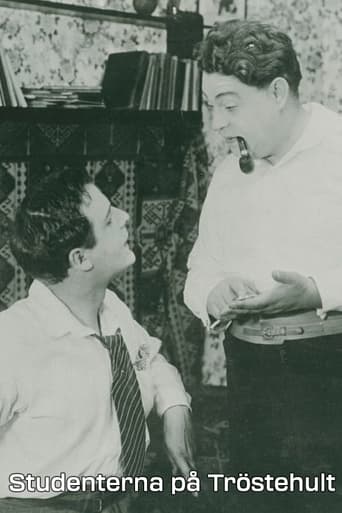
Wera Berg von Linde
Actor
- Active
- 1924-1924
Films 1
About Wera Berg von Linde
Wera Berg von Linde appears in surviving film records as a very obscure Swedish screen performer active in the silent era, with the 1924 feature The Students at Tröstehult listed as her known screen credit. At present, reliable biographical documentation beyond that credit is extremely limited, and major reference sources do not appear to preserve a fuller public profile, detailed life story, or extended filmography under this exact name. Because of that scarcity, it is safest to identify her as a minor or one-off participant in Swedish silent cinema rather than as a broadly documented star of the era. Her presence in The Students at Tröstehult places her within the culturally important early-1920s Scandinavian film world, a period associated with naturalistic acting, literary adaptation, and a strong connection between stage-trained performers and the screen. No authoritative evidence is readily available regarding her later career, training, family background, or whether she continued acting beyond 1924. As a result, her historical significance lies mainly in her contribution to an individual silent film credit and in the broader record of women who participated in early European cinema, even when their careers were only briefly documented. Further archival research in Swedish film magazines, studio records, and contemporary press may be required to establish a more complete biography.
More about Wera Berg von Linde
In film history
Wera Berg von Linde's cultural impact is best understood in archival rather than celebrity terms. Even though her surviving record is extremely small, she is part of the fabric of Swedish silent cinema, an industry that helped establish Nordic film as a major artistic force in the 1910s and 1920s. Performers like her populated productions that documented social life, class identity, and literary adaptation in the interwar period, and their names preserve the collaborative reality of early filmmaking. Her credit also reflects the many women whose screen work has survived only in filmographies and trade references, making them important to historians who reconstruct the silent era.
Later reputation
Her legacy is primarily one of historical documentation: she remains a named participant in an early Swedish film, which allows her to be included in the surviving map of silent-era cinema. While she does not appear to have a widely recorded star legacy, her presence underscores how many contributors to early film were not preserved in later popular memory. For historians, such names are valuable because they help reconstruct cast lists, production networks, and the social history of Scandinavian cinema. In that sense, her lasting legacy is tied to the importance of archival preservation and film scholarship rather than to a large body of surviving performances.
Influence
No direct influence on later performers or directors is documented in currently accessible sources. Any artistic influence would be indirect, through participation in the broader Swedish silent-film milieu that shaped performance norms for later Scandinavian cinema. Because her career is so sparsely recorded, it is not possible to responsibly identify specific actors or filmmakers she influenced. Her importance lies more in the historical record than in a traceable lineage of influence.
Off screen
No reliable public information is readily available about Wera Berg von Linde's personal life, including family background, marriage, children, or activities outside of film. Standard film-reference sources accessible from the surviving record do not appear to preserve enough data to reconstruct her private biography with confidence. Because of the limited documentation, any claims about relationships, education, or later life would be speculative. She should therefore be treated as a historically attested but sparsely documented silent-era performer.
Credits
- Credited screen appearance in the Swedish silent film The Students at Tröstehult (1924)
- Participation in early-1920s Scandinavian silent cinema, a historically significant artistic period
- Representation of the many lesser-documented performers who contributed to national cinema industries during the silent era
Films
- The Students at Tröstehult (1924)
Notes
- Wera Berg von Linde is primarily known today from filmography records rather than from a widely documented star biography.
- Her only readily confirmed screen credit in available sources is The Students at Tröstehult (1924).
- She belongs to the silent-film era, when many performers were recorded only intermittently in surviving archives.
- Her obscurity is not unusual for early European cinema, where many cast members were not consistently profiled in trade publications.
- The preservation of her name helps historians reconstruct cast lists from otherwise poorly documented productions.
- No widely accessible records currently confirm her birth, death, or later professional activities.
- Her surname suggests a Swedish context, consistent with the production environment of The Students at Tröstehult.
Questions
Who was Wera Berg von Linde?
Wera Berg von Linde was a Swedish actor associated with the silent-film era. She is best known from her credited appearance in The Students at Tröstehult (1924), though surviving public information about her life and career is extremely limited.
What films is Wera Berg von Linde best known for?
She is best known for The Students at Tröstehult (1924), which is the only readily confirmed film credit in accessible sources. No additional filmography can be stated with confidence without further archival verification.
When was Wera Berg von Linde born and when did she die?
Her birth and death dates are not currently confirmed in accessible reference sources. Likewise, her birthplace and details about her later life remain unavailable in the surviving public record.
What awards did Wera Berg von Linde win?
No awards or nominations are currently documented for Wera Berg von Linde in the accessible historical record. This is not unusual for minor or poorly documented silent-era performers.
What was Wera Berg von Linde's acting style?
Her acting style is not specifically described in surviving sources. Since she worked in silent cinema, any performance would have relied on visual expression, gesture, and the heightened screen naturalism typical of Swedish films of the period.
What is Wera Berg von Linde's legacy in film history?
Her legacy is mainly archival: she is one of the named participants in early Swedish cinema whose credit helps historians reconstruct the era. Even sparse documentation is valuable because it preserves the contributions of performers who might otherwise be lost to film history.