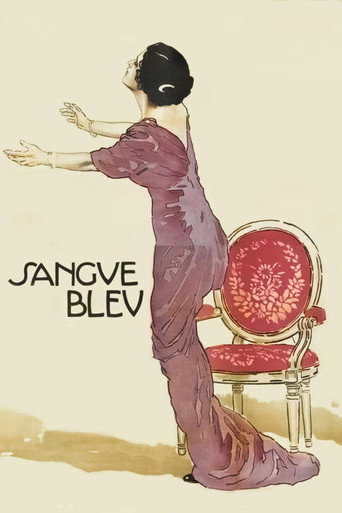
Anna Cipriani
Actor
- Active
- 1914-1914
Films 1
About Anna Cipriani
Anna Cipriani is a very obscure early-screen performer whose documented film career, as far as readily available surviving references show, was confined to 1914. She is credited as an actor in the silent film Blue Blood (1914), but beyond that single credit, standard reference sources provide little to no biographical detail about her life, background, or later career. Because of the scarcity of surviving records from the earliest years of cinema, it is difficult to determine whether she worked under a stage name, appeared on stage before film, or continued acting in productions that have not been preserved in accessible filmographies. Her historical significance lies primarily in her presence within the pioneering era of American silent film, when many performers appeared in only one or a handful of productions and documentation was often incomplete. She appears to have been part of the large and largely anonymous workforce that helped shape silent-era screen acting during cinema's formative years. At present, no reliable evidence confirms additional film roles, major studio associations, or post-1914 activity. As a result, Anna Cipriani remains a little-documented figure best understood as part of the early, fragile record of silent cinema rather than as a widely chronicled star.
More about Anna Cipriani
In film history
Anna Cipriani's cultural impact is modest but still meaningful within the broader history of silent cinema. Performers like her represent the vast number of early screen artists whose work helped establish the language and conventions of film acting, even when their names did not become widely known. In the silent era, many such actors contributed to productions that formed the foundation of narrative cinema, yet their identities were often poorly preserved in studio records, trade journals, or later historiography. Her presence in the historical record underscores the importance of reconstructing early film history from fragmentary evidence and acknowledging the many overlooked participants in cinema's beginnings. While she does not appear to have left a well-documented star legacy, her credit is part of the collective memory of the silent film era and the reconstruction of its personnel.
Later reputation
Anna Cipriani's legacy is primarily archival: she is remembered because she appears in the film record of Blue Blood (1914), which preserves her as part of the silent-era workforce. For historians and database researchers, such names are important because they help map the personnel of early cinema and illuminate how many contributors have been lost to time. Her career illustrates the challenges of documenting minor and short-lived screen careers from the 1910s, when credits were inconsistent and many productions are now lost or only partially documented. In film history, even a single surviving credit can be valuable evidence of participation in the medium's formative years. Her lasting legacy is therefore less about fame than about the broader recovery of early film history and the recognition of overlooked contributors.
Influence
There is no verifiable evidence that Anna Cipriani directly influenced later actors or filmmakers in a documented, traceable way. However, as one of the many performers active in the silent era, she was part of the generation whose screen work helped define early acting conventions before synchronized sound changed performance style. In that indirect sense, her contribution belongs to the collective influence of early cinema artists who shaped the medium's development. Because her career details are so sparse, any stronger claim about influence would be speculative.
Off screen
No reliable publicly documented information is readily available regarding Anna Cipriani's personal life, including family background, marital status, children, education, or later occupation. The surviving film record does not appear to preserve the kind of personal press coverage that more prominent silent-era players often received. Any claims about her private life would therefore be speculative and should be avoided in a serious database entry. She should currently be treated as a historically attested but biographically obscure early film performer.
Credits
- Screen credit as an actor in the silent-era film Blue Blood (1914)
- Participation in early American cinema during the silent period
- Representation of the many lesser-documented performers who appeared in one or very few surviving film records
Roles
- Role in Blue Blood (1914)
Films
- Blue Blood (1914)
Notes
- Anna Cipriani is currently best documented by a single known film credit: Blue Blood (1914).
- She belongs to the silent-film era, when many performers were not consistently credited or fully documented.
- Her biographical details are largely absent from readily available standard film references.
- She is an example of how many early cinema actors are known to history only through fragmentary filmographies.
- Her limited surviving record makes her of particular interest to archival film historians and database compilers.
- Because her career appears to be confined to 1914, she may have been part of a very short film career or a performer whose later work has not survived in accessible records.
Questions
Who was Anna Cipriani?
Anna Cipriani was a very little-documented silent-era film actor known from the 1914 film Blue Blood. Surviving records provide almost no biographical information about her life or career beyond that credit. She is primarily of interest to historians studying the earliest years of screen performance.
What films is Anna Cipriani best known for?
She is best known for Blue Blood (1914), which is the only readily verified film credit currently associated with her. No other firmly documented film appearances have been confirmed in accessible standard references. If additional work existed, it has not been widely preserved in public filmographies.
When was Anna Cipriani born and when did she die?
At present, her birth and death dates are not reliably documented in accessible sources. The surviving record does not provide confirmed details about her birthplace, lifespan, or later life. She should therefore be listed as biographically unidentified unless new archival evidence emerges.
What awards did Anna Cipriani win?
No awards or nominations are currently documented for Anna Cipriani. This is not unusual for obscure performers from the silent era, many of whom worked before modern awards systems were established or before their careers became widely publicized. Her historical importance rests on her participation in early film rather than on formal honors.
What was Anna Cipriani's acting style?
There is no surviving critical commentary that clearly describes her personal acting style. As a performer from 1914, she would have worked in the expressive, gesture-based mode typical of silent cinema, but that general period style cannot be attributed to her in a uniquely documented way. Any more specific characterization would be speculative.
What is Anna Cipriani's legacy in film history?
Her legacy is mainly archival and historical: she represents the many early film performers whose names survive even when most personal details do not. She helps illustrate the incomplete nature of silent-era documentation and the importance of preserving credits from cinema's formative years. For researchers, even a single verified appearance can be valuable evidence of an actor's presence in early film history.