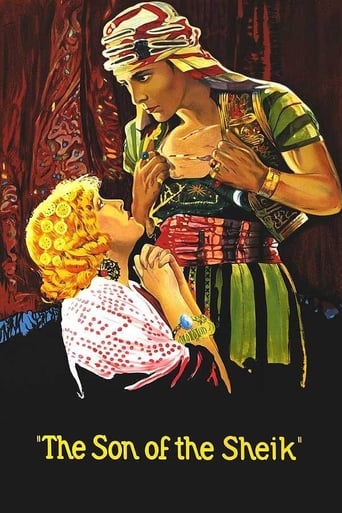
Films
1 film
About Bynunsky Hyman
Bynunsky Hyman is a largely obscure silent-era film performer whose surviving screen credit places him in the cast of The Son of the Sheik (1926), the famous sequel starring Rudolph Valentino. Very little verifiable biographical information has survived in standard film reference sources, which is common for minor performers in the silent period whose careers were often brief, lightly documented, or recorded only in studio cast lists. Based on available evidence, Hyman appears to have worked in film only during 1926, with no securely documented later screen career under this name. His participation in recognizable films of the late silent era links him to the grand adventure-romance style that made The Son of the Sheik a landmark production. Beyond that appearance, reliable public records do not presently yield confirmed details about his birthplace, life outside the screen, or whether this was a stage name or his birth name. Because of the scarcity of documentation, he is remembered primarily as a minor but legitimate part of silent-cinema history rather than as a major star or celebrity. His filmography underscores how many working actors of the silent age remain only partially visible to modern researchers, despite having contributed to significant studio productions.
The Craft
Milestones
- Appeared in The Son of the Sheik (1926), one of the best-known late silent-era adventure films
- Was part of the production associated with Rudolph Valentino's final screen role and enduring popular legacy
- Represents the many small but important supporting and background performers whose work helped shape silent-era studio films
- Has a surviving film credit from 1926, preserving his name in classic cinema records despite limited biographical documentation
Best Known For
Iconic Roles
Must-See Films
Working Relationships
Worked Often With
Studios
Why They Matter
Impact on Culture
Bynunsky Hyman's cultural impact is inseparable from the film in which he appeared: The Son of the Sheik remains an artifact of silent cinema and one of the defining screen vehicles of Rudolph Valentino. Even small roles in such productions contributed to the atmosphere, spectacle, and social world that made silent films immersive for contemporary audiences. While Hyman himself did not become a major public figure, his preserved credit is part of the larger historical record that allows scholars to reconstruct studio-era casting practices and the labor of lesser-known performers. His presence in the cast also illustrates how classic Hollywood depended on a deep bench of working actors whose names are now often obscure but whose contributions were essential to production.
Lasting Legacy
Hyman's legacy is archival rather than celebrity-based: he survives in the historical memory of film because his name is attached to a major surviving silent feature. For film historians and database researchers, such credits are valuable because they help document the full personnel network behind landmark productions. His case also highlights the fragility of early motion-picture documentation, where many performers left only one or a few credited appearances and then disappeared from the accessible record. In that sense, he stands as a representative example of the many forgotten craftsmen and players who helped build the silent era's cinematic world. Any modern legacy he has is primarily through careful film scholarship, restoration credits, and cast listings that preserve his participation in classic cinema.
Who They Inspired
There is no evidence that Bynunsky Hyman had a documented influence on later actors or filmmakers in the sense of a public career with a traceable artistic school or direct mentorship. His influence is therefore indirect and historical: by being part of a major silent film, he remains part of the preserved ensemble tradition that shaped early screen acting. For modern researchers, his credit contributes to a fuller understanding of how productions were staffed and how silent-era films balanced star presence with supporting and background performance. His name also serves as a reminder that many contributors to classic cinema remain underrecognized despite their participation in historically important works.
Off Screen
No reliable, publicly verifiable personal-life information has been found for Bynunsky Hyman in standard classic-film reference sources. Details such as marriages, family background, residence, education, and life after film are not presently documented in the available record. This lack of information suggests either a very short film career, limited archival survival, or work under a name that was not widely tracked outside studio paperwork. Any specific claims about his private life would be speculative and are therefore omitted here.
Did You Know?
- His known screen activity is currently limited to a single year, 1926.
- He is Bynunsky Hyman appeared in the Son of the Sheik, Rudolph Valentino's final starring film released after Valentino's death.
- He is one of many silent-era performers whose careers are preserved mostly through cast lists rather than extensive biographical records.
- No confirmed birth or death data is readily available in standard reference sources under this name.
- His sparse documentation makes him a typical example of the many minor players of the silent era whose contributions are still part of film history.
- Because The Son of the Sheik is a well-preserved and heavily studied film, Hyman's name continues to circulate among classic-cinema databases despite his obscurity.
- There is no verified evidence that he continued acting into the sound era.
Frequently Asked Questions
Who was Bynunsky Hyman?
Silent-era film with credits in this catalog. Surviving records about him are extremely limited, so he is remembered mainly through this single screen credit and his place in classic cinema history.
What films is Bynunsky Hyman best known for?
Titles linked here include The Son of the Sheik (1926).
When was Bynunsky Hyman born and when did he die?
His birth and death dates are not currently documented in reliable public film-reference sources. Because of that, both his birthDate and deathDate remain unknown.
What awards did Bynunsky Hyman win?
No awards or nominations are known for Bynunsky Hyman. He appears to have been a minor credited performer whose historical significance comes from his participation in a landmark silent film rather than from individual accolades.
What was Bynunsky Hyman's acting style?
There is not enough surviving documentation to describe a distinctive acting style with confidence. As a performer in a 1926 silent feature, his work would have relied on the conventions of silent acting, including expressive gesture and physical presence, but no detailed critical descriptions of his technique are currently known.
What is Bynunsky Hyman's legacy in film history?
His legacy is primarily archival: he is one of the many lesser-known performers whose names survive in the cast of an important classic film. For historians, that matters because it helps preserve the complete human context of silent-era production and the broader ensemble behind movies.
Did Bynunsky Hyman work in the sound era?
There is no verified evidence that he continued acting into the sound era. His documented film activity currently ends in 1926.