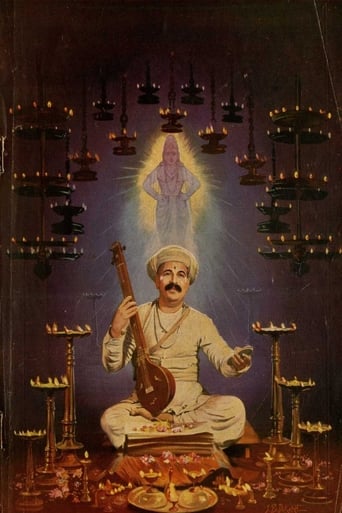
Vishnupant Pagnis
Actor
Born: 1892 in Maharashtra, India Died: 1943 Active: 1936-1943 Birth Name: Vishnupant Govind Pagnis
Films
1 film
About Vishnupant Pagnis
Actor in early Indian cinema, best known for his transformative portrayal of the 17th-century Marathi saint Tukaram in the landmark 1936 film 'Sant Tukaram'. Born into a traditional family, Pagnis began his career in Marathi theater before transitioning to the nascent film industry. His performance in 'Sant Tukaram' became, establishing him as one of the first method actors in Indian cinema who would immerse himself completely in his roles. Despite appearing in only this one major film, his impact was so profound that it influenced generations of Indian actors. Pagnis approached his craft with intense devotion and spiritual preparation, often fasting and meditating to embody the saintly characters he portrayed. His commitment to authenticity extended beyond the screen, as he maintained the humble demeanor of his characters even in his personal life. Though his filmography was limited to primarily 1936, his single performance secured his place in cinematic history as a trailblazer who demonstrated the potential of cinema as a medium for spiritual and cultural storytelling.
The Craft
On Screen
Pagnis employed a deeply immersive method acting approach uncommon in 1930s Indian cinema. He would undergo intense spiritual preparation, including fasting and meditation, to authentically portray saintly characters. His performance style combined classical Marathi theatrical traditions with naturalistic screen presence, creating a bridge between stage and film acting. He emphasized emotional authenticity over melodramatic gestures, bringing subtle nuances to his portrayal of spiritual devotion and human suffering.
Milestones
- Starred in 'Sant Tukaram' (1936), India's first major international film success
- Pioneered method acting techniques in Indian cinema
- His film became India's first official entry to the Academy Awards
- Established the template for spiritual biographical films in Indian cinema
Best Known For
Iconic Roles
Must-See Films
Accolades
Won
- Venice International Film Festival - Official Selection (1937)
- Indian film retrospective honors posthumously
Nominated
- Academy Award consideration - Best Foreign Film (1937)
Special Recognition
- Recognized as one of India's greatest cinematic performances
- Film preservation by National Film Archive of India
- Honored in Marathi cinema retrospectives
Working Relationships
Worked Often With
Studios
Why They Matter
Impact on Culture
Vishnupant Pagnis's performance in 'Sant Tukaram' revolutionized Indian cinema by demonstrating that films could serve as powerful vehicles for spiritual and cultural expression. The film's international success at the Venice Film Festival in 1937 put Indian cinema on the global map for the first time, challenging Western perceptions of non-Western film industries. Pagnis's authentic portrayal of sainthood established a new benchmark for biographical films in India, inspiring countless subsequent productions about spiritual figures. His work helped preserve and popularize Marathi cultural heritage, introducing audiences worldwide to the Bhakti movement and its philosophical contributions. The film's themes of devotion, social equality, and resistance to orthodoxy resonated deeply during India's independence movement, making Pagnis's performance culturally significant beyond its artistic merits.
Lasting Legacy
Vishnupant Pagnis's legacy endures as a foundational figure in Indian cinema history, particularly in the realm of spiritual and biographical films. His single landmark performance continues to be studied by film scholars and actors as an example of perfect casting and complete character immersion. The National Film Archive of India has preserved 'Sant Tukaram' as a cinematic treasure, ensuring that Pagnis's work remains accessible to future generations. Film institutes in India regularly screen and analyze his performance as part of their curriculum on acting and film history. His influence can be seen in the work of later actors who specialized in spiritual roles, from Marathi cinema to Bollywood productions. Pagnis demonstrated that cinema could transcend entertainment to become a medium for spiritual enlightenment and cultural preservation.
Who They Inspired
Pagnis influenced Indian cinema by establishing a template for authentic spiritual performances that combined technical skill with genuine devotion. His method approach predated similar techniques in Western cinema by decades, showing Indian actors the importance of psychological and spiritual preparation for roles. Directors of subsequent spiritual and mythological films often cited his work as the gold standard for casting and performance. His success proved that films with regional cultural specificity could achieve universal appeal, encouraging filmmakers to explore local stories with global relevance. The acting techniques he pioneered continue to influence contemporary Indian actors, particularly those working in period and biographical films.
Off Screen
Vishnupant Pagnis lived a deeply spiritual life that mirrored the roles he portrayed on screen. He was known for his humility and devotion, maintaining a simple lifestyle despite his cinematic success. His commitment to his craft was so complete that he often remained in character even after filming, continuing to practice the spiritual disciplines of the saints he portrayed. He was married and had children, though details about his family life remain scarce in historical records.
Education
Traditional education in Maharashtra, likely with training in classical Marathi theater and music
Family
- Unknown - historical records incomplete
Did You Know?
- 'Sant Tukaram' was India's first film to gain international recognition, screening at the Venice Film Festival in 1937
- Pagnis reportedly fasted for days and lived as a mendicant to prepare for his role as Tukaram
- The film was made on a budget of just ₹75,000 but became a massive commercial success
- Pagnis was not a professional actor but was discovered by the directors while performing at a religious gathering
- His performance was so convincing that many viewers believed he was actually a saint
- The film's success led to a surge in spiritual and biographical films in Indian cinema
- Pagnis sang his own songs in the film, showcasing his musical talents
- Despite his fame, he continued to live a simple, ascetic life
- The film was selected as India's first official entry for the Academy Awards
- Original prints of the film were preserved and restored by film archives decades later
In Their Own Words
In portraying a saint, one must first become a student of sainthood
Cinema is not merely entertainment; it is a temple where stories of devotion come to life
The camera sees not just the face, but the soul behind it
To play Tukaram was not acting, but a pilgrimage of the spirit
Frequently Asked Questions
Who was Vishnupant Pagnis?
Indian with credits in this catalog. His portrayal became legendary in Indian cinema history, establishing new standards for spiritual biographical films and method acting techniques.
What films is Vishnupant Pagnis best known for?
Titles linked here include Sant Tukaram (1936).
When was Vishnupant Pagnis born and when did he die?
Born 1892; died 1943.
What awards did Vishnupant Pagnis win?
While formal award systems were limited in 1930s Indian cinema, 'Sant Tukaram' was officially selected for the Venice International Film Festival in 1937 and was India's first entry for Academy Award consideration. Posthumously, he has been honored through film preservation efforts and retrospectives celebrating his contribution to Indian cinema.
What was Vishnupant Pagnis's acting style?
Pagnis pioneered method acting in Indian cinema through his immersive approach to portraying spiritual figures. He would undergo intense preparation including fasting, meditation, and living ascetically to authentically embody his characters, combining classical theatrical traditions with naturalistic screen presence.