
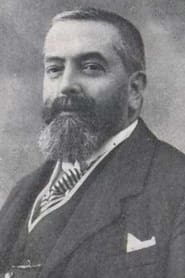
Alejandro Pérez Lugín
Director
Born: February 22, 1870 in Madrid, Spain Died: September 5, 1926 Active: 1890-1926 (Film career: 1926)
Films
1 film
About Alejandro Pérez Lugín
Made a significant mark on Spanish cultural life in the early 20th century. Born in Madrid in 1870, he first gained recognition as a journalist working for major Spanish newspapers, where he developed his keen observational skills and narrative voice. His literary career flourished with the publication of several novels, but it was his 1921 novel 'Currito de la Cruz' that became his most celebrated work, capturing the essence of Madrid's lower-class culture and bullfighting traditions. In 1926, at the age of 56, Pérez Lugín made his only foray into filmmaking by adapting his famous novel into a silent film, which he also directed. The film was an enormous commercial success and is now considered a masterpiece of Spanish silent cinema. Tragically, Pérez Lugín died in Madrid in 1926, shortly after the film's release, making 'Currito de la Cruz' both his debut and final work as a director. His legacy as a cultural figure who successfully bridged literature and early cinema remains significant in Spanish cultural history.
The Craft
Behind the Camera
Pérez Lugín's directing style in 'Currito de la Cruz' reflected his journalistic background and literary sensibilities, focusing on authentic representation of Madrid's working-class culture and the world of bullfighting. He employed a realistic approach to storytelling, using naturalistic performances and location shooting to capture the genuine atmosphere of the settings. His direction emphasized character development and social commentary, bringing the same depth to his visual storytelling that he brought to his novels. As a first-time director at age 56, he brought a mature, thoughtful perspective to the medium, creating a film that was both entertaining and socially significant.
Milestones
- Published acclaimed novel 'Currito de la Cruz' (1921)
- Directed and adapted 'Currito de la Cruz' into a successful silent film (1926)
- Prominent journalist for major Spanish newspapers
- Became one of Spain's most popular writers of the early 20th century
- Created
Best Known For
Must-See Films
Accolades
Special Recognition
- Considered one of the pioneers of Spanish cinema
- His novel 'Currito de la Cruz' remains a classic of Spanish literature
- The film 'Currito de la Cruz' is preserved as an important work of Spanish cinematic heritage
Working Relationships
Worked Often With
Studios
Why They Matter
Impact on Culture
Alejandro Pérez Lugín had a profound cultural impact on Spanish society through his dual contributions to literature and cinema. His novel 'Currito de la Cruz' captured the essence of Madrid's popular culture and became a cultural touchstone for Spanish identity in the early 20th century. The film adaptation brought this cultural vision to the masses during the silent era, helping to establish a uniquely Spanish cinematic voice that differed from Hollywood and European influences. His work provided a window into Spanish working-class life, bullfighting culture, and the social dynamics of Madrid, preserving these aspects of Spanish heritage for future generations. The success of both his novel and film demonstrated the power of authentic Spanish storytelling and paved the way for future Spanish filmmakers to explore national themes.
Lasting Legacy
Alejandro Pérez Lugín's legacy endures primarily through his masterpiece 'Currito de la Cruz,' which exists in both literary and cinematic form as a cornerstone of early 20th-century Spanish culture. As one of the few Spanish writers of his generation to successfully transition to filmmaking, he represents an important bridge between Spanish literary traditions and the emerging art of cinema. His work is studied in Spanish literature courses and preserved in film archives as an essential example of Spain's silent film heritage. The enduring popularity of 'Currito de la Cruz' has led to multiple adaptations over the decades, including sound film versions, testifying to the timeless appeal of his storytelling. His approach to depicting authentic Spanish culture influenced subsequent generations of Spanish artists who sought to capture the essence of their national identity in their work.
Who They Inspired
Pérez Lugín influenced Spanish cinema by demonstrating the potential of adapting successful literary works to the screen, a practice that became increasingly common in Spanish filmmaking. His realistic approach to depicting Spanish culture and society inspired later Spanish filmmakers to explore national themes rather than imitating foreign styles. The success of 'Currito de la Cruz' proved that Spanish audiences would respond positively to films that reflected their own culture and experiences, encouraging the development of a distinctive Spanish cinematic identity. His work influenced subsequent adaptations of his novel, with directors interpreting his story through different cinematic eras, from the 1936 sound version to later remakes. His journalistic eye for detail and social observation influenced Spanish documentary and realist filmmaking traditions that would emerge in later decades.
Off Screen
Alejandro Pérez Lugín was deeply embedded in Madrid's cultural and intellectual circles during the early 20th century. He was known for his keen observations of Spanish society, particularly the working-class neighborhoods of Madrid, which became the setting for his most famous work. His personal experiences and connections to the world of bullfighting informed his writing, giving his work authentic cultural detail. Despite his success as a writer and journalist, he remained connected to everyday Spanish life, which made his work resonate with the general public. His death in 1926, just months after completing his only film, marked the end of a diverse and influential career that spanned journalism, literature, and cinema.
Education
Educated in Madrid during the late 19th century, though specific details about his formal education are not well documented in historical records
Did You Know?
- 'Currito de la Cruz' was Pérez Lugín's only film as a director
- His novel was so popular that it was adapted into films multiple times, including versions in 1936, 1949, and 1965
- He was 56 years old when he made his directorial debut
- The film was one of the biggest box office successes in Spanish cinema during the 1920s
- He died just a few months after the film's premiere
- The story was inspired by real characters from Madrid's working-class neighborhoods
- His journalism background influenced his realistic approach to storytelling
- The film was shot on location in Madrid and featured authentic bullfighting sequences
- His work helped establish the tradition of Spanish films focusing on national themes and culture
- Despite his success in film, he remained primarily known as a writer during his lifetime
In Their Own Words
Through the lens of my camera, I sought to capture the soul of Madrid that I had written about for years
Every story worth telling must have the dust of real streets on its boots
The bullfighter and the writer share the same fate: they face the truth with no protection but their art
Frequently Asked Questions
Who was Alejandro Pérez Lugín?
Spanish writer, journalist, and on YTB.my. He was a prominent cultural figure in early 20th-century Spain who successfully bridged literature and cinema during the silent film era.
What films is Alejandro Pérez Lugín best known for?
Titles linked here include Currito de la Cruz (1926).
When was Alejandro Pérez Lugín born and when did he die?
Born February 22, 1870; died September 5, 1926.
What was unique about Pérez Lugín's career?
What made Pérez Lugín's career unique was that he was already an established and successful writer and journalist at age 56 when he made his directorial debut. His film 'Currito de la Cruz' was both his first and last work as a director, making him a notable one-film director who created a masterpiece.
How did Pérez Lugín influence Spanish cinema?
Pérez Lugín influenced Spanish cinema by demonstrating the power of adapting literary works to film and showing that Spanish audiences wanted films reflecting their own culture. His realistic portrayal of Spanish life helped establish a tradition of national filmmaking that would influence subsequent generations of Spanish directors.