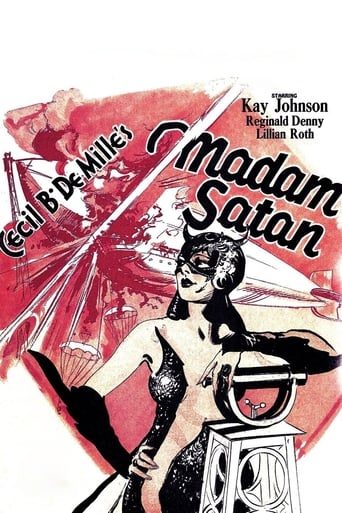
Films
1 film
About Elsa Peterson
Minor character actress and background performer active during the early sound era of Hollywood, specifically noted for her participation in large-scale ensemble productions. Her most significant screen credit came in 1930 when she was cast in Cecil B. DeMille's extravagant Pre-Code musical comedy-drama, 'Madam Satan.' During this period, the transition from silent films to 'talkies' required a vast number of performers for elaborate party sequences and musical numbers, a niche Peterson filled within the studio system. While her career did not transition into leading roles, her presence in a DeMille production places her within the history of one of cinema's most ambitious experimental eras. Like many atmospheric players of the 1930s, her work was often uncredited, contributing to the visual texture of the 'Golden Age' without achieving individual stardom. She represents the thousands of professional performers who maintained the rigorous production schedules of major studios like MGM during the early 1930s.
The Craft
On Screen
Peterson was primarily a naturalistic ensemble player, utilized for her ability to blend into the sophisticated, high-society atmospheres required by early 1930s 'society dramas.' Her work required poise and the ability to perform in highly choreographed group scenes, which were a staple of the DeMille directorial style.
Milestones
- Cast in Cecil B. DeMille's 'Madam Satan' (1930), a landmark of early sound cinema excess
- Participated in the 'Ballet Mécanique' and zeppelin party sequences of early 1930s cinema
- Worked under the direction of legendary filmmaker Cecil B. DeMille during his experimental sound period
- Contributed to the transition era of Metro-Goldwyn-Mayer (MGM) as a supporting player
Best Known For
Iconic Roles
Must-See Films
Working Relationships
Worked Often With
Studios
Why They Matter
Impact on Culture
Elsa Peterson's participation in 'Madam Satan' links her to. The film is studied today for its bizarre blend of musical, comedy, and disaster genres, as well as its incredible Art Deco costume design. As part of the ensemble, Peterson contributed to the visual representation of the 'flapper' era's end and the beginning of the more structured 1930s social hierarchy on screen.
Lasting Legacy
Her legacy is tied to the preservation of early sound film history. While not a household name, her presence in a DeMille production ensures her name appears in the annals of filmography databases that track the evolution of the Hollywood studio system. She serves as a representative of the 'invisible' workforce of Hollywood that made the grandeur of the Golden Age possible.
Who They Inspired
While she did not influence acting techniques, she was part of the generation of actors who had to adapt to the technical constraints of early microphones and the massive sets of the early 1930s, influencing the logistical development of background acting in sound films.
Off Screen
Information regarding Elsa Peterson's personal life remains obscure, as she was a private individual working within the studio system's background talent pool. Like many performers of the era who did not reach top-billing status, her biographical details were not publicized by studio press departments.
Did You Know?
- She appeared in 'Madam Satan,' which features.
- Her work in 1930 occurred during the height of the Pre-Code era, before the strict enforcement of the Hays Code in 1934.
- She was part of a cast that included future stars and established silent film veterans transitioning to sound.
- The film she is best known for, 'Madam Satan,' was Cecil B. DeMille's only musical.
- Despite the film's massive budget of nearly $1 million, many supporting actors like Peterson received little individual screen credit.
Frequently Asked Questions
Who was Elsa Peterson?
American film actress active during the early 1930s. She is best remembered for her role in the 1930 Cecil B. DeMille film 'Madam Satan.'
What films is Elsa Peterson best known for?
Titles linked here include Madam Satan (1930).
When was Elsa Peterson active in Hollywood?
Her recorded film activity is centered around 1930, during the pivotal transition period from silent films to synchronized sound cinema.
What was Elsa Peterson's acting style?
She was an ensemble performer who specialized in atmospheric roles, providing the necessary sophistication and presence for high-society scenes in major studio productions.
Did Elsa Peterson win any awards?
There are no records of major awards or nominations for Elsa Peterson, as her career was focused on supporting and ensemble work rather than leading roles.