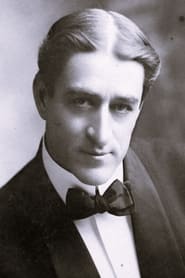
Edwin Stevens
Actor
Born: August 16, 1860 in San Francisco, California, USA Died: January 3, 1923 Active: 1883-1923
Films
1 film
About Edwin Stevens
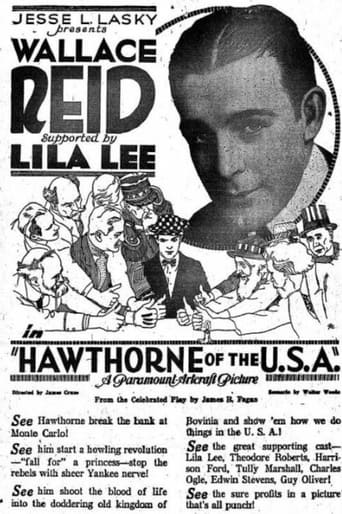
American stage and film actor: career bridged the gap between the late 19th-century theater and the burgeoning silent film industry of the early 20th century. Born in San Francisco in 1860, he began his professional journey in 1883 with Rudolph Aronson's company at the Casino Theatre in New York, quickly establishing himself as a versatile character actor in light operas and musical comedies. Throughout the 1890s and 1900s, he became a fixture on Broadway, appearing in landmark productions such as 'The Geisha' and 'Captain Jinks of the Horse Marines' alongside stars like Ethel Barrymore. As the motion picture industry began to flourish, Stevens transitioned to the screen in the mid-1910s, often portraying authoritative figures, aristocrats, or sophisticated villains. His filmography includes significant roles in major productions like Cecil B. DeMille's 'The Squaw Man' (1918) and the Wallace Reid vehicle 'Hawthorne of the U.S.A.' (1919). Beyond acting, he demonstrated his creative range by directing several silent features, including 'The Boy Girl' (1917). Stevens remained active in the industry until his untimely death from pneumonia in early 1923, leaving behind a legacy as a refined performer of the silent era.
The Craft
On Screen
Stevens was known for his 'refined' and 'stately' acting style, a byproduct of his extensive training in Broadway operettas and dramas. He specialized in character roles that required a sense of gravitas, often utilizing expressive facial movements and a commanding physical presence to portray aristocrats, high-ranking officials, and sophisticated antagonists. His transition to film saw him adapt his theatrical projection into the more nuanced visual language of silent cinema, where he was frequently cast for his ability to convey authority and intelligence.
Milestones
- Established a prolific Broadway career starting in the 1880s
- Starred as the Marquis Imari in the original 1896 Broadway production of 'The Geisha'
- Appeared in the 1901 Broadway comedy 'Captain Jinks of the Horse Marines' with Ethel Barrymore
- Successfully transitioned from stage to silent films in the mid-1910s
- Directed several silent films including 'The Boy Girl' (1917) and 'Susan's Gentleman' (1917)
- Portrayed Prince Vladimir in the 1919 classic 'Hawthorne of the U.S.A.'
- Played the role of Lord Rintoul in the 1921 adaptation of 'The Little Minister'
Best Known For
Iconic Roles
Must-See Films
Accolades
Special Recognition
- Recognized as a leading character actor of the Broadway stage during the early 1900s
- Featured in prominent theatrical publications of the era such as Arena Magazine (1908)
Working Relationships
Worked Often With
Studios
Why They Matter
Impact on Culture
Edwin Stevens represented the 'old guard' of professional stage actors who brought legitimacy and technical skill to the early motion picture industry. At a time when film was often looked down upon by theater purists, Stevens' successful transition helped bridge the cultural gap between Broadway and Hollywood. His presence in major silent films provided a level of sophisticated character acting that influenced the development of the 'character actor' archetype in American cinema.
Lasting Legacy
Stevens is remembered as a versatile pioneer of the silent era who excelled in both acting and directing. While many of his films are now lost or rare, his contributions to the formative years of Hollywood—particularly his work with directors like Cecil B. DeMille and stars like Wallace Reid—remain a significant part of film history. He is also a key figure in Broadway history for his roles in the original productions of several classic American plays and musicals.
Who They Inspired
His disciplined approach to character work influenced younger actors of the 1920s, demonstrating how theatrical techniques could be effectively minimized for the camera. His ability to play both villains and dignified elders set a standard for character versatility in the early studio system.
Off Screen
Edwin Stevens was married to actress Louise Weller. The couple had two children and remained married until his death. He was well-regarded in the theatrical community for his long-standing commitment to the craft and his successful navigation of the shift from live performance to the screen.
Education
Trained in the New York theatrical circuit; initially joined Rudolph Aronson's company at the Casino Theatre in 1883.
Family
- Louise Weller
Did You Know?
- He played the title role in the 1908 stage production of 'The Devil' by Ferenc Molnár.
- Stevens died of pneumonia at the age of 62 at his home in Los Angeles.
- He was a member of the famous 'The Lambs' club, a prestigious theatrical social club in New York.
- In 'Hawthorne of the U.S.A.', he played the primary antagonist to silent film idol Wallace Reid.
- He directed his own performance in the 1917 film 'The Boy Girl'.
- His active years covered exactly 40 years, from his stage debut in 1883 to his final film releases in 1923.
In Their Own Words
The stage is a school of hard knocks, but the screen is a mirror that never lies. (Attributed context: Discussing the transition from Broadway to silent film acting.)
Frequently Asked Questions
Who was Edwin Stevens?
Prominent American stage and silent film actor and on YTB.my. He was a celebrated Broadway star before becoming a sought-after character actor in Hollywood's silent era.
What films is Edwin Stevens best known for?
Titles linked here include Hawthorne of the U.S.A. (1919), The Squaw Man (1918).
When was Edwin Stevens born and when did he die?
Born August 16, 1860; died January 3, 1923.
What was Edwin Stevens' acting style?
He was known for a dignified and authoritative acting style, often playing aristocrats or sophisticated villains. His background in Broadway operettas gave him a commanding presence that translated well to the silent screen.
Did Edwin Stevens win any awards?
As he was active before the establishment of the Academy Awards, he did not win major film awards, but he was highly honored within the theatrical community of his time.
Was Edwin Stevens also a director?
Yes, in addition to acting, Stevens directed several films in the late 1910s, including 'The Boy Girl' and 'Susan's Gentleman'.