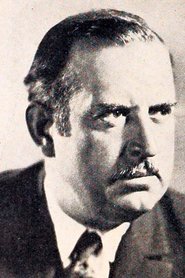

Hawthorne of the U.S.A.
"A broke American clerk breaks the bank and topples a Balkan king."
Keys: Space play/pause · ←/→ 10s · F fullscreen · M mute · </> speed
About this film
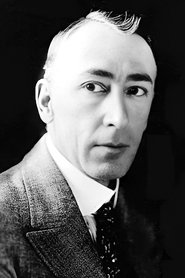
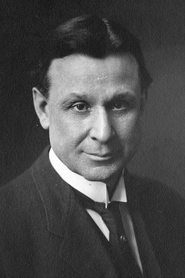
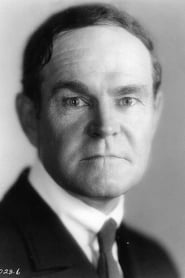
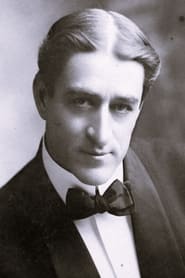
Monte Carlo clerks Anthony Hamilton Hawthorne and Rodney Blake are nearly broke in Monte Carlo when Hawthorne breaks the bank. While driving through the impoverished kingdom of Bovinia, Hawthorne falls in love with a woman he meets when he retrieves his blown-off cap. Deciding to stay, Hawthorne is persuaded to finance a revolution until he learns that the woman he loves is Princess Irma and that she is in danger of being assassinated.
Cast & crew
More films like this

More Adventure films
View all →

More from James Cruze
View all →
More about this film
About the production
Release dateNovember 30, 1919
BudgetEstimated $150,000 - $200,000
Box officeTop 10 box office hit of 1919 (Exact gross figures internal to Famous Players-Lasky)
ProductionFamous Players-Lasky Corporation
Filmed inLasky Studio, Hollywood, California, Monte Carlo, Monaco (Second unit/Atmosphere), Southern California (Bovinia exterior scenes)
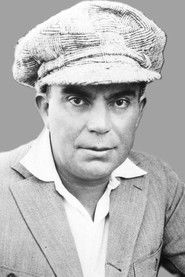
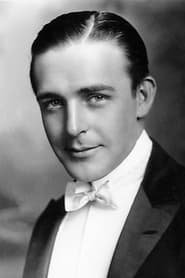
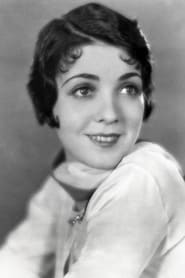
The film was an adaptation of the 1912 Broadway play by James B. Fagan, which originally starred Douglas Fairbanks. Director James Cruze, known for his efficiency and later for 'The Covered Wagon' (1923), utilized a fast-paced shooting schedule typical of the Wallace Reid 'speed' pictures. The production was part of the Paramount-Artcraft line, which represented the studio's high-end prestige releases. Famous Players-Lasky utilized their contract stars Wallace Reid and Lila Lee to capitalize on their immense popularity as a romantic screen duo.
Themes
American ExceptionalismRuritanian RomanceModernity vs. TraditionThe Power of WealthPolitical Revolution
Themes & topics
Historical background
Released around 1919, Hawthorne of the U.S.A. emerged while exhibitors were still defining how longer narratives could hold nickelodeon audiences.
Why this film matters
For historians, Hawthorne of the U.S.A. is less a blockbuster than a datapoint—showing what audiences in 1919 could see on a typical program.
Making of
During the production, Wallace Reid was already struggling with the early stages of the morphine addiction that would eventually claim his life; the addiction began after he was injured in a train wreck while filming 'The Valley of the Giants' earlier in 1919. Despite his private struggles, Reid maintained a high-energy performance on set, performing many of his own driving stunts. Director James Cruze focused on the 'Ruritanian' romance elements, a popular subgenre of the time involving intrigue in fictional Central European kingdoms. The chemistry between Reid and Lila Lee was so successful that they were paired in several other films by the studio.
What critics said
Specialist critics writing today emphasize preservation and access—praising archives when a viewable copy of Hawthorne of the U.S.A. survives rather than overstating original buzz.
Did you know?
- The role of Hawthorne was originally played on Broadway by Douglas Fairbanks in 1912.
- Harrison Ford, who plays Rodney Blake, is no relation to the later 'Star Wars' actor of the same name.
- The fictional country 'Bovinia' was a play on the word 'bovine,' reflecting the American protagonist's dismissive view of the rural kingdom.
- Wallace Reid was at the height of his 'King of Paramount' status during this production, known for his 'good-natured American' persona.
- Charles Ogle, who plays Colonel Radulski, was famous for being the first actor to play Frankenstein's monster on screen in 1910.
- The film is one of the few surviving features of Wallace Reid, whose career was cut short by a tragic drug addiction and early death in 1923.
- The film features an early example of the 'Ugly American' trope, where the protagonist views European traditions with open mockery.
- Lila Lee was only 18 years old during the filming, having been discovered by Gus Edwards as a child performer.
Visual style
The film was shot by Frank Urson, William Marshall, and Charles Schoenbaum. It features standard classical Hollywood lighting of the late 1910s, with a focus on clear narrative storytelling and 'star lighting' for Reid and Lee. Notable are the outdoor driving sequences which were a staple of Reid's 'auto-thriller' brand.
Innovations
The film is noted by film historians for its sophisticated use of intertitles; approximately 80% of the titles are dialogue-based rather than expository, a high ratio for 1919 that moved the medium closer to the 'talkies' of the future. It also utilized seamless editing to blend Hollywood studio sets with second-unit footage of Monte Carlo.
Music
As a silent film, it had no recorded soundtrack. Original screenings would have been accompanied by a live piano or organ score, often utilizing popular 'travelogue' or 'adventure' themes of the day.
Famous quotes
Anthony Hawthorne: 'In America, we don't bow to kings; we just break their banks.'
Rodney Blake: 'Tony, you're going to get us killed or married, and I'm not sure which is worse in this country!'
Memorable scenes
- The Monte Carlo sequence where Hawthorne 'breaks the bank,' causing a sensation among the European elite.
- The 'Hat Scene' where Hawthorne leaps over a wall to retrieve his blown-off cap and encounters Princess Irma for the first time.
- The climax where Hawthorne uses his car to outrun the revolutionaries and save the King from assassination.
What audiences thought
The film was a major commercial success, ranking among the highest-grossing films of 1919. Audiences of the era flocked to see Wallace Reid in high-speed automobiles and romantic situations, cementing his status as one of the top three male stars in Hollywood alongside Charlie Chaplin and Douglas Fairbanks.
Film connections
Influenced by
- The Prisoner of Zenda (Novel/Play)
- Douglas Fairbanks' stage persona
- Early 20th-century travelogues
This film influenced
- The Student Prince in Old Heidelberg (1927)
- Roman Holiday (1953) - (Inverted themes of royalty and commoners)
- The Great Race (1965)
Film restoration
Preserved. A 35mm nitrate print is held in the Library of Congress (American Film Institute Collection).
Where to watch
- Available on DVD-R from Grapevine Video
- Streaming occasionally on specialized silent film platforms
- Public domain archives (select versions)