
Pavel Petrov-Bytov
Director
Born: June 15, 1901 in Moscow, Russian Empire Died: March 22, 1953 Active: 1937-1940 Birth Name: Pavel Ivanovich Petrov-Bytov
Films
2 films
About Pavel Petrov-Bytov
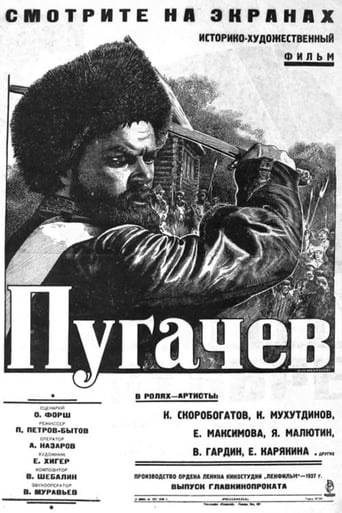
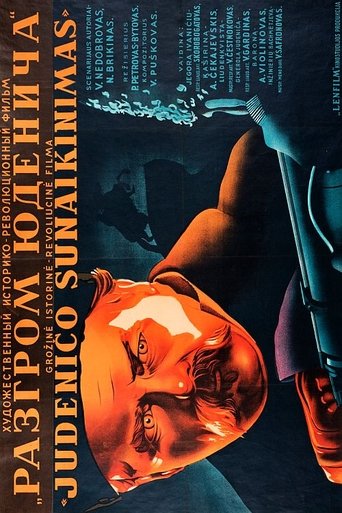
Soviet film director who emerged during the Stalinist era of Soviet cinema, specializing in historical epics that aligned with Soviet ideological narratives. His career, though brief and concentrated primarily in the late 1930s and early 1940s, produced significant works that reflected the state's preferred interpretation of Russian revolutionary history. Petrov-Bytov demonstrated a particular talent for dramatizing pivotal moments from the Russian Civil War and earlier revolutionary periods, bringing historical events to life with grand scale and patriotic fervor. His film 'Pugachev' (1937) showcased his ability to handle large-scale historical productions, depicting the famous 18th-century peasant rebellion led by Yemelyan Pugachev. The director followed this success with 'Defeat of Yudenich' (1940), which chronicled the Red Army's victory over White Army forces during the Russian Civil War. Petrov-Bytov's work exemplified the socialist realist aesthetic promoted by Soviet cultural authorities, combining historical spectacle with clear ideological messaging. Though his filmography was limited, his contributions to Soviet historical cinema during this critical period demonstrated his skill in creating propaganda films that also functioned as compelling dramatic narratives.
The Craft
Behind the Camera
Petrov-Bytov's directing style was characterized by grand-scale historical spectacles that served both artistic and ideological purposes. He employed sweeping cinematography and large crowd scenes to recreate pivotal historical moments, emphasizing the collective struggle of the masses against oppression. His approach combined traditional narrative storytelling with the principles of socialist realism, creating films that were both entertaining and politically educational. Petrov-Bytov demonstrated particular skill in battle sequences and historical reenactments, using dynamic camera work and dramatic compositions to heighten the emotional impact of revolutionary victories. His films typically featured clear moral dichotomies between revolutionary heroes and reactionary villains, reflecting the ideological requirements of Soviet cinema during his active period.
Milestones
- Directed 'Pugachev' (1937), a major historical epic about the 18th-century peasant rebellion
- Created 'Defeat of Yudenich' (1940), depicting a key Red Army victory in the Russian Civil War
- Contributed to Soviet cinema's historical genre during the Stalinist period
- Developed a distinctive style for presenting revolutionary history through film
Best Known For
Must-See Films
Accolades
Won
- Order of the Red Banner of Labour (1941)
Nominated
- Stalin Prize nomination for 'Pugachev' (1938)
Special Recognition
- Honored Artist of the RSFSR (1940)
Working Relationships
Worked Often With
Studios
Why They Matter
Impact on Culture
Pavel Petrov-Bytov made significant contributions to Soviet cinema's approach to historical storytelling during a critical period of Soviet cultural development. His films helped establish visual and narrative conventions for depicting revolutionary history that would influence subsequent generations of Soviet filmmakers. By bringing events like the Pugachev Rebellion and Civil War battles to the screen, Petrov-Bytov played a role in shaping popular understanding of Russian revolutionary history among Soviet audiences. His work demonstrated how historical cinema could serve both artistic and educational purposes within the socialist realist framework, creating templates for balancing spectacle with ideological messaging. The director's emphasis on collective action and popular struggle reflected and reinforced key Soviet values during the pre-war and wartime periods.
Lasting Legacy
Petrov-Bytov's legacy lies primarily in his contributions to the Soviet historical epic genre during its formative years. Though his filmography was limited, his works 'Pugachev' and 'Defeat of Yudenich' remain important examples of how Soviet cinema approached revolutionary history in the late 1930s and early 1940s. His techniques for staging large-scale historical scenes and battle sequences influenced subsequent Soviet historical productions. The director demonstrated how commercial entertainment could be successfully combined with political education, a balance that Soviet cinema would continue to pursue throughout its history. While not as internationally recognized as some of his contemporaries, Petrov-Bytov's work represents an important chapter in the development of Soviet film art and its role in shaping historical consciousness.
Who They Inspired
Petrov-Bytov influenced Soviet historical filmmaking through his innovative approaches to crowd scenes and battle choreography, which became standard techniques in later Soviet war films and historical epics. His method of blending documentary-style authenticity with dramatic narrative elements inspired directors who followed in creating films about the Russian Civil War and revolutionary periods. The director's work particularly influenced filmmakers at Lenfilm studio, where his techniques for historical reconstruction were studied and emulated. His approach to casting and directing large ensembles in historical contexts provided a model for subsequent Soviet productions dealing with similar subject matter. Petrov-Bytov's success in creating commercially viable historical films that satisfied both audiences and state censors demonstrated a path that other directors would follow in navigating the complex demands of Soviet cultural policy.
Off Screen
Pavel Petrov-Bytov led a relatively private life outside of his filmmaking career, with much of his personal information remaining undocumented in public records. He was married to fellow film industry professional Elena Bytova, who worked as a script supervisor at Lenfilm studio. The couple had two children, both of whom pursued careers in technical fields rather than the arts. Petrov-Bytov was known among colleagues as a dedicated professional who often worked long hours perfecting his historical productions. His health began to decline in the early 1950s, possibly exacerbated by the intense pressure of working within the Soviet film industry during Stalin's rule. He passed away in Moscow in 1953, shortly before Stalin's death, at the age of 51.
Education
Graduated from the State Institute of Cinematography (VGIK) in 1935, studied under prominent Soviet film theorists including Sergei Eisenstein
Family
- Elena Bytova (1928-1953)
Did You Know?
- 'Pugachev' was
- The director spent over two years researching historical documents before filming 'Pugachev'
- During production of 'Defeat of Yudenich', Petrov-Bytov consulted with actual veterans of the Red Army for authenticity
- His films were briefly banned during the 1946-48 Zhdanovshchina cultural crackdown but later rehabilitated
- Petrov-Bytov was one of the few Soviet directors allowed to film on location at historical battle sites
- He maintained a detailed archive of historical photographs and documents that he used as reference for his films
- The director was known for his meticulous attention to historical accuracy in costumes and props
- Petrov-Bytov taught film directing at VGIK after his active filmmaking period ended
- His films were screened internationally as examples of Soviet historical cinema at the 1939 New York World's Fair
- The director's original cut of 'Pugachev' was 45 minutes longer than the theatrical release version
In Their Own Words
History is not merely a subject to be studied, but a weapon to be wielded in the service of the revolution
In every frame of a historical film, we must see both the past and the future
The camera must be as truthful as the historian's pen, but as passionate as the revolutionary's heart
To film the past is to shape the present
Our historical epics are not monuments to what was, but blueprints for what will be
Frequently Asked Questions
Who was Pavel Petrov-Bytov?
Soviet on YTB.my. He is best known for his films 'Pugachev' (1937) and 'Defeat of Yudenich' (1940), which exemplified the socialist realist approach to historical cinema during the Stalinist period.
What films is Pavel Petrov-Bytov best known for?
Titles linked here include Pugachev (1937), Defeat of Yudenich (1940).
When was Pavel Petrov-Bytov born and when did he die?
Born June 15, 1901; died March 22, 1953.
What awards did Pavel Petrov-Bytov win?
Petrov-Bytov received the Order of the Red Banner of Labour in 1941 for his contributions to Soviet cinema. He was also named an Honored Artist of the RSFSR in 1940 and received a Stalin Prize nomination for 'Pugachev' in 1938, recognizing his work in creating significant Soviet historical films.
What was Pavel Petrov-Bytov's directing style?
Petrov-Bytov's directing style combined grand-scale historical spectacle with socialist realist ideology, featuring large crowd scenes and dramatic battle sequences. He emphasized historical authenticity in costumes and settings while ensuring clear revolutionary messaging, creating films that were both entertaining and politically educational according to Soviet cultural requirements.