
Pugachev
"Pugachev claims the throne"
Keys: Space play/pause · ←/→ 10s · F fullscreen · M mute · </> speed
About this film
Emelyan Pugachev leads Cossack revolt claiming to be Peter III against Catherine II in 1773. Pugachev (1937) is Soviet historical epic of peasant uprising.
Cast & crew
More films like this
More Drama films
View all →







More from Pavel Petrov-Bytov
View all →
More about this film
About the production
Release dateOctober 25, 1937
Box officeNot publicly documented - Soviet films did not track box office in capitalist terms
ProductionLenfilm Studio
Filmed inLeningrad (now St. Petersburg), Russia, Various locations around the Volga region for authentic period settings
The film was produced during the height of Stalin's purges, making any depiction of rebellion a sensitive subject. The production had to carefully frame the historical uprising as a precursor to the Bolshevik Revolution rather than a challenge to authority itself. Director Pavel Petrov-Bytov worked closely with historical consultants to ensure accuracy while maintaining Soviet ideological requirements. The battle scenes involved hundreds of extras and were filmed using innovative techniques for large-scale crowd management.
Themes
Class strugglePopular resistance to oppressionThe legitimacy of rebellion against unjust authorityThe continuity of revolutionary tradition in Russian historyThe conflict between feudalism and emerging revolutionary consciousness
Themes & topics
Cossack rebellion18th century RussiaImpostorCivil warPeasant uprisingPeter III pretenderCatherine the GreatVolga regionUral mountainsImperial RussiaSocial revolutionClass warfare
Historical background
Pugachev (1937) appeared as Soviet historiography reframed imperial revolts as class struggle precursors.
Why this film matters
Peasant-rebel narratives justified revolutionary lineage in Stalin-era cinema.
Making of
The production of 'Pugachev' was a complex undertaking during among the leading politically volatile periods in Soviet history. Director Pavel Petrov-Bytov had to navigate the fine line between historical accuracy and ideological requirements, ensuring the film portrayed the rebellion as a legitimate class struggle rather than mere banditry. The casting of Konstantin Skorobogatov as Pugachev was significant, as he brought theatrical gravitas to the role that resonated with Soviet audiences. The film's battle scenes were particularly challenging to stage, requiring coordination of hundreds of extras, horses, and historically accurate military formations. The production team consulted extensively with historians from the Soviet Academy of Sciences to authenticate the period details, from costumes to military tactics. Despite the historical setting, the film's messaging was carefully crafted to align with contemporary Soviet ideology, emphasizing the continuity between peasant rebellions and the proletarian revolution.
What critics said
Soviet critics approved scale; historians note ideological framing of 18th-century events.
Did you know?
- The film was released during the Great Purge, making its subject matter particularly sensitive despite being set in the 18th century
- Konstantin Skorobogatov, who played Pugachev, was a renowned theater actor making one of his rare film appearances
- The film was one of the first Soviet productions to depict the Pugachev Rebellion, which had been a controversial historical subject
- Director Pavel Petrov-Bytov was one of the pioneers of Soviet cinema, having started his career in the silent era
- The film's production coincided with the 20th anniversary of the Bolshevik Revolution, influencing its interpretation of historical events
- Many of the costumes and props were authentic 18th-century pieces borrowed from Soviet museums
- The film faced initial censorship challenges due to its depiction of successful peasant rebellion
- The battle sequences were filmed using real Cossack horsemen from the region where the historical events occurred
- The film's score incorporated traditional Cossack folk melodies arranged for the orchestra
- Despite its historical subject, the film was clearly framed to support Soviet historical materialism and class struggle narratives
Awards & recognition
- Stalin Prize, Second Class (1938)
Visual style
The cinematography by Vladimir Gurdzan employed sweeping wide shots to capture the scale of the rebellion and the vast Russian landscape. The battle sequences were filmed using innovative camera techniques for the time, including camera movement on horseback to create dynamic action scenes. The visual style emphasized the contrast between the opulent imperial settings and the rough conditions of the rebel camps, reinforcing the film's class struggle themes. Gurdzan used dramatic lighting to create a sense of historical authenticity while maintaining the heroic tone required by socialist realism. The film's visual composition drew inspiration from 19th-century Russian historical paintings, particularly the works of Vasily Surikov who also depicted the Pugachev Rebellion.
Innovations
The film was notable for its innovative use of sound recording in large-scale outdoor battle scenes, a significant technical challenge for Soviet cinema in 1937. The production developed new techniques for recording dialogue and sound effects during scenes with hundreds of horses and extras. The film's editing, particularly in the battle sequences, employed rapid montage techniques that influenced subsequent Soviet historical films. The production also pioneered methods for creating historically accurate period settings on a limited budget, using a combination of location shooting and carefully constructed studio sets. The film's special effects, particularly for scenes depicting the burning of cities and fortresses, were considered advanced for their time.
Music
The musical score was composed by Vladimir Shcherbachov, one of the leading Soviet composers of the period. Shcherbachov incorporated traditional Cossack folk melodies and Russian folk songs, arranging them for full symphony orchestra to create a sound that was both historically evocative and cinematically grand. The main theme associated with Pugachev used minor key motifs that suggested both tragedy and heroism, reflecting the complex nature of the historical figure. The soundtrack also included period-appropriate military music for the imperial forces, creating an auditory contrast between the two sides. The film's music was later released as a concert suite and became popular in Soviet concert halls, demonstrating its artistic merit beyond the cinema.
Famous quotes
I am Peter III, your true emperor, returned to save you from the German woman who usurped my throne!
The people have slept too long under the yoke of oppression. Now they awaken!
Better to die free than live as a slave to foreign masters!
Every peasant who lifts his pitchfork against his master is a soldier in the army of freedom!
They call us rebels, but we are the true Russia, not these German princes on the imperial throne!
Memorable scenes
- The dramatic scene where Pugachev first declares himself Peter III before the assembled Cossacks, with the camera sweeping across the crowd as they kneel in homage
- The massive battle sequence outside Kazan, showing the clash between Pugachev's peasant army and the imperial forces, with hundreds of horsemen and infantry engaged in combat
- The poignant final scene of Pugachev's execution in Moscow, intercut with flashbacks of the rebellion's triumphs
- The council of war scene where Pugachev debates his lieutenants about strategy, revealing both his military genius and his limitations as a leader
- The burning of the noble estate, where peasants finally turn against their masters in a scene of cathartic violence
What audiences thought
The film was well-received by Soviet audiences, who were familiar with the Pugachev Rebellion from school curricula but had rarely seen it depicted on screen with such scale and dramatic intensity. Audiences particularly responded to the battle scenes and Skorobogatov's powerful performance as the rebel leader. The film's themes of resistance against oppression resonated with viewers despite the historical setting, though contemporary audiences would have understood the implicit parallels to the Bolshevik Revolution. The film ran successfully in Soviet theaters for several months, an unusually long run for the period. In later years, the film became a staple of Soviet television programming during historical commemorations and was frequently shown in schools as an educational tool about pre-revolutionary class struggles.
Film connections
Influenced by
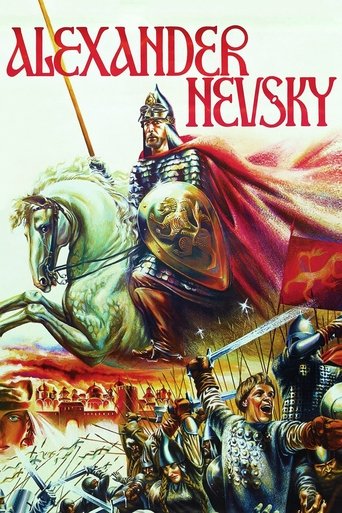
- Sergei Eisenstein's historical films (particularly 'Alexander Nevsky')
- 19th-century Russian historical paintings
- Traditional Russian folk epics and byliny
- Soviet historical materialism
- The works of Russian historian Mikhail Pokrovsky
This film influenced
- Later Soviet historical epics about popular uprisings
- Post-war Soviet films about the 'people's heroes' of Russian history
- The 1978 Soviet film 'Pugachev' which was a remake
- Contemporary Russian historical films about pre-revolutionary rebellions
Film restoration
The film is preserved in the Gosfilmofond archive in Russia. While the original nitrate negatives have deteriorated, a complete 35mm print exists and has been digitally restored. The restored version was released on DVD as part of a collection of classic Soviet historical films. Some scenes show signs of nitrate decomposition, but the film is essentially complete and viewable. The soundtrack has been fully restored from original optical tracks.
Where to watch
- Available on Russian streaming platforms like Mosfilm's official channel
- Included in the 'Soviet Cinema Classics' DVD collection
- Occasionally screened at film festivals specializing in classic cinema
- Available through some university film archives and library collections
- Accessible on specialized streaming services for classic international cinema