Renée Sylvaire
Actor
- Active
- 1914-1914
Films 2
About Renée Sylvaire
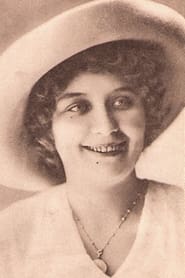
Renée Sylvaire was a French screen actress of the silent era whose surviving film record is extremely limited, with the 1914 production Le Friquet being the only title readily associated with her in standard film references. Because she worked at a time when many performers were credited sparsely, and because early French film documentation is often incomplete, very little biographical information about her has survived in widely accessible sources. Her known screen activity places her in the earliest years of narrative cinema in France, when short dramatic films were a major part of the developing film industry. She appears to have been part of the large group of stage and screen performers whose work helped shape silent-era acting conventions, even though her individual career details are now largely lost to history. No reliable public record of later film appearances, theatrical career, family background, or personal biography has been confirmed in standard modern references. As a result, Renée Sylvaire is best understood as a historically documented but poorly preserved figure from early French cinema, representative of many actors whose contributions were significant at the time but are now only faintly traceable through surviving film credits.
More about Renée Sylvaire
On screen
No detailed contemporary description of Renée Sylvaire's acting style has survived in accessible reference sources. Given the period in which she worked, her performance would have depended on silent-era expressive technique, likely emphasizing gesture, facial expression, and physical clarity rather than spoken dialogue. Any assessment beyond that would be speculative because no reliable reviews, production notes, or extant performance commentary have been securely linked to her.
In film history
Renée Sylvaire's cultural impact is best understood through the historical importance of the era in which she worked rather than through a large surviving body of work. As an actress active in 1914, she belonged to the generation that helped establish screen acting norms in French cinema during the silent period, when film language was still being standardized. Even though her individual fame does not appear to have endured in the way that some of her contemporaries' did, her credit in Le Friquet contributes to the broader record of early film performance and production in France. Performers like Sylvaire are significant because they remind modern researchers that silent cinema was built not only by its most celebrated auteurs and stars but also by numerous lesser-known actors whose work populated and sustained the medium.
Later reputation
Her lasting legacy is archival rather than celebrity-based: she remains a traceable name from the early silent era, attached to one known film credit and to the broader history of French cinema before and during the First World War. For film historians and database researchers, figures like Renée Sylvaire are important because they fill out the personnel history of early production and provide evidence of casting networks in the period. The scarcity of surviving documentation also illustrates how easily performers from the silent era can disappear from popular memory despite having been part of the active film culture of their time. Her legacy therefore lies in historical preservation and in the continuing effort to recover the names of early women in cinema whose careers were once visible but are now only partially documented.
Influence
There is no secure evidence of direct influence on later actors or filmmakers that can be attributed specifically to Renée Sylvaire. Her influence, if any, would have been indirect and tied to the evolving performance practices of silent cinema in France. More broadly, her surviving credit contributes to the collective influence of early screen performers who helped define how emotion, character, and narrative could be conveyed without sound. In that sense, she forms part of the foundational workforce of early film acting rather than the documented lineage of a famous individual style.
Off screen
No verified public information is readily available regarding Renée Sylvaire's personal life, including marriages, children, family background, education, or post-film career. Early French film performers are often difficult to document because studio records, publicity materials, and civil records were not always preserved or widely indexed. In her case, available references do not provide enough reliable biographical detail to reconstruct a fuller personal history without risking inaccuracy.
Credits
- Appeared in the 1914 silent film Le Friquet, the principal surviving screen credit associated with her name
- Worked during the formative years of French narrative cinema in the pre-World War I silent era
- Represents one of the many early film performers whose careers are preserved mainly through incomplete archival filmographies
Roles
- Role in Le Friquet (1914)
Films
- Le Friquet (1914)
Notes
- Her name is associated in accessible film records with only one confirmed title, Le Friquet (1914).
- She belongs to the silent-film generation whose careers are often difficult to reconstruct because early credits were inconsistently recorded.
- Her surviving record places her in French cinema immediately before the First World War, a pivotal moment in film history.
- She is an example of a performer whose historical presence is known, but whose personal life has largely slipped from documentation.
- There is no widely cited evidence of a later talkie-era career under the name Renée Sylvaire.
- She may have appeared in other works that are not yet securely indexed, but only Le Friquet is readily verifiable in common reference sources.
Questions
Who was Renée Sylvaire?
Renée Sylvaire was a French silent-era film actress known primarily for appearing in Le Friquet (1914). Very little biographical information about her has survived in modern reference sources, so she is best understood as an early screen performer from pre-World War I French cinema. Her surviving film record is sparse, but her name remains part of the historical cast lists of the period.
What films is Renée Sylvaire best known for?
She is best known for Le Friquet (1914), which is the principal confirmed title associated with her name. At present, this appears to be the only readily verifiable film credit in standard sources. If she appeared in other productions, they have not been securely documented in accessible references.
When was Renée Sylvaire born and when did she die?
Her birth date and death date are not currently documented in readily accessible reliable sources. Likewise, her birth place and death place have not been confirmed. This lack of information is common for many silent-era performers whose records were incompletely preserved.
What awards did Renée Sylvaire win?
No awards or formal honors are known to be associated with Renée Sylvaire in surviving references. This is not unusual for performers from the silent era, especially those whose careers were brief or poorly documented. Her significance is historical rather than award-based.
What was Renée Sylvaire's acting style?
There is no surviving detailed critique of her acting style, so any exact description would be speculative. As a silent-film actress active in 1914, she would have worked within the expressive visual style of early cinema, relying on gesture, posture, and facial expression to communicate character and emotion. That was the standard craft of the era.
What is Renée Sylvaire's legacy?
Her legacy is primarily archival: she is one of the many early film actresses whose name survives even though most of her life story does not. She stands as part of the foundation of French silent cinema and as evidence of the large number of women who contributed to the medium's early development. For historians, preserving her credit helps complete the historical record of early filmmaking.