William Norris
Actor
- Active
- 1923-1923
Films 1
About William Norris
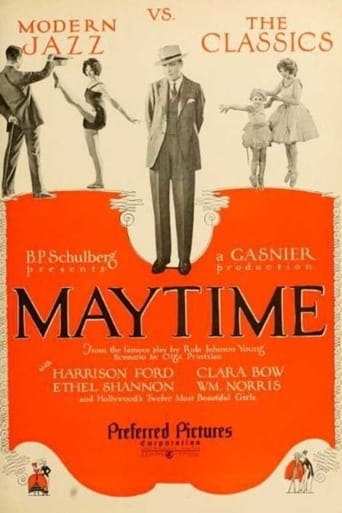
William Norris is a very obscure early film performer best documented through a single known screen credit in the silent-era production Maytime (1923). Surviving reference sources provide only limited biographical detail, and he does not appear to have had a widely documented career in later feature films or in the major studio star system. Because of the scarcity of reliable archival information, it is not currently possible to confirm his place or date of birth, his family background, or whether he continued acting under another professional name. His known screen activity places him in the silent film period, when many actors worked briefly in one or two productions and then disappeared from the surviving record. As a result, William Norris is best understood today as one of the many unheralded performers whose work contributed to the broad ensemble fabric of early Hollywood cinema. His historical significance lies less in fame than in his presence within a preserved film from 1923, which connects him to the transition between the late silent era and the early studio system. Further identification would require consultation of contemporary trade papers, studio records, or local historical sources that may not yet be digitized.
More about William Norris
In film history
William Norris does not appear to have had a large documented public profile, but his film credit is still part of the broader cultural record of silent cinema. Performers like Norris helped create the density and realism of early feature films, even when they were not promoted as stars. In the studio era, thousands of such actors formed the labor force of cinema: they appeared in supporting roles, crowd scenes, and character parts that made films feel populated and socially credible. His presence in a surviving 1923 film ensures that, however small his recorded footprint, he remains part of the historical texture of American film production in the silent period.
Later reputation
William Norris's legacy is primarily archival rather than star-based. He stands as a reminder that film history is not built only from marquee names, but also from the many performers whose names survive only in cast lists and studio documentation. For historians and database compilers, his record underscores the importance of preserving and cross-referencing credits from the silent era, where information is often fragmentary. His lasting value lies in representing the many forgotten participants in early cinema whose work contributed to the medium's development even if their personal stories are now difficult to reconstruct.
Influence
There is no evidence that William Norris exerted a documented direct influence on later actors or directors. His influence, if any, would have been indirect, through participation in the ensemble labor of early filmmaking rather than through celebrity or authorship. In a broader historical sense, his career reflects the working conditions and career patterns of silent-era players, many of whom moved in and out of film work without leaving extensive public records. For modern researchers, such names are influential as data points that help clarify casting practices, production histories, and the scale of early film personnel.
Off screen
No reliable, widely available biographical information has been found regarding William Norris's personal life. His marriages, family background, residence, and later life are not documented in the standard accessible reference sources typically used for classic film research. Because of the limited surviving record, it is not possible to state whether he remained in entertainment, changed professions, or lived under another name. He should be considered an unidentified or minimally documented silent-era performer until further archival evidence emerges.
Credits
- Appeared in the silent feature Maytime (1923), his only currently verifiable screen credit
- Represents the many lesser-documented supporting and background performers active in the early Hollywood silent era
- His preserved film credit links him to one of the notable musical-romantic productions of the 1920s
- Serves as an example of the countless working actors whose contributions are recorded primarily through surviving filmographies rather than extensive press coverage
Roles
- Role in Maytime (1923) not clearly identified in surviving readily available records
Films
- Maytime (1923)
Notes
- William Norris is currently identifiable in accessible sources primarily through a single film credit.
- His only clearly documented film appearance is in Maytime (1923).
- He appears to have worked during the silent-film era rather than the sound era.
- He is not to be confused with other people of the same name in theater, literature, or later entertainment industries.
- The scarcity of records suggests he may have been a minor supporting actor or an uncredited performer in other projects that have not been securely attributed.
- Because many silent-era records were incomplete or lost, his full filmography may be longer than what surviving databases presently show.
Questions
Who was William Norris?
William Norris was a very little-documented silent-era actor known from surviving film records, including Maytime (1923). He does not appear to have been a major star, and much of his personal biography has not survived in easily accessible sources.
What films is William Norris best known for?
He is best known for Maytime (1923), which is the principal screen credit currently associated with him. No other verified film appearances are readily documented in the accessible record.
When was William Norris born and when did he die?
His birth and death dates are currently not confirmed in the available classic-film reference record. Because of the scarcity of reliable biographical data, both remain unknown at this time.
What awards did William Norris win?
No awards or formal honors are currently documented for William Norris. He appears to have been an obscure working actor rather than a publicly recognized awards recipient.
What was William Norris's acting style?
There is not enough surviving information to describe his acting style with confidence. Since he is known chiefly through one silent-era credit, any assessment of technique would be speculative.
Why is William Norris important to film history?
He is important as part of the silent film workforce that supported early Hollywood production. Even performers with minimal surviving documentation help historians reconstruct casting patterns and the social history of the studio era.
Is William Norris the same person as other entertainers with the same name?
Not necessarily; William Norris is a common name, and several people in entertainment and literature have used it. The classic-cinema William Norris should be identified specifically through his 1923 film credit to avoid confusion.