Ernest Joy
Actor
- Active
- 1915-1915
Films 1
About Ernest Joy
Ernest Joy was a silent-era film actor whose screen career was brief and appears to have been concentrated in the mid-1910s. He is documented in surviving film records as appearing in The Golden Chance (1915), one of the notable features from that period, but very little biographical information about his personal life has survived in standard reference sources. Like many early character actors, he seems to have worked during a transitional moment in American cinema when the industry was rapidly moving from short subjects and stage-derived performance toward more polished feature filmmaking. His known screen activity is limited, which makes it difficult to reconstruct a full career arc with confidence, and no reliable evidence currently establishes a later film career or extensive stage work. Because of the scarcity of surviving documentation, he remains one of many early Hollywood figures whose contributions are preserved mainly through film credits rather than extensive publicity or archival biography. His importance lies in the historical record of early feature production and the many supporting performers who helped shape silent cinema even when their names did not become widely famous.
More about Ernest Joy
In film history
Ernest Joy's cultural impact is difficult to measure because surviving documentation about his life and body of work is extremely sparse. Nevertheless, his credit in The Golden Chance places him within the formative years of American feature filmmaking, when many performers contributed to the visual language and ensemble structure that defined silent cinema. Actors like Joy helped populate the expanding screen world of the 1910s, supporting the narrative realism and character-driven dramas that drew audiences away from shorter novelty films. Even when individual careers did not become famous, these performers collectively formed the working foundation of early Hollywood.
Later reputation
His legacy is primarily archival: Ernest Joy is remembered as part of the historical personnel of early American cinema, preserved in film credits and reference listings rather than in extensive biographical literature. For film historians and database researchers, names like his are valuable because they document the breadth of talent involved in silent-era production and the many contributors whose work has otherwise faded from popular memory. The survival of his credit in The Golden Chance ensures that his participation remains part of the record of the medium's early development. In that sense, his legacy is less about celebrity than about historical continuity and the preservation of silent-film labor.
Influence
There is no documented evidence that Ernest Joy directly influenced later actors or filmmakers in a measurable or widely cited way. His significance is instead indirect: he is representative of the early generation of screen performers whose work helped establish acting conventions for the silent screen. The cumulative influence of such performers shaped the ensemble style, physical expressiveness, and character realism that later actors inherited and refined. His place in film history is therefore best understood as part of the broader ecosystem that made classic cinema possible.
Off screen
No reliable biographical record of Ernest Joy's personal life has been confirmed in standard classic-cinema reference sources. Information about marriages, family background, education, residence, and later life is not currently documented with enough certainty to present as fact. As with many silent-era performers who worked only briefly or in small roles, his public footprint appears to have been limited largely to film credits. Any deeper reconstruction of his private life would require archival research in studio records, census materials, or trade-paper references not readily confirmed here.
Credits
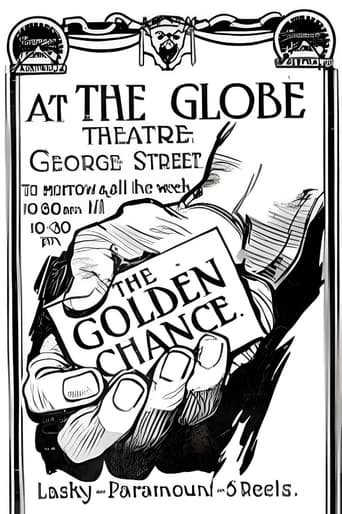
- Appeared in The Golden Chance (1915), a surviving credit that anchors his known filmography
- Worked in the silent-film era during the rapid expansion of feature-length production in the mid-1910s
- Represents the large body of early screen actors whose careers are only partially preserved in extant records
- Associated with one of the better-known dramatic films of its year, helping document ensemble casting practices in silent Hollywood
Films
- The Golden Chance (1915)
Notes
- Ernest Joy is documented in surviving sources mainly through a single known screen credit rather than a long biography.
- His known filmography places him squarely in the silent era, before the advent of synchronized sound film.
- The Golden Chance (1915) is the key film associated with his name in current reference material.
- Because early studio records are incomplete, many minor silent-era performers like Joy remain difficult to research today.
- His career demonstrates how many early film actors worked briefly or intermittently and then disappeared from the historical record.
- He is an example of a film personality whose presence is preserved more in cast lists than in newspaper celebrity coverage.
Questions
Who was Ernest Joy?
Ernest Joy was a silent-era film actor known from surviving records of early Hollywood cinema. His documented screen work is limited, but he is associated with The Golden Chance (1915), which places him among the performers active during the formative years of feature filmmaking.
What films is Ernest Joy best known for?
He is best known for The Golden Chance (1915), which is the principal surviving credit tied to his name in current reference sources. No other widely confirmed film titles are readily documented here with the same level of certainty.
When was Ernest Joy born and when did he die?
Reliable birth and death information for Ernest Joy is not currently confirmed in standard reference materials accessible here. As a result, both dates remain unknown rather than inferred.
What awards did Ernest Joy win?
No awards or formal honors are documented for Ernest Joy in the available historical record. This is not unusual for early silent-era supporting performers whose careers were briefly recorded but not widely publicized.
What was Ernest Joy's acting style?
There is no surviving critical description of his individual performance style that can be verified confidently. As a silent-era actor, he would have worked in a medium that relied heavily on expressive gesture, facial expression, and visual storytelling.
What is Ernest Joy's legacy in film history?
His legacy lies in his presence in the historical record of silent cinema, especially as part of the cast of The Golden Chance. He represents the many early film professionals whose work supported the growth of American feature production even when their names did not become broadly famous.