The Golden Chance
Plot
Mary Denby, a woman raised with refinement and social grace, has fallen on hard times after marrying Steve Denby, a petty thief whose drinking and unreliability have driven the couple into poverty. Desperate to support herself, Mary answers an advertisement for a seamstress position in the home of society matron Mrs. Hillary, whose husband is eager to impress businessman Roger Manning while negotiating a deal. When Mrs. Hillary learns that her intended hostess for the evening is unavailable, she recognizes Mary's natural breeding and intelligence and recruits her as a substitute guest to help complete the evening's social charade. Mary and Roger are immediately drawn to each other, and the Hillarys continue to involve her in their plans for the weekend as the business transaction hangs in the balance. The situation becomes increasingly complicated as Mary's past and present collide, forcing her to choose between the remnants of her unhappy marriage and the possibility of a new life built on dignity, love, and self-respect.
About the Production
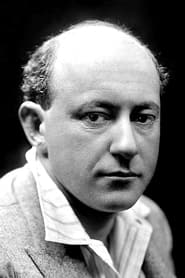
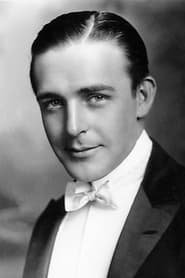
The Golden Chance was produced during Cecil B. DeMille's exceptionally productive early silent era at the Jesse L. Lasky Feature Play Company, when he was rapidly helping define the prestige feature film for Paramount. Like many DeMille productions of the mid-1910s, it was mounted as a star vehicle for Cleo Ridgely, with Wallace Reid playing the romantic lead, and it emphasized elaborate interiors, fashionable costumes, and the contrast between working-class hardship and upper-class elegance. Precise budget and box-office figures are not readily documented in surviving mainstream sources, which is common for many 1915 productions. The film was shot in California, but detailed location records have not been consistently preserved.
Historical Background
The Golden Chance was made in 1915, a pivotal year in American cinema when feature films were rapidly replacing shorter one-reel productions as the dominant commercial form. This was the same year DeMille emerged as a major Hollywood director through a series of sophisticated domestic dramas that helped establish the prestige feature and the studio-era star system. The film also reflects Progressive Era anxieties and fascinations surrounding class mobility, urban respectability, marriage, female labor, and the instability of social appearances. In the broader historical moment, the United States was still neutral in World War I, and popular entertainment often offered audiences polished fantasies of romance and social aspiration that contrasted with increasingly complex real-world modernity. The film matters as part of DeMille's early body of work in which he developed the visual and thematic patterns that would later make him one of the most commercially successful directors in film history.
Why This Film Matters
Although The Golden Chance is not among DeMille's most famous surviving titles, it is culturally significant as an example of early Hollywood's treatment of class, gender, and social performance. The film dramatizes a woman whose personal worth is obscured by poverty and marriage to an unreliable man, then rediscovered through her entry into elite domestic space, a narrative that resonated strongly with contemporary audiences interested in upward mobility and moral reform. It also illustrates how the silent-era studio system used glamour and melodrama to shape public ideas about femininity, respectability, and consumer culture. As an early DeMille feature, it contributes to understanding how Hollywood developed a language of upscale domestic spectacle that would influence later romantic dramas and social comedies.
Making Of
The Golden Chance belongs to the phase in which Cecil B. DeMille was refining the domestic melodrama into a polished prestige product, using carefully staged interiors, decorative settings, and emotionally legible performances. The production likely relied on the Lasky company's fast, efficient shooting methods, which allowed DeMille to turn out features at a brisk pace while still giving them a luxurious appearance. Cleo Ridgely was one of the studio's dependable leading ladies, and the film was tailored to her screen persona as a woman of evident breeding forced into morally compromised circumstances. Wallace Reid's casting fits the era's pattern of handsome young male leads being developed as romantic attractions for the growing feature audience. Detailed behind-the-scenes anecdotes are not well preserved for this title, but its surviving reputation indicates that it was representative of DeMille's evolving command of class, costume, and melodramatic structure.
Visual Style
The film's cinematography is characteristic of early DeMille productions: staged compositions, strong use of interior sets, and an emphasis on visual hierarchy through costume, décor, and blocking. Rather than relying on elaborate camera movement, the style likely favors carefully arranged tableaux and expressive close-ups or medium shots that communicate social status and emotional conflict. Lighting and set dressing would have been used to distinguish the humble, strained domestic life of Mary and Steve from the elegant surroundings of the Hillary household. The visual strategy depends heavily on contrast, making class difference legible at a glance, which is a hallmark of early silent storytelling and DeMille's emerging refinement of it.
Innovations
The film's technical importance lies primarily in its polished feature-film construction rather than in a single groundbreaking innovation. It demonstrates DeMille's early skill at coordinating performance, set design, costume, and narrative economy so that the social world of the story is instantly readable. The production reflects the mature silent-era move toward longer-form storytelling, with multiple character relationships and a sustained dramatic arc instead of simple episodic action. Its technical value for historians comes from showing how early Hollywood created a glossy, coherent domestic melodrama with the tools available before synchronized sound and before the full standardization of studio-era continuity grammar.
Music
As a 1915 silent film, The Golden Chance did not have a synchronized recorded soundtrack. Musical accompaniment would have been supplied live in theaters, typically by a pianist, organist, or small ensemble, and the exact music would have varied by venue. No original composed score is generally documented in surviving standard references for the film. Modern screenings, if available, may use reconstructed or newly compiled silent-film accompaniment drawn from period practices or archive-specific musical selections.
Memorable Scenes
- Mary answering the advertisement for a seamstress and entering the Hillary household, which sets up the film's central class contrast.
- The moment Mrs. Hillary recognizes Mary's breeding and recruits her to stand in as a society guest.
- Mary's introduction into the elegant social world, where her refinement becomes visible despite her poverty.
- The developing attraction between Mary and Roger Manning, which gives the story its romantic center.
- The weekend arrangement that keeps Mary close to the Hillarys and intensifies the emotional and social stakes.
Did You Know?
- The film was directed by Cecil B. DeMille very early in his career, during the period when he was becoming one of Hollywood's most important commercial stylists.
- Cleo Ridgely, one of the key Lasky stars of the period, was central to the film's appeal as a refined woman forced into hardship.
- Wallace Reid appears as the romantic interest, years before he became one of Paramount's major matinee idols.
- The story reflects a frequent DeMille theme: the moral tension between wealth, social performance, and personal virtue.
- The film is part of the early feature-length wave that helped establish Paramount as a major national distributor and producer.
- Surviving documentation on the film is limited compared with later DeMille titles, which makes it more difficult to reconstruct exact production details.
- Its plot hinges on a class-crossing social masquerade, a device that would become a recurring silent-era melodramatic and romantic trope.
- The film showcases DeMille's early interest in domestic drama as a vehicle for social satire and romance.
- Mary's seamstress job and sudden introduction into elite society create a classic silent-film contrast between labor, respectability, and desire.
- Because it is a 1915 silent film, original music accompaniment would have varied by theater and was not standardized.
What Critics Said
Contemporary critical reaction to The Golden Chance appears to have been generally favorable within the trade and popular press environment that welcomed DeMille's early features, especially those that combined emotional melodrama with polished production values. Like much of DeMille's 1915 work, it was likely appreciated for its handsome presentation, clear storytelling, and appeal to middle-class audiences rather than for subtle realism. Modern critical discussion is more limited because the film is not as widely screened or written about as DeMille's better-known surviving titles, but it is typically regarded by film historians as an instructive example of his early domestic melodramas and his growing mastery of feature-length narrative. Its historical value today lies less in canonical status than in what it reveals about the evolution of Hollywood style, star personas, and class-inflected storytelling.
What Audiences Thought
Audience reception in 1915 was likely positive among viewers who enjoyed polished romance, social aspiration, and the emotional clarity typical of silent melodrama. The film's premise of a refined woman temporarily elevated into upper-class society would have offered both fantasy and moral reassurance, making it attractive to viewers during a period when feature films were increasingly marketed as respectable entertainment. No detailed surviving audience metrics are readily available, but the film's production under the Paramount/Lasky banner suggests it was intended for wide commercial circulation. Today, audience access is limited, so its modern reception depends largely on archival screenings, scholarship, and the interest of silent-film enthusiasts rather than mainstream viewership.
Film Connections
Influenced By
- Stage melodrama traditions involving domestic virtue and fallen men
- Early 20th-century social comedies and society dramas
- Progressive Era narratives about class aspiration and moral uplift
- Cecil B. DeMille's own interest in domestic melodrama
This Film Influenced
- Later Cecil B. DeMille domestic and social melodramas
- Silent-era class-crossing romance films
- Early Hollywood society comedies and prestige dramas
You Might Also Like
More Drama Films
View allMore from Cecil B. DeMille
View allFilm Restoration
The Golden Chance is a surviving silent film title but is not widely circulated; copies are held in archival or preservation contexts rather than being broadly available in commercial release. Its survival status is significantly better than that of many 1915 films, though access may be limited and materials may be incomplete or derived from preservation elements rather than original negative sources.