
The Whispering Chorus
"Embezzlement, a false grave, and whispering guilt"
Keys: Space play/pause · ←/→ 10s · F fullscreen · M mute · </> speed
About this film
John Trimble has embezzled and obtains another identity by having a mutilated body buried in his place. He is later arrested for murdering himself. During the trial his mother, before dying from shock, asks him to keep his identity secret since his wife is now married to the Gove
Cast & crew
More films like this
More Drama films
View all →







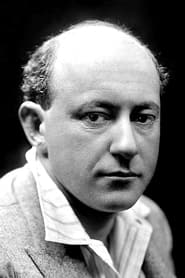
More from Cecil B. DeMille
View all →
More about this film
About the production
Release dateJanuary 21, 1918
ProductionFamous Players-Lasky Corporation, Artcraft Pictures Corporation
Filmed inLos Angeles, California, Famous Players-Lasky Studios
The film was one of Cecil B. DeMille's most sophisticated early works, featuring innovative use of split-screen effects to show the protagonist's internal conflict. The production faced challenges with the graphic nature of some scenes, particularly the murder sequence, which was controversial for its time. DeMille insisted on realistic makeup effects for the mutilated body scene, pushing the boundaries of what was acceptable in 1918 cinema.
Themes
Guilt and redemptionIdentity and self-deceptionMoral responsibilityThe consequences of sinSocial hypocrisy
Themes & topics
embezzlementfaked deathidentity theftmurder trialmoral dilemmapsychological dramaguiltredemptioncourtroom dramadouble identity
Historical background
The Whispering Chorus appeared in 1918, when the silent era before Hollywood consolidated into a studio system shaped how movies were financed, distributed, and discussed. Audiences of the day encountered the work amid shifting tastes in acting, pacing, and spectacle. Its focus on john trimble has embezzled and obtains another identity by having a mutilated body buried in his place mirrors themes circulating in popular culture of that moment.
Why this film matters
The Whispering Chorus (1918) belongs to the wider archive of world cinema, documenting john trimble has embezzled and obtains another identity. Archivists and historians value such titles for what they reveal about craft, genre, and audience expectations. Restorations and festival screenings keep the work visible to viewers far beyond its first run.
Making of
Cecil B. DeMille was deeply invested in this project, seeing it as an opportunity to explore complex moral themes beyond the simple melodramas common at the time. The production was notably ambitious for its budget, with DeMille insisting on elaborate sets for the courtroom scenes and realistic location shooting. Raymond Hatton underwent a significant transformation for his role, losing weight and adopting a hunched posture to convey his character's moral decay. The famous split-screen sequences required innovative camera techniques and multiple exposures, which were technically challenging in 1918. DeMille worked closely with his cinematographer to develop new methods for visualizing the 'whispering chorus' effect, using superimposed images and double exposures. The film's controversial content, particularly the murder scene, required careful negotiation with censors of the time.
What critics said
Press coverage from 1918 is fragmentary for many titles of this vintage; surviving notices for The Whispering Chorus tend to stress novelty, star power, or topical appeal. Later writing places the picture within its national and generic context, weighing both period conventions and moments that still land for modern viewers. Streaming and disc releases have revived discussion among classic-film audiences.
Did you know?
- The film was considered lost for decades until a complete print was discovered in the 1970s in the Netherlands.
- Cecil B. DeMille considered this one of his most personal films, dealing with themes of guilt and redemption that would recur throughout his career.
- The title refers to the 'whispering chorus' of voices that represents the protagonist's conscience throughout the film.
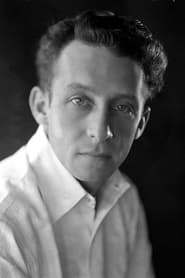
- Raymond Hatton, who played John Trimble, was one of DeMille's favorite character actors and appeared in over 20 of his films.
- The film's innovative use of split-screen to show the character's inner thoughts was groundbreaking for 1918.
- The courtroom scene was filmed in a single continuous take, a technical feat for the time.
- The film was one of the first to use the concept of a character being tried for his own murder.
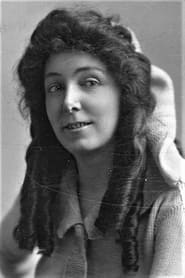
- Kathlyn Williams, who played Jane, was a major star of the 1910s and was known as 'The Biograph Girl' before this role.
- The film's success helped establish DeMille as one of Hollywood's premier directors of moral dramas.
- The mutilated body effects were created by early makeup pioneer George Westmore.
Awards & recognition
- Special Commendation for Moral Significance - National Board of Review (1918)
Visual style
The cinematography by Alvin Wyckoff was groundbreaking for its time, featuring innovative use of split-screen to visualize the protagonist's internal conflict. The film employed multiple exposure techniques to create the 'whispering chorus' effect, showing multiple versions of the character's conscience simultaneously. Wyckoff used dramatic lighting contrasts to emphasize the moral ambiguity of the story, with deep shadows representing the character's guilt. The courtroom sequences featured unusually mobile camera work for 1918, with tracking shots that added tension and realism to the proceedings. The visual style combined realistic settings with expressionistic lighting to create a dreamlike quality that reflected the psychological nature of the narrative.
Innovations
The film pioneered several technical innovations that would become standard in cinema. Most notably, it featured some of the earliest uses of split-screen to show simultaneous action and internal thoughts. The production developed new techniques for makeup effects, particularly for the mutilated body sequence, which were remarkably realistic for the time. The film also experimented with camera movement, using tracking shots in the courtroom scenes that were technically demanding in 1918. The multiple exposure techniques used to create the 'whispering chorus' effect required precise timing and coordination between the camera and performers.
Music
As a silent film, The Whispering Chorus was accompanied by live musical performances during its original theatrical run. The score was composed by William Furst, who created a complex orchestral arrangement that emphasized the film's psychological tension. The music featured recurring leitmotifs for different characters and emotional states, particularly a haunting melody that represented the 'whispering chorus' of conscience. Modern restorations have been accompanied by newly composed scores that attempt to recreate the emotional impact of the original music while using contemporary orchestration techniques.
Famous quotes
The whispers of conscience are louder than any voice of reason.
To escape yourself, you must first destroy yourself.
Sometimes the greatest crime is not what we do, but who we become.
In the courtroom of life, we are all judged by the jury of our own conscience.
Memorable scenes
- The split-screen sequence showing John Trimble's internal conflict as the 'whispering chorus' of his conscience surrounds him
- The murder scene where the drifter is killed and his body mutilated to stand in for Trimble
- The dramatic courtroom revelation where Trimble is confronted with evidence of his own 'death'
- The emotional deathbed scene where Trimble's mother extracts his promise to maintain his new identity
What audiences thought
The film was a commercial success upon its release, drawing large audiences to its multiple theatrical runs. Viewers were particularly struck by the innovative visual effects and the compelling moral dilemma at the story's core. Many contemporary newspaper accounts reported audiences leaving theaters in deep discussion about the film's ethical questions. The film's reputation grew over time, with it being remembered as among the leading thought-provoking dramas of the silent era. Modern audiences who have had the opportunity to see restored versions often express surprise at the film's sophistication and emotional depth, challenging assumptions about the simplicity of early cinema.
Film connections
Influenced by
- Dostoevsky's 'Crime and Punishment'
- German Expressionist cinema
- Contemporary American morality plays
This film influenced
- The Man Who Cheated Himself
- The Wrong Man
- Film noir of the 1940s and 1950s
- Psychological thrillers of the 1960s
Film restoration
The film was considered lost for many years but a complete 35mm print was discovered in the Netherlands Film Archive in the 1970s. This print has since been preserved and restored by film archives including the Library of Congress and the Museum of Modern Art. The restored version maintains most of the original's visual quality, though some deterioration is evident in certain scenes. The film is now considered well-preserved compared to many other silent-era features.
Where to watch
- The Criterion Collection
- Kino Lorber DVD releases
- Film archives including the Library of Congress
- Museum of Modern Art film screenings
- Silent film festivals and retrospectives