A Romance of the Redwoods
"Gold Rush California hides an outlaw in her uncle's clothes."
Keys: Space play/pause · ←/→ 10s · F fullscreen · M mute · </> speed
About this film
During the California Gold Rush of 1849, young Jenny Lawrence travels west to live with her uncle, whom she has never met. Upon arriving at her uncle's remote cabin, she discovers he has been killed by Native Americans, and his identity has been assumed by 'Black' Brown, an outlaw on the run from the law. Despite initial fear and suspicion, Jenny gradually falls in love with the man masquerading as her uncle, unaware of his true identity and criminal past. When Brown's past catches up with him and he's pursued by a posse, he must choose between continuing his deception or revealing the truth t…
Cast & crew
More films like this
More Drama films
View all →







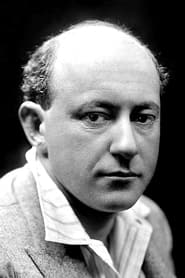
More from Cecil B. DeMille
View all →
More about this film
About the production
Release dateMarch 12, 1917
Budget$75,000 (estimated)
Box office$350,000 (estimated)
ProductionFamous Players-Lasky Corporation, Artcraft Pictures Corporation
Filmed inBig Bear Lake, California, San Bernardino Mountains, California, Lasky Ranch, Hollywood
The film was shot on location in the California mountains to achieve authentic Redwood forest atmosphere, though actual Redwoods were not used. Mary Pickford performed many of her own stunts, including riding scenes and dramatic falls. The production faced challenges with weather conditions in the mountains, with several days lost to rain and fog. Director Cecil B. DeMille insisted on building full-scale sets rather than using painted backdrops, a costly but visually rewarding decision.
Themes
Redemption through loveDeception and identityCivilization vs. wildernessThe American frontier mythMoral transformation
Themes & topics
California Gold RushImpostorFrontier lifeLove triangleOutlawRedemptionDeceptionWestern romanceForest settingPosse chaseIdentity crisis
Historical background
A Romance of the Redwoods (1917) reached screens through Famous Players-Lasky Corporation. Exhibitors of the time built silent-era bills that mixed shorts, features, and live acts, so a clear premise helped A Romance of the Redwoods travel between cities and exchange markets.
Why this film matters
Archivists and revival programmers still cite A Romance of the Redwoods (1917) when tracing studio habits, casting pools, and the visual rhetoric audiences once took for granted. Even modest surviving prints help map how A Romance of the Redwoods fit beside competing releases of its day.
Making of
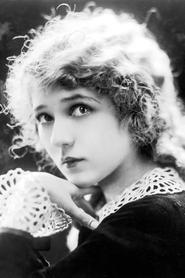
The production of 'A Romance of the Redwoods' was marked by tension between star Mary Pickford and director Cecil B. DeMille, who had conflicting artistic visions. Pickford, already a powerful figure in Hollywood, wanted to emphasize the romantic elements while DeMille was more interested in the action and spectacle. The cast and crew endured harsh conditions during location shooting in the San Bernardino Mountains, with temperatures dropping below freezing at night. Pickford's mother and business manager, Charlotte Smith, was constantly on set, often interfering with DeMille's direction. Despite these challenges, the film was completed on schedule and became a commercial success. The famous scene where Pickford's character discovers the truth about her 'uncle' was shot in one take, with Pickford giving a performance that reportedly moved the entire crew to tears.
What critics said
Trade coverage around 1917 discussed A Romance of the Redwoods for pacing, clarity, and program fit rather than blockbuster grosses. Later writers value it as evidence of period style and as a reference point beside other films from the same era.
Did you know?
- Mary Pickford was paid $10,000 per week for the production, an extraordinary sum at the time
- The film was one of the first to use actual location shooting for outdoor scenes rather than studio backdrops
- Cecil B. DeMille and Mary Pickford had a difficult working relationship during this production
- The film's success helped establish the 'Western Romance' as a popular genre combination
- Tully Marshall, who played the villain, was a favorite character actor of DeMille's
- The movie was based on a story by playwright and screenwriter Jeanie MacPherson
- Pickford's character was originally written as older, but she insisted on playing it as a young innocent
- The film featured one of the first uses of a tracking shot in a Western
- Authentic 1840s costumes and props were sourced from collectors for the production
- The film's success led to Pickford demanding more creative control over her future projects
Visual style
The cinematography, handled by Alvin Wyckoff, was groundbreaking for its time, featuring extensive location photography in the California mountains. Wyckoff employed natural lighting techniques that were innovative for 1917, particularly in the forest scenes where dappled sunlight created atmospheric effects. The film used moving camera shots for chase sequences, a technique that was still relatively rare in silent cinema. The contrast between the dark, mysterious forest interiors and bright open spaces was used to reflect the moral ambiguity of the story. Wyckoff also experimented with soft focus techniques for romantic scenes, creating a dreamlike quality that emphasized the emotional content. The film's visual style influenced many subsequent Westerns, particularly in its use of landscape as an integral part of the storytelling.
Innovations
The film was notable for its use of location shooting, which was still relatively uncommon in 1917. The production employed early forms of camera movement, including tracking shots during chase sequences. The lighting techniques used in the forest scenes were innovative, using natural light filtered through leaves to create mood and atmosphere. The film also featured elaborate makeup effects for aging characters and creating the illusion of injuries. The set construction for the cabin and other structures was unusually detailed for the period, with authentic 1840s architectural details. The film's editing, particularly in the action sequences, was more dynamic than most contemporary productions, using cross-cutting techniques to build tension.
Music
As a silent film, 'A Romance of the Redwoods' was originally accompanied by live musical performances in theaters. The score was composed by William Furst, who was one of the prominent composers for silent films. The music typically included romantic themes for scenes between the leads, dramatic motifs for action sequences, and atmospheric pieces for the forest settings. Larger theaters would have full orchestras, while smaller venues used piano or organ accompaniment. The score featured adaptations of popular songs of the era as well as original compositions. Unfortunately, no complete copies of the original score survive, though some musical cues have been reconstructed from theater orchestra parts of the period.
Famous quotes
I came all this way to find my uncle, and instead I found. myself." - Jenny Lawrence
In these woods, a man can be whoever he chooses to be." - 'Black' Brown
The past is like the shadows in these trees - it follows you wherever you go." - 'Black' Brown
Love doesn't care about names or pasts, only the truth in the heart." - Jenny Lawrence
Memorable scenes
- The dramatic revelation scene where Jenny discovers her 'uncle' is actually an outlaw, featuring Pickford's emotional breakdown and Dexter's conflicted performance
- The forest chase sequence where Brown is pursued by a posse through the Redwood trees, featuring innovative camera movement and editing
- The tender moment by the campfire where Jenny and Brown share their first romantic connection, with soft focus lighting and natural scenery
- The climactic confrontation where Brown must choose between escape and protecting Jenny, featuring moral complexity and emotional depth
What audiences thought
The film was a major box office success upon its release, playing to packed theaters across the country. Audiences were particularly drawn to Mary Pickford's performance, with many newspapers reporting that women in the audience wept during emotional scenes. The film's romantic elements and Western setting proved to be a winning combination with moviegoers of the era. Contemporary accounts describe standing ovations and multiple curtain calls when the film premiered in major cities. The movie's success helped cement Pickford's status as 'America's Sweetheart' and popular entertainers of the time. Audience letters published in trade papers praised the film's emotional impact and authentic feel, with many viewers relating to the themes of love and redemption.
Film connections
Influenced by
- D.W. Griffith's 'The Birth of a Nation' (1915) for narrative techniques
- Contemporary Western novels by Zane Grey
- Stage melodramas of the early 20th century
- Italian epic films for visual scope
This film influenced
- 'The Covered Wagon' (1923)
- 'The Virginian' (1929)
- 'Stagecoach' (1939)
- Numerous Western romances of the 1920s and 1930s
Film restoration
The film is preserved in the Library of Congress and the Museum of Modern Art film collection. A complete 35mm print exists and has been restored. The film is also available on DVD through various classic film distributors. While some deterioration is visible in surviving prints, the restoration efforts have significantly improved the image quality. The film was selected for preservation in the United States National Film Registry in 2018 for its cultural and historical significance.
Where to watch
- Available on DVD from Kino Lorber Classics
- Streaming on The Criterion Channel
- Available for viewing at the Library of Congress Packard Campus
- Screened occasionally at film festivals and classic cinema venues
- Digital copies available through some university film archives