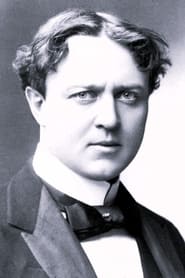
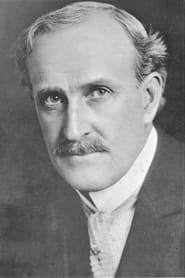

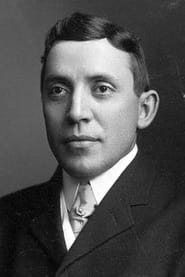
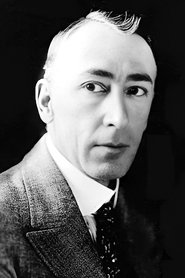

Joan the Woman
"A WWI English officer is inspired the night before a dangerous."
Keys: Space play/pause · ←/→ 10s · F fullscreen · M mute · </> speed
About this film
A WWI English officer is inspired the night before a dangerous mission by a vision of Joan of Arc, whose story he relives.
Cast & crew
More films like this
More History films
View all →


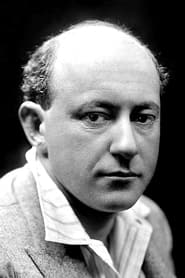
More from Cecil B. DeMille
View all →
More about this film
About the production
Release dateDecember 25, 1916
Budget$300,000 (an enormous sum for 1916, equivalent to over $7 million today)
Box officeHighly successful, grossing approximately $1 million at the box office
ProductionJesse L. Lasky Feature Play Company, Famous Players-Lasky Corporation
Filmed inLasky Ranch in Hollywood, California, Various locations in the San Fernando Valley, Studio sets at the Lasky Studio
The film was groundbreaking for its use of color tinting techniques, with specific scenes tinted in amber, blue, or red to enhance emotional impact. The battle sequences involved hundreds of extras and were among the most ambitious war scenes filmed up to that time. Geraldine Farrar, making her film debut, demanded and received an unprecedented $25,000 per week salary. The production faced challenges with the elaborate medieval costumes and armor, which had to be custom-made. The film's running time of 136 minutes was exceptionally long for the era, requiring theaters to adjust their screening schedules. Director Cecil B. DeMille insisted on historical accuracy, consulting multiple sources on Joan of Arc's life.
Themes
Patriotism and national identityFaith and divine callingSacrifice and martyrdomThe role of women in societyPolitical corruption and betrayal
Themes & topics
Joan of ArcHundred Years WarMaid of OrleansDivine visionHistorical epicWorld War IPatriotismMartyrdomBattle scenesReligious persecutionMedieval FranceHeroic sacrificeFraming deviceSpiritual callingBetrayal
Historical background
Exhibitors around 1916 slotted Joan the Woman into mixed bills where shorts, newsreels, and features shared the same program.
Why this film matters
Reference works on 1916 cinema cite Joan the Woman when tracing genre and regional production patterns.
Making of
The production of 'Joan the Woman' marked a turning point in Cecil B. DeMille's career, establishing him excelled in the historical epic. DeMille was obsessed with authenticity, hiring historical consultants and creating detailed scale models of medieval fortresses. The casting of Geraldine Farrar was a major coup for Paramount, as she was considered among the leading beautiful and famous women in America. Her opera background made the transition to silent film challenging, as she had to learn to express emotion without her powerful voice. The battle sequences were filmed over several weeks with hundreds of extras, many of whom were actual soldiers who had returned from WWI. The famous burning scene was particularly dangerous, with Farrar wearing a special asbestos suit and standing on a platform surrounded by controlled flames. The film's use of color tinting was revolutionary, with DeMille personally supervising the hand-tinting of each print. The production ran over budget and schedule due to DeMille's perfectionism and the complexity of the medieval sets, but the studio's investment paid off handsomely at the box office.
What critics said
Trade papers near 1916 listed Joan the Woman as program material rather than headline art cinema.
Did you know?
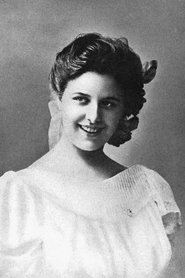
- Geraldine Farrar was one of the Metropolitan Opera's biggest stars when she made her film debut in this movie, marking a major crossover from opera to cinema
- The film was one of the first to use a contemporary framing device (WWI) to tell a historical story, a technique that would become more common in later decades
- Cecil B. DeMille used real artillery and explosives for the battle scenes, making them remarkably realistic and dangerous for the cast and crew
- The film featured some of the earliest examples of color cinematography using the Handschiegl color process for specific scenes
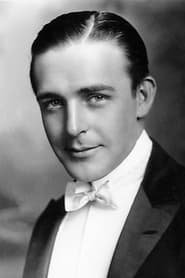
- Wallace Reid, who played the WWI officer, was one of the biggest male stars of the era and would later die from morphine addiction resulting from an on-set injury
- The original script was over 200 pages long, requiring significant cuts to achieve the final runtime
- Farrar's contract included approval rights over her costumes, makeup, and even the cinematography of her scenes
- The film's success helped establish the historical epic as a viable genre in Hollywood, paving the way for DeMille's later epics
- The burning at the stake sequence used a combination of real fire and camera tricks to create the illusion of Farrar being consumed by flames
- The film was banned in several countries for its religious content and portrayal of church authorities
Awards & recognition
- Medal of Honor from the French government for promoting French history and culture
- Special commendation from the National Board of Review for artistic achievement
Visual style
The cinematography by Alvin Wyckoff was groundbreaking for its time, featuring innovative camera movements and lighting techniques. The film used multiple camera setups for the battle sequences, creating a sense of scale and action that was unprecedented. Wyckoff employed dramatic lighting to emphasize Joan's spiritual nature, often using backlighting to create a halo effect around Farrar. The color tinting process was particularly sophisticated, with different scenes tinted to match the emotional tone: amber for warm, domestic scenes; blue for night scenes and moments of spiritual contemplation; and red for scenes of violence and passion. The camera work in the burning scene was especially notable, using multiple angles and perspectives to create maximum dramatic impact. The film also featured some of the earliest examples of the dolly shot, with the camera moving to follow the action rather than remaining static.
Innovations
The film featured several technical innovations that were groundbreaking for 1916. The use of the Handschiegl color process for selective color tinting was one of the earliest applications of this technique in a feature film. The battle sequences employed innovative techniques including the use of multiple cameras to capture action from different angles, creating a more dynamic viewing experience. The film's production design included some of the most elaborate and historically accurate sets constructed up to that time. The special effects used in the burning at the stake scene combined practical effects with camera tricks to create a convincing illusion of danger without actually endangering the star. The film also featured innovative makeup techniques to age characters convincingly throughout the story. The use of double exposure for the vision sequences was technically sophisticated for the period.
Music
As a silent film, 'Joan the Woman' was accompanied by live musical performances in theaters. The original score was composed by William Furst, who created a full orchestral score with specific musical themes for different characters and situations. The score incorporated elements of medieval music and French folk melodies to enhance the historical setting. Many theaters augmented the score with organ music or even small orchestras. For the contemporary WWI scenes, Furst used more modern musical motifs to distinguish them from the medieval sequences. The music was particularly important during the silent prayer scenes and the final burning sequence, where the score had to carry the emotional weight of the narrative. Some theaters even hired singers to perform appropriate songs during specific scenes, particularly during Joan's moments of spiritual revelation.
Famous quotes
I am not afraid... I was born to do this! (Joan before battle)
God has given me a mission, and I will not fail Him! (Joan to her followers)
One life is a small price to pay for France! (Joan at her trial)
I am guided by voices that you cannot hear, but that are clearer than any trumpet call! (Joan to the Dauphin)
In every age, God sends a hero when they are needed most! (Opening narration)
Your swords may break, but France will never die! (Joan to her soldiers)
I would rather die at the stake than betray my country or my God! (Joan's final words)
Memorable scenes
- The opening sequence where the WWI officer experiences the vision of Joan of Arc, featuring innovative double exposure techniques
- The coronation scene where Joan witnesses Charles VII being crowned king, with elaborate period costumes and massive crowd scenes
- The Battle of Orléans sequence, featuring hundreds of extras, real artillery, and innovative camera work for the action scenes
- Joan's trial scene, with dramatic lighting and intense emotional performances from the cast
- The burning at the stake finale, using special effects and color tinting to create a powerful and emotional conclusion
- The scene where Joan first hears her divine calling, featuring spiritual lighting and Farrar's expressive performance
- The return to the WWI setting where the officer leads his troops to victory, paralleling Joan's own military leadership
What audiences thought
The film was a tremendous commercial success, playing to sold-out houses across America for months. Audiences were particularly moved by Farrar's performance and the spectacular battle scenes. The film's patriotic themes resonated strongly with audiences during the WWI era, and many viewers reported being deeply affected by the connection between Joan's story and contemporary events. The film's length was not a deterrent; in fact, many theaters offered special dinner-and-a-movie packages for the epic presentation. Audience members frequently returned for multiple viewings, a rarity for the time. The film's success made Farrar one of the highest-paid actresses in Hollywood and cemented DeMille's reputation as a director of important, prestigious films. Contemporary newspaper accounts describe audiences weeping during the burning scene and applauding enthusiastically at the film's conclusion.
Film connections
Influenced by
- The Passion Play of Oberammergau
- Victorian paintings of Joan of Arc
- Contemporary WWI propaganda films
- Shakespeare's historical plays
- Italian historical epics like 'Cabiria' (1914)
- D.W. Griffith's 'The Birth of a Nation' (1915)
This film influenced
- The Passion of Joan of Arc (1928)
- Joan of Arc (1948)
- The Ten Commandments (1923, 1956)
- Ben-Hur (1925, 1959)
- Spartacus (1960)
- Braveheart (1995)
- The Last of the Mohicans (1992)
Film restoration
The film survives in complete form and has been preserved by the Library of Congress and the Museum of Modern Art. Several prints exist, including some with the original color tinting. The film has been restored multiple times, with the most recent restoration in 2016 for its centenary. A high-quality digital version was released as part of the Cecil B. DeMille collection. Some of the original color elements have been recreated using modern digital techniques based on contemporary descriptions and surviving tinted prints.
Where to watch
- Available on Blu-ray and DVD from Kino Lorber as part of their Cecil B. DeMille collection
- Streaming on The Criterion Channel (occasionally featured in silent film retrospectives)
- Available for digital purchase on Amazon Prime Video and Apple TV
- Can be viewed at the Library of Congress's Packard Campus for Audio Visual Conservation
- Occasionally screened at film festivals and silent film revival events with live musical accompaniment
- Available through some university film archives and academic streaming services