It
"Clara Bow defines IT—charm that conquers class."
Keys: Space play/pause · ←/→ 10s · F fullscreen · M mute · </> speed
About this film
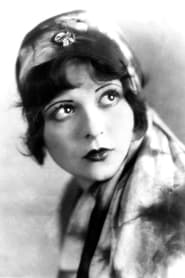
A flapper shopgirl woos her rich boss with animal magnetism -- the captivating personal quality otherwise known as "it.".
Cast & crew
More films like this
More Comedy films
View all →







More from Clarence G. Badger
View all →


More about this film
About the production
Release dateFebruary 19, 1927
Budget$139,000
Box office$1.4 million (domestic), $2.2 million (worldwide)
ProductionParamount Pictures, Famous Players-Lasky Corporation
Filmed inParamount Studios, Hollywood, California, Ritz-Carlton Hotel, New York City (for reference shots)
The film was shot in just over three weeks during the summer of 1926. Director Clarence G. Badger had to work quickly to capitalize on Clara Bow's rising popularity. The famous restaurant scene was filmed in one take with multiple cameras to capture the spontaneous energy. The production faced challenges with the New York location shooting, as they had to recreate Manhattan streets on the Paramount backlot. The film's success led to an immediate sequel, 'It' (1928), though it featured different characters.
Themes
Social class mobility and the American DreamFemale sexuality and empowerment in the 1920sAuthenticity versus artificiality in personal attractionModern urban life versus traditional valuesThe power of self-confidence and charisma
Themes & topics
flappershopgirlrich bossromancecomedysocial classNew York Citydepartment storecharismaJazz Agesilent filmmakeovermistaken identityyacht
Historical background
It (1927) reached screens through Paramount Pictures. Exhibitors of the time built silent-era bills that mixed shorts, features, and live acts, so a clear premise helped It travel between cities and exchange markets.
Why this film matters
Archivists and revival programmers still cite It (1927) when tracing studio habits, casting pools, and the visual rhetoric audiences once took for granted. Even modest surviving prints help map how It fit beside competing releases of its day.
Making of
The production of 'It' was marked by intense studio pressure to create a star vehicle for Clara Bow, who had shown promise but hadn't yet achieved major stardom. Director Clarence G. Badger, known for his work with comedians, emphasized Bow's natural comedic timing and physical expressiveness. The famous scene where Bow winks at the camera was improvised during filming and became defining moments in silent cinema. The production team worked closely with Elinor Glyn to ensure the film captured her concept of 'It' while adapting it for American audiences. The wardrobe department created over 30 different outfits for Bow, establishing her as a fashion icon. The film's rapid production schedule was necessitated by Paramount's financial troubles, but this pressure resulted in a fresh, energetic quality that audiences loved. The chemistry between Bow and Moreno was genuine, though off-screen they had a difficult relationship due to Moreno's traditional Spanish background clashing with Bow's modern flapper lifestyle.
What critics said
Trade coverage around 1927 discussed It for pacing, clarity, and program fit rather than blockbuster grosses. Later writers value it as evidence of period style and as a reference point beside other films from the same era.
Did you know?
- The term 'It Girl' was coined specifically for Clara Bow after the production's success, though Elinor Glyn had defined 'It' in her 1926 novella as 'that quality possessed by some which draws all others with its magnetic force.'
- Clara Bow was not the first choice for the lead role - Paramount initially considered actress Dolores Costello, but studio head B.P. Schulberg insisted on Bow after seeing her screen tests.
- The famous scene where Clara Bow sits on her boyfriend's lap while eating ice cream was considered scandalous for its time and was nearly cut by censors.
- Elinor Glyn, who wrote the original story and appears in the film as herself, was paid $50,000 for the rights - an enormous sum for 1927.
- The film's success saved Paramount Pictures from bankruptcy during a difficult financial period.
- A young Gary Cooper can be spotted as an extra in the newspaper office scene, though he's uncredited.
- The yacht scenes were filmed on a real yacht owned by Paramount Pictures, which was later used in several other films.
- Clara Bow's Brooklyn accent was so thick that many of her co-stars couldn't understand her dialogue during filming, requiring multiple takes.
- The film's success led to merchandise including 'It' dolls, 'It' perfume, and 'It' clothing lines.
- William Austin's character's catchphrase 'Don't be silly' became a popular expression in the late 1920s.
Awards & recognition
- Photoplay Medal of Honor (1927) - Won
Visual style
The cinematography by James Wong Howe was groundbreaking for its time, employing innovative techniques to capture Clara Bow's magnetic presence. Howe used soft focus lighting during close-ups to enhance Bow's expressive eyes and create an ethereal glow around her, effectively visualizing the concept of 'It.' The film employed extensive location shooting in New York, which was unusual for the period, giving the story a realistic urban atmosphere. Howe experimented with camera movement, including a famous tracking shot following Bow through the department store that created a sense of energy and spontaneity. The contrast between the bright, bustling store scenes and the intimate, dimly lit romantic moments was carefully calibrated to reflect the film's emotional journey. The use of mirrors and reflections throughout the film symbolized the theme of self-awareness and personal magnetism. Howe's work on 'It' influenced the visual style of romantic comedies for decades to come.
Innovations
While 'It' was not a technical innovator in the way some science fiction or epic films were, it employed several notable techniques that advanced the romantic comedy genre. The film made extensive use of multiple camera setups for comedy scenes, allowing for more dynamic editing and timing. The production team developed new makeup techniques specifically for Clara Bow to ensure her features translated well to the black and white film, creating a look that would influence makeup artists for years. The film's editing pace was notably faster than many contemporary dramas, reflecting the energy of the Jazz Age and Bow's performance style. The use of location shooting combined with studio sets created a seamless urban environment that was more realistic than most films of the period. The film also experimented with subtle special effects, including double exposure shots to emphasize the concept of 'It' as an almost supernatural quality.
Music
As a silent film, 'It' was accompanied by live musical performances during its original theatrical run. The original cue sheet suggested popular songs of the era including 'Charleston' and 'Ain't We Got Fun?' for upbeat scenes, while romantic moments featured classical pieces like Debussy's 'Clair de Lune.' Many theaters commissioned original scores from their house orchestras. The film's restoration in 2001 included a new orchestral score composed by Robert Israel, which attempted to recreate the sound of a 1920s theater orchestra while incorporating contemporary film scoring techniques. The original release included sound effects using the Vitaphone system, though these were limited to basic noises like doorbells and telephones. The music was crucial in conveying the film's emotional content and establishing the Jazz Age atmosphere, with syncopated rhythms underscoring Bow's energetic performances.
Famous quotes
Miss Spence: 'I've got It! I know I have It! And I'm going to prove it to you!'
Elinor Glyn: 'It, believe me, is a very virile power... It's a purely magnetic quality... It's self-confidence and indifference as to whether you are pleasing or not.'
Monty: 'Don't be silly, my dear. You can't possibly have It.'
Cyrus: 'There's something about you... I don't know what it is... but it's there.'
Betty Lou: 'I'm not afraid of anything. I'm not afraid of you, and I'm not afraid of myself.'
Memorable scenes
- The iconic department store scene where Clara Bow, as Betty Lou, first catches Cyrus's eye while playfully modeling clothes and demonstrating her irresistible charm
- The famous restaurant scene where Bow sits on her date's lap while eating ice cream, shocking the other patrons but demonstrating her free-spirited nature
- The yacht sequence where Betty Lou pretends to be sophisticated to impress Cyrus, leading to comic misunderstandings and romantic tension
- The final rooftop scene where Betty Lou's genuine 'It' quality finally wins over Cyrus, culminating in a passionate embrace against the New York skyline
- The opening sequence introducing the concept of 'It' with Elinor Glyn herself explaining the mysterious quality to a group of socialites
What audiences thought
Audiences in 1927 embraced 'It' with extraordinary enthusiasm, turning it into one of the biggest box office hits of the year. The film reportedly caused standing-room-only crowds in theaters across America, with some venues running the film continuously for weeks. Clara Bow received thousands of fan letters weekly, and young women across the country imitated her hairstyle and fashion choices. The film's success was particularly notable among younger audiences, who saw themselves reflected in Bow's modern, independent character. In major cities, 'It' parties became a social trend, with attendees dressing as flappers and attempting to demonstrate their own 'It' quality. The film's popularity extended internationally, though some European markets required cuts to the more suggestive scenes. Even today, the film maintains a devoted following among silent film enthusiasts and is frequently screened at classic film festivals to enthusiastic audiences.
Film connections
Influenced by
- The novella 'It' by Elinor Glyn (1926)
- Contemporary German romantic comedies
- The works of Ernst Lubitsch
- American stage comedies of the 1920s
- Earlier Clara Bow films that established her persona
This film influenced
- Platinum Blonde (1931)
- My Man Godfrey (1936)
- When Harry Met Sally (1989)
- Pretty Woman (1990)
- The Devil Wears Prada (2006)
- The Social Network (2010)
Film restoration
The film is well-preserved with complete copies held in several archives including the Library of Congress, the UCLA Film & Television Archive, and the Museum of Modern Art. A restored version was released in 2001 by Milestone Films, featuring a new musical score and improved image quality. The restoration was undertaken using the best available 35mm elements and digital technology to repair damage and stabilize the image. The original nitrate negatives have long since decomposed, but high-quality safety copies exist. The film is part of the National Film Registry, having been selected for preservation in 2001 for its cultural, historical, and aesthetic significance.
Where to watch
- The Criterion Collection (Blu-ray/DVD)
- Kino Lorber (DVD/Blu-ray)
- The Criterion Channel (streaming)
- MUBI (streaming - periodically available)
- YouTube (official uploads from archives)
- Public domain websites (though quality varies)
- Film archives and museums with screening programs
- Turner Classic Movies (periodic television broadcasts)