
Sharmila Tagore
Actor
Born: December 8, 1944 in Hyderabad, Hyderabad State, British India Active: 1959-present
Films
2 films

About Sharmila Tagore
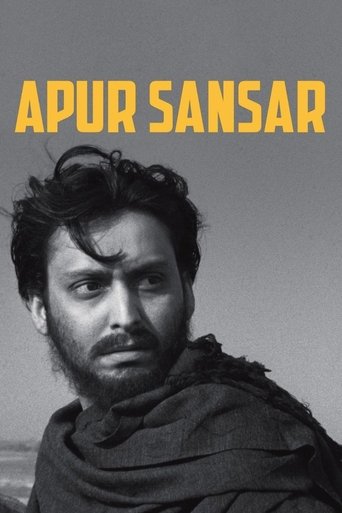
Sharmila Tagore began her remarkable career as a teenager when she was discovered by filmmaker Satyajit Ray, who cast her as Aparna in his masterpiece 'Apur Sansar' (The World of Apu) in 1959. Her debut performance at just 14 years old was critically acclaimed and established her as a serious actress capable of conveying deep emotional complexity. Following this success, Ray cast her again in 'Devi' (1960), where she portrayed a young woman believed to be an incarnation of the goddess Kali, showcasing her ability to handle challenging, psychologically complex roles. Throughout the 1960s and 1970s, Tagore became one of India's most versatile actresses, successfully transitioning from Bengali art cinema to mainstream Hindi films while maintaining her artistic integrity. She worked with prominent directors like Hrishikesh Mukherjee, Basu Chatterjee, and Raj Kapoor, delivering memorable performances in films such as 'Anupama,' 'Safar,' and 'Amar Prem.' Beyond her acting career, Tagore served as the chairperson of the Central Board of Film Certification from 2004 to 2011, contributing to Indian cinema policy and censorship debates. Her career spanning over six decades has made her an icon of Indian cinema, representing the bridge between parallel cinema and mainstream Bollywood.
The Craft
On Screen
Sharmila Tagore is renowned for her naturalistic and understated acting style, characterized by subtle facial expressions and nuanced emotional delivery. Her performances often convey deep psychological complexity through minimal gestures, reflecting her training under Satyajit Ray's influence. She excels at portraying vulnerable yet strong female characters, bringing authenticity to both traditional and modern roles. Her ability to adapt her style from the restrained realism of art cinema to the more expressive demands of mainstream films demonstrates remarkable versatility. Tagore's screen presence combines grace with intelligence, allowing her to carry complex narratives with quiet dignity and emotional depth.
Milestones
- Debut in Satyajit Ray's 'Apur Sansar' (1959) at age 14
- Starred in Ray's 'Devi' (1960)
- Won National Film Award for Best Actress for 'Mausam' (1975)
- Received Padma Bhushan from Government of India (2013)
- Served as Chairperson of Central Board of Film Certification (2004-2011)
- International recognition at Cannes and Moscow Film Festivals
- Successful transition from Bengali to Hindi cinema
- Represented India as UNICEF Goodwill Ambassador
Best Known For
Iconic Roles
Must-See Films
Accolades
Won
- National Film Award for Best Actress for 'Mausam' (1975)
- Filmfare Award for Best Actress for 'Aradhana' (1969)
- Filmfare Award for Best Actress for 'Amar Prem' (1972)
- Filmfare Lifetime Achievement Award (2004)
- Padma Bhushan (2013)
- Bengal Film Journalists' Association Awards
- Moscow International Film Festival Best Actress (1975)
Nominated
- Multiple Filmfare Award nominations throughout 1960s-1980s
- National Film Award nominations for various performances
Special Recognition
- Padma Bhushan (2013)
- UNICEF Goodwill Ambassador
- Chairperson of Central Board of Film Certification (2004-2011)
- Dadasaheb Phalke Award (2021)
- Lifetime Achievement Award at International Film Festival of India
Working Relationships
Worked Often With
Studios
Why They Matter
Impact on Culture
Sharmila Tagore revolutionized Indian cinema by successfully bridging the gap between parallel art cinema and mainstream Bollywood. Her early work with Satyajit Ray brought international attention to Indian cinema, while her subsequent Hindi films demonstrated that artistic integrity could coexist with commercial success. She challenged conventional portrayals of women in Indian cinema, often playing strong, independent characters who defied traditional stereotypes. As one of the first Indian actresses to gain international recognition, she paved the way for future generations of Indian actors to work globally. Her role as UNICEF Goodwill Ambassador extended her influence beyond cinema into social advocacy, particularly for children's rights and education.
Lasting Legacy
Sharmila Tagore's legacy encompasses her contributions to Indian cinema across six decades, her role in elevating the status of actresses in the industry, and her cultural ambassadorship for India internationally. She represents the golden era of Indian cinema while remaining relevant to contemporary audiences. Her performances continue to be studied in film schools for their technical excellence and emotional authenticity. The Tagore-Pataudi family remains one of India's most influential cultural dynasties, with her children carrying forward her legacy in cinema and public life. Her work with the Central Board of Film Certification has left a lasting impact on Indian film policy and censorship practices.
Who They Inspired
Tagore influenced generations of Indian actresses by demonstrating that women could be both commercially successful and artistically respected. Her naturalistic acting style inspired actors to move away from theatrical performances toward more realistic portrayals. She showed that actresses could have longevity in the industry, transitioning from leading lady roles to character roles with grace. Her international success opened doors for other Indian actors to work in global cinema. Her advocacy for women's issues and children's rights has inspired many celebrities to use their fame for social causes.
Off Screen
Sharmila Tagore married Mansoor Ali Khan Pataudi, the 8th Nawab of Pataudi and former captain of the Indian cricket team, in 1968. Their marriage was considered one of India's most high-profile unions, bridging cinema and cricket royalty. After her husband's death in 2011, she has continued to be active in both cinema and social causes. She has maintained a relatively private personal life despite her celebrity status, focusing on her family and philanthropic work. Tagore is known for her elegance and has been a style icon throughout her career, representing Indian culture internationally.
Education
St. Mary's School, Kolkata; Loreto Convent, Shillong; Graduated from University of Delhi
Family
- Mansoor Ali Khan Pataudi (1968-2011)
Did You Know?
- Discovered by Satyajit Ray at age 14 through a photograph in a magazine
- Her debut film 'Apur Sansar' was the third part of Ray's Apu Trilogy
- She was the first Indian actress to appear in a bikini on screen in 'An Evening in Paris' (1967)
- Converted to Islam upon marriage and took the name Ayesha Sultana
- Her son Saif Ali Khan is one of Bollywood's highest-paid actors
- She was offered the role that eventually went to Jaya Bhaduri in 'Zanjeer' (1973)
- Fluent in Bengali, Hindi, English, and Urdu
- Was one of the highest-paid actresses of her time in the 1970s
- Her granddaughter Sara Ali Khan is also a successful Bollywood actress
- Received the Dadasaheb Phalke Award, India's highest honor in cinema
In Their Own Words
Cinema is not just entertainment, it's a powerful medium for social change
Satyajit Ray taught me that acting is about being, not pretending
I've always believed that an actress's age should not determine her roles
Cinema reflects society, but it also shapes society
Working with Ray was like attending the best film school in the world
Frequently Asked Questions
Who was Sharmila Tagore?
Sharmila Tagore is a legendary Indian actress who began her career in 1959 with Satyajit Ray's 'Apur Sansar' and became one of India's most respected performers, spanning both art and commercial cinema over six decades.
What films is Sharmila Tagore best known for?
Titles linked here include Apur Sansar (1959), Devi (1960).
When was Sharmila Tagore born?
Born December 8, 1944; died death date not listed.
What awards did Sharmila Tagore win?
She won the National Film Award for Best Actress, multiple Filmfare Awards, the Padma Bhushan (2013), the Dadasaheb Phalke Award (2021), and received international recognition at various film festivals.
What was Sharmila Tagore's acting style?
Her acting style is characterized by naturalistic, subtle performances with minimal gestures, influenced by Satyajit Ray's realist approach, allowing her to convey deep emotions through nuanced expressions rather than dramatic theatrics.