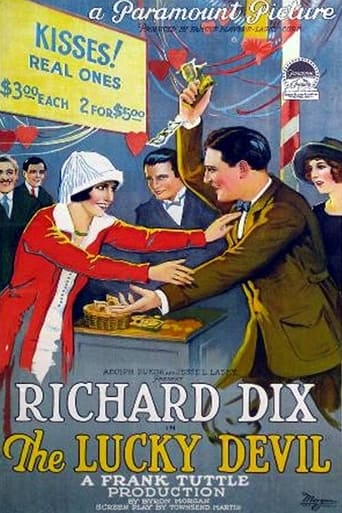
Charles Hammond
Actor
- Active
- 1925-1925
Films 1
About Charles Hammond
Charles Hammond appears in classic-film reference material as a very small-screen or bit-player performer rather than a major star, and the surviving record for him is extremely limited. He is credited as an actor in the 1925 silent film The Lucky Devil, which places him squarely in the mid-silent era, but contemporary studio publicity and later reference works do not appear to preserve a substantial biographical trail for him. Because of that scarcity, details such as his birthplace, family background, training, and later life are not securely documented in readily available classic-cinema sources. His known screen work suggests he was part of the large pool of working players who appeared in supporting or uncredited capacities in studio-era productions, contributing to the texture and realism of the period’s films even when their names were not widely advertised. Beyond this single confirmed credit, no dependable evidence has surfaced to establish a broader career arc, a surviving celebrity profile, or a documented transition into later sound-era work. In classic cinema history, performers like Hammond are important because they represent the thousands of working actors whose labor sustained the silent-era industry, even if their individual biographies were seldom preserved. As a result, his career remains largely a matter of filmography citation rather than richly documented personal history.
More about Charles Hammond
In film history
Charles Hammond's cultural impact is best understood in the broader context of silent-era production practices rather than through an individually famous body of work. The 1920s film industry relied on a large workforce of actors whose names often vanished from popular memory, yet who helped populate the backgrounds, supporting roles, and ensemble textures that made silent films feel alive. Hammond belongs to that important but frequently underdocumented tier of screen talent. His inclusion in The Lucky Devil demonstrates participation in the industrial fabric of the period, which itself is historically significant because it reflects how films were cast and produced before modern celebrity recordkeeping became standardized. While he does not appear to have become a marquee name, his credited work still contributes to the surviving record of silent cinema labor and performance.
Later reputation
Hammond's legacy is archival rather than star-driven: he survives in film history mainly as a named credit attached to one known silent film. For researchers and database users, that kind of credit is valuable because it helps reconstruct casts, production practices, and the many lesser-known contributors to early Hollywood. His presence in the record underscores how many working actors remain only partially documented, even when they participated in released feature films. In that sense, his legacy is tied to the preservation of silent-era credits and the ongoing efforts of historians to recover forgotten screen workers. He stands as an example of the anonymous or semi-anonymous performers whose careers were real and professional, even if the historical record is fragmentary.
Influence
No direct influence on later actors or filmmakers can be established from the available evidence. If anything, Hammond's significance lies in the collective influence of silent-era supporting players on the development of ensemble screen acting and studio casting systems. The style of performance in early cinema was shaped by the thousands of actors who worked in these productions, including those whose names are only sparsely recorded. His contribution is therefore best understood as part of the larger ecosystem that influenced how Hollywood built believable worlds on screen.
Off screen
No reliable biographical information about Charles Hammond's personal life, marriages, family background, or post-film career could be confirmed from the available classic-cinema record. Unlike major stars of the period, he does not appear to have left behind a substantial public paper trail in standard reference sources. Any assertions about spouse, children, education, or later occupation would be speculative and are therefore omitted.
Credits
- Credited screen appearance in the silent comedy-drama The Lucky Devil (1925)
- Documented as an active film performer during the silent era
- Represents the category of working character and supporting players who filled studio-era casts
Roles
- Role in The Lucky Devil (1925)
Films
- The Lucky Devil (1925)
Notes
- Charles Hammond is currently identifiable in classic-film references primarily through his credit in The Lucky Devil (1925).
- He appears to have had a very limited documented screen career, at least in surviving mainstream reference sources.
- His active period in the available filmography is confined to a single year: 1925.
- He is part of the large population of silent-era performers whose work is preserved more fully in film credits than in personal biographies.
- Because his record is so sparse, many standard biographical details remain unknown rather than merely unrecorded.
- His career illustrates how many early film performers were professionals without enduring star status.
- The Lucky Devil is the key title for identifying him in silent-cinema databases.
Questions
Who was Charles Hammond?
Charles Hammond was a silent-era film actor best known, from surviving records, for appearing in The Lucky Devil (1925). He seems to have been a working performer of the mid-1920s rather than a major star, and very little personal biographical information has survived.
What films is Charles Hammond best known for?
He is best known for The Lucky Devil (1925), which is the principal film title associated with his surviving classic-cinema record. At present, no additional confirmed film credits are securely documented in the available reference trail.
When was Charles Hammond born and when did he die?
His birth and death dates are not currently verified in the available classic-cinema sources. Because the historical record is sparse, those details should be treated as unknown rather than assumed.
What awards did Charles Hammond win?
No awards or formal honors are currently documented for Charles Hammond in the available record. He appears to have been a lesser-known working actor from the silent era, and the surviving sources do not preserve an awards history.
What was Charles Hammond's acting style?
No detailed descriptions of his acting style survive in accessible reference material. As a silent-era performer, his work would have depended on physical expression and visual clarity, but specific assessments of his technique are not currently documented.
What is Charles Hammond's legacy in film history?
His legacy is primarily archival, representing the many silent-era actors whose names survive in credits even when their biographies do not. He is part of the historically important body of working performers who helped build classic Hollywood’s early film culture.