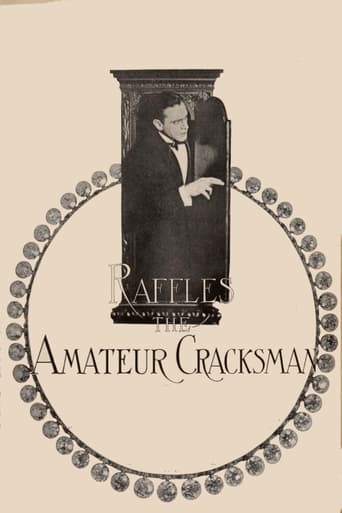

Kathryn Adams
Actor
- Active
- 1917-1917
Films 1
About Kathryn Adams
Kathryn Adams was a silent-era American screen actress whose recorded film career appears to have been concentrated in 1917, the year she is credited in Raffles, the Amateur Cracksman. Because she worked during the early years of feature filmmaking, surviving documentation about her life and career is limited, and she should not be confused with later actresses of the same or similar names. Her known screen activity places her within the rapidly developing world of mid-1910s American cinema, when studios were producing short and feature-length films at a brisk pace and many performers worked only briefly before leaving the industry. The available record does not preserve a full biographical trail, so details such as her birth, death, family background, training, and later life remain uncertain in standard reference sources. Even so, her surviving credit links her to one of the more recognizable literary-adventure properties adapted for the screen during the silent era. As with many early film performers, her legacy survives primarily through filmographies and archival cataloging rather than a large body of extant publicity or biographical interviews. Her presence in the historical record is valuable as part of the broader company of silent-film actors who helped shape the conventions of American popular cinema in its formative years.
More about Kathryn Adams
In film history
Kathryn Adams's cultural impact is best understood as part of the invisible labor of silent-era performance: the thousands of actors whose work helped establish cinematic storytelling, even when their names did not remain prominent in later popular memory. Her credit in a literary adaptation like Raffles, the Amateur Cracksman places her within a tradition of early screen interpretation that helped translate stage and fiction properties into the language of cinema. Although she is not documented as a major star, her surviving film participation contributes to the historical texture of silent film culture and to the understanding of how studios populated their productions with working actors of the era. Performers such as Adams are important to film history because they illustrate how broad and fluid the early acting profession was, with many artists appearing in only a few known films yet still participating in the evolution of screen performance.
Later reputation
Her lasting legacy is primarily archival and historical rather than celebrity-based. Kathryn Adams remains part of the documented workforce of silent cinema, preserved in filmographies and databases that continue to map the period's personnel. For researchers, she represents the many early film actors whose careers were brief, whose credits are sparse, and whose biographies are partially lost to time, yet whose work still forms part of the foundation of Hollywood history. In that sense, her legacy lies in the completeness of film history itself: every credited performer helps reconstruct how the silent industry operated, cast films, and sustained production at a formative moment.
Influence
There is no documented evidence that Kathryn Adams directly mentored a generation of performers or developed a widely imitated acting style. Her influence is therefore indirect, residing in the broader ecosystem of silent-film acting, where many performers collectively shaped conventions of gesture, expression, and screen characterization. As a credited participant in a 1917 feature, she contributed to the professional pool that established the norms later refined by better-known stars and directors. Her place in the historical record demonstrates how numerous unnamed or lightly documented performers helped build the artistic vocabulary of early American cinema.
Off screen
No reliable, widely cited public record has been located that establishes Kathryn Adams's personal life, including marriage, children, schooling, or later biographical details. Because she appears in the surviving record primarily through a single 1917 screen credit, standard reference sources generally do not provide the sort of personal documentation available for better-known stars. Any claims about family relationships, residence, or later career would be speculative and are therefore not included here.
Credits
- Appeared in Raffles, the Amateur Cracksman (1917), a silent-era screen adaptation of the popular gentleman-thief stories.
- Represents the many lesser-documented performers who worked in early feature production during the 1910s.
- Surviving filmography places her in the active American silent-film industry at a time of rapid studio growth and narrative experimentation.
Roles
- Role in Raffles, the Amateur Cracksman (1917)
Films
Notes
- Her known film work is confined in available records to 1917, suggesting either a very brief screen career or incomplete surviving documentation.
- She should not be confused with later actresses named Kathryn Adams or Katherine Adams, including performers active in later decades.
- Her recorded credit places her in the silent era, before synchronized sound transformed acting techniques and studio production.
- Raffles, the Amateur Cracksman was drawn from a famous literary character, linking her to early Hollywood's interest in adapting popular fiction.
- Like many performers of the 1910s, she is remembered more through film listings and archival indexes than through extensive publicity material.
- The scarcity of biographical data around her is typical of many early silent-film actors whose careers were only partially documented.
- Her surviving credit helps historians reconstruct cast lists and production practices from the formative years of feature filmmaking.
Questions
Who was Kathryn Adams?
Kathryn Adams was a silent-era American actor best known in surviving records for appearing in Raffles, the Amateur Cracksman (1917). Her career is only sparsely documented, which is common for many early film performers. She belongs to the large group of working actors who helped build the silent-film industry even when their biographies were not widely preserved.
What films is Kathryn Adams best known for?
She is best known for Raffles, the Amateur Cracksman (1917), the only confirmed credit in the information currently available. If she appeared in other films, they are not well documented in standard surviving reference material. Her historical recognition therefore rests chiefly on this single silent-era title.
When was Kathryn Adams born and when did she die?
Her birth and death dates are not reliably documented in the available classic-cinema record. Because her surviving filmography is minimal and limited to the silent era, standard reference sources do not consistently provide verified personal vital statistics. More archival research would be needed to establish them with confidence.
What awards did Kathryn Adams win?
No awards or nominations are currently documented for Kathryn Adams in the available record. That does not necessarily mean she never received any recognition, but it does mean no reliable awards history is known from standard sources. Her significance is historical rather than award-based.
What was Kathryn Adams's acting style?
There is not enough surviving critical material to describe Kathryn Adams's individual acting style in detail. As a silent-era performer, she would have worked in the expressive visual style typical of the period, relying on gesture, facial expression, and physical clarity. Any more specific assessment would be speculative without reviews or surviving footage tied to her performances.
What is Kathryn Adams's legacy in film history?
Her legacy lies in being part of the documented cast of early silent cinema, especially in a literary adaptation that reflects the storytelling trends of the 1910s. Even performers with short or poorly documented careers are important because they help historians reconstruct how early studios cast and produced films. Kathryn Adams is a reminder that film history is built not only by stars, but also by the many working actors whose names survive in production records.