1917 · approximately 50-70 minutes; exact surviving records vary

Also available on: Wikimedia Archive.org
Raffles, the Amateur Cracksman

Raffles, the Amateur Cracksman

1917 approximately 50-70 minutes; exact surviving records vary United States
Dual identity and social performanceCrime as sport and intellectual challengeClass privilege and accessCharm versus moralityOutwitting authority

Plot

A.J. Raffles is a celebrated amateur cricket player and a charming man-about-town who moves easily among London’s most exclusive social circles. Beneath his polished exterior, however, he is a gentleman thief who steals valuable jewels and trinkets for the sheer excitement of the challenge rather than out of need. As police and private investigators grow suspicious, Raffles uses his wit, social connections, and nerve to stay one step ahead of the law while maintaining his public reputation. The story follows his daring burglaries and clever evasions, building around the tension between his aristocratic respectability and his secret criminal life. The film presents him as both a romantic rogue and a master strategist, emphasizing the thrill of outsmarting his pursuers.

About the Production

Release Date 1917
Production Metro Pictures Corporation
Filmed In New York City, New York, USA

This 1917 silent feature was adapted from E. W. Hornung’s hugely popular A.J. Raffles stories, which had already made the gentleman-thief a familiar literary figure to American and British readers. The film was mounted as a prestige vehicle for John Barrymore, who was rapidly becoming one of the era’s most bankable stars and whose sophisticated screen persona fit the role of the elegant criminal. Like many films of the period, it was produced under the constraints of silent-era studio practice, with emphasis on star appeal, intertitles, and visual storytelling rather than elaborate technical spectacle. Surviving production documentation is limited, so detailed budgetary figures, precise filming schedules, and some crew data are not widely documented in readily accessible sources.

Historical Background

The film was made in 1917, during the First World War era and at a moment when American cinema was rapidly consolidating its dominance in the international marketplace. Feature-length films were becoming the norm, and studios increasingly adapted well-known novels and stage properties to appeal to middle-class audiences seeking sophisticated entertainment. The character of Raffles fit neatly into the period’s taste for polished melodrama, crime stories, and socially mobile protagonists who moved between respectability and transgression. It also reflects the silent era’s fascination with charm-based criminality, where moral ambiguity could be softened by wit, class, and style. Historically, the film belongs to the phase when Hollywood was transforming from a nickelodeon-based novelty industry into a star-centered studio system.

Why This Film Matters

Raffles, the Amateur Cracksman is culturally significant as an early screen incarnation of one of the most enduring gentleman-thief archetypes in modern fiction. The film helped translate a literary antihero into visual terms at a time when cinema was learning how to depict personality, status, and criminal cunning without spoken dialogue. Its importance also lies in John Barrymore’s early screen career, since films like this helped establish his screen image as a charismatic, intelligent leading man. More broadly, the film participates in a tradition that later includes suave thieves and elegant antiheroes in both film and television, from classic caper stories to modern heist narratives. Even where the film itself is obscure today, its character type remains highly influential in popular culture.

Making Of

Raffles, the Amateur Cracksman was designed as a star-driven adaptation of a successful literary property, with John Barrymore ideally suited to play a sophisticated rogue who could be both charming and morally ambiguous. Barrymore’s casting is significant because it shows how early studios were already leveraging stage prestige to attract audiences to feature films. The film was made during a period when Metro Pictures was building its reputation through literary adaptations and recognizable star vehicles, and the production likely depended heavily on costume, set dressing, and expressive close-up work to convey upper-class milieu and suspense. Because it is a silent-era picture from 1917, extensive behind-the-scenes records are sparse, but the surviving context suggests a straightforward studio production rather than an effects-heavy or location-intensive project. The film’s current historical importance is enhanced by the fact that many early Barrymore titles have not survived in complete form, making each available record valuable for reconstructing his silent career.

Visual Style

As a 1917 silent feature, the film would have relied on clear staging, medium and closer framing for character emphasis, and intertitles to advance plot and wit. The visual style likely emphasized contrast between refined interiors and moments of suspenseful intrusion, helping to underline Raffles’ dual identity as gentleman and thief. Silent-era cinematography of this type often used static but carefully composed shots, with the actor’s movement and gesture carrying much of the dramatic weight. John Barrymore’s expressive performance would have been central to the film’s visual appeal, especially in scenes requiring sophistication, deception, or triumphant evasiveness.

Innovations

The film does not appear to be associated with major technical innovations, but it belongs to an important era in which feature-length narrative clarity, star performance, and adaptation of well-known literary properties were themselves central industrial achievements. Its likely technical emphasis was on controlled studio mise-en-scène, costume detail, and expressive performance for silent storytelling. In that sense, the film exemplifies the polished production methods of mid-1910s American studios rather than pushing formal boundaries in camera or editing technique. Its chief accomplishment was probably in translating a witty literary character into a visually legible screen persona.

Music

As a silent film, Raffles, the Amateur Cracksman did not have a synchronized recorded soundtrack. In exhibition, it would typically have been accompanied by live music from a theater pianist, organist, or small ensemble, with cue sheets or local improvisation depending on the venue. No standardized original score is widely documented in surviving sources for this film. The music would have been chosen to match suspense, elegance, and comic or romantic undertones in keeping with the gentleman-thief theme.

Famous Quotes

No original spoken dialogue or verified intertitle quotations are widely documented in surviving sources for this film.
The film is better known for its source character’s famous literary persona than for specific surviving lines of dialogue.

Memorable Scenes

  • Raffles moving with confidence through high society while secretly planning a theft, a scene type that emphasizes his dual life.
  • A jewel-heist sequence in which the suspense comes from his ability to anticipate and outmaneuver the police.
  • Moments that showcase Barrymore’s aristocratic bearing and expressive silent-era performance as he shifts from elegant host to calculating thief.

Did You Know?

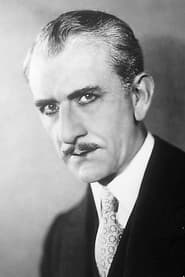
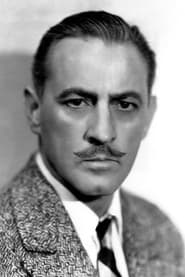
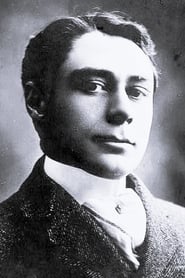
  • The film stars John Barrymore in one of his early major screen roles, helping to cement his transition from stage fame to silent-film celebrity.
  • A.J. Raffles was originally created by writer E. W. Hornung as a deliberate inversion of Sherlock Holmes: a refined criminal rather than a detective.
  • The character’s popularity in print made him one of the most recognizable gentleman thieves in popular culture long before later screen antiheroes.
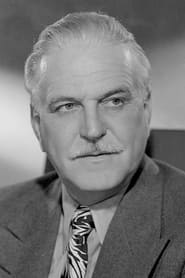
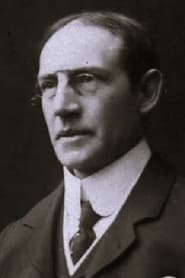
  • Frank Morgan appears in the cast early in his long screen career, decades before he became widely famous for The Wizard of Oz (1939).
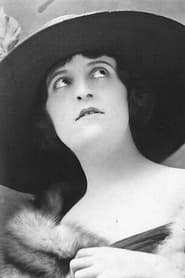
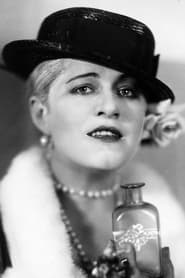
  • Evelyn Brent is also part of the cast, and she would later become a notable silent and early sound-era actress.
  • Because the film is silent, much of the characterization depended on Barrymore’s facial expression, gesture, and stage-trained physicality.
  • The title was sometimes referenced in ways that emphasized the “amateur cracksman” concept, a period term meaning a gentleman burglar.
  • As with many films from the 1910s, surviving prints and documentation are incomplete, which makes exact reconstruction of some production details difficult.
  • The film is part of the early wave of literary adaptations that helped establish feature-length narrative filmmaking in the United States.
  • Raffles’ appeal lay in his blend of elegance, intelligence, and criminal daring, qualities that later influenced many fictional thieves and antiheroes.

What Critics Said

Contemporary critical reception is not comprehensively documented in easily accessible surviving sources, but the film was made as a prestige adaptation with a major star, suggesting it was intended to be regarded as an upscale entertainment rather than a routine genre picture. In the silent-era press, Barrymore vehicles were often noted for his stage authority and expressive performance style, and this role would have aligned well with audience expectations for a dashing, urbane lead. Modern assessment tends to focus less on the film as a surviving text and more on its place in Barrymore’s early filmography and in the evolution of the gentleman-thief narrative. Because extant copies and full critical records are limited, the film is more often discussed by historians through its production context and source material than through detailed shot-by-shot appraisal.

What Audiences Thought

No reliable nationwide box-office figures or audience-survey data survive in a readily verifiable form, which is common for American films of this period. As a John Barrymore star vehicle based on a popular literary character, it likely appealed to audiences already familiar with the Raffles stories and to viewers attracted by crime melodrama with a glamorous twist. The combination of upper-class settings, suspense, and a morally shaded hero would have been a strong commercial formula in the 1910s. Its lasting audience reputation today is limited largely by the scarcity of surviving prints and documentation rather than by any known contemporary failure.

Film Connections

Influenced By

  • The A.J. Raffles stories by E. W. Hornung
  • Sherlock Holmes narratives by Arthur Conan Doyle, as a related late-Victorian detective-fiction milieu
  • Stage melodrama and early twentieth-century crime fiction traditions

This Film Influenced

  • Later gentleman-thief and caper films
  • Subsequent screen adaptations of Raffles
  • Crime stories featuring charming antiheroes and socially mobile thieves

Film Restoration

Surviving documentation is limited, and the film is generally treated as incomplete or with uncertain survival status in modern reference contexts. It is not widely available in standard home-video circulation, and its preservation history is not as secure or well-publicized as later classic titles. Where prints or records survive, they appear to be fragmentary or difficult to access rather than broadly restored and distributed.

Themes & Topics