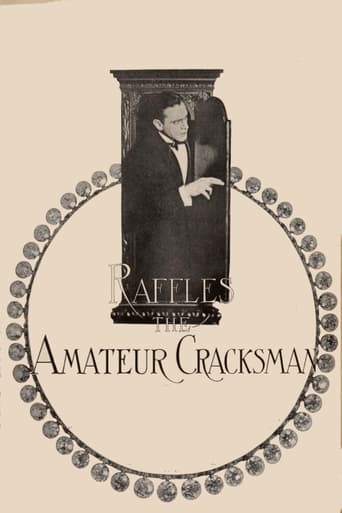
Dudley Hill
Actor
- Active
- 1917-1917
Films 1
About Dudley Hill
Dudley Hill is a little-documented screen actor whose known motion-picture work appears to have been confined to the silent era, with a credited appearance in the 1917 film "Raffles, the Amateur Cracksman." Because surviving reference material on him is extremely scarce, many core biographical details such as his birth, death, nationality, and personal life are not readily verifiable in standard film-history sources. His presence in the cast of a notable literary adaptation suggests that he was part of the working pool of character players and supporting performers active in the burgeoning film industry of the 1910s. Like many performers of the period who did not transition into sustained stardom, Hill seems to have left only a faint documentary footprint, preserved primarily through cast listings and archival film records. His career therefore stands as an example of the many early cinema artists whose contributions supported the development of narrative feature filmmaking even when their individual careers were not widely publicized. At present, the historical record does not allow for a fuller reconstruction of his life arc without risking speculation.
More about Dudley Hill
In film history
Dudley Hill's cultural impact cannot be measured in the way that one would assess a major star or auteur, but his documented work remains part of the broader historical fabric of silent cinema. Performers like Hill helped populate the early feature film landscape, giving texture and credibility to adaptations of popular novels and stage properties. Even when individual careers are poorly documented, their surviving credits contribute to film scholarship by helping historians reconstruct casting practices, production personnel, and the industrial growth of the silent-era screen industry.
Later reputation
Hill's legacy is essentially archival rather than star-driven: he survives in film history through the preservation of cast information associated with "Raffles, the Amateur Cracksman" and related documentation. For researchers, such names are important because they remind us how many early screen performers remain under-recorded despite participating in commercially and culturally significant productions. His name also underscores a central challenge of silent-film historiography: much of the era's workforce is known only through fragmentary evidence.
Influence
There is no verifiable evidence that Dudley Hill exerted a direct influence on later actors or filmmakers in the way that prominent silent-era stars did. His importance lies more in the collective influence of working actors who helped establish the acting conventions and ensemble structures of early narrative cinema. In that sense, his contribution is part of the inherited craft tradition that shaped the development of screen performance.
Off screen
No reliable, widely corroborated information about Dudley Hill's personal life, family background, marriages, or domestic circumstances is presently available in standard classic-cinema reference sources. Given the brevity of his documented screen career and the scarcity of surviving records, it is not possible to provide a trustworthy biography of his private life without speculation.
Credits
- Credited screen appearance in the silent feature "Raffles, the Amateur Cracksman" (1917)
- Association with early feature-length literary adaptation during the silent era
- Representation of the many supporting players who worked in early 20th-century cinema and are preserved in surviving cast records
Roles
- Supporting cast member in "Raffles, the Amateur Cracksman" (1917)
Films
- "Raffles, the Amateur Cracksman" (1917)
Notes
- Dudley Hill's surviving film record appears to be extremely limited, with "Raffles, the Amateur Cracksman" (1917) as the primary credited title associated with him.
- He worked during the silent era, when many performers were not as thoroughly documented as later sound-era stars.
- The film he is known for was an adaptation of a popular literary property, a common strategy in early feature filmmaking.
- Because so little biographical information survives, he is one of many early cinema figures known more from cast lists than from press coverage or interviews.
- His filmography suggests a very brief or at least very sparsely documented screen career.
- Researchers may encounter variations or gaps in historical records for performers like Hill due to inconsistent crediting practices in the 1910s.
Questions
Who was Dudley Hill?
Dudley Hill was a silent-era screen actor whose documented film work is extremely limited. He is known primarily for appearing in "Raffles, the Amateur Cracksman" (1917), and surviving records do not currently provide a fuller biographical profile.
What films is Dudley Hill best known for?
He is best known for "Raffles, the Amateur Cracksman" (1917). No additional verified film credits are readily available in the surviving historical record used for classic-cinema reference.
When was Dudley Hill born and when did he die?
His birth and death dates are not currently verifiable from reliable classic-cinema sources. The available record is too sparse to confirm his place or dates of birth and death.
What awards did Dudley Hill win?
No awards or major honors are documented for Dudley Hill in the available historical record. This is not unusual for a lesser-documented supporting performer from the silent era.
What was Dudley Hill's acting style?
His acting style is not described in surviving sources, so it cannot be assessed with confidence. As a silent-era performer, he would have worked within the expressive visual performance conventions typical of the period.
What is Dudley Hill's legacy in film history?
His legacy is mainly archival: he represents the many early screen performers whose names survive in cast lists even when detailed biographies do not. Such figures are important to film historians because they help reconstruct the broader personnel network of silent cinema.