

The Mark of Zorro
"A foppish nobleman masks himself as the outlaw Zorro."
Keys: Space play/pause · ←/→ 10s · F fullscreen · M mute · </> speed
About this film
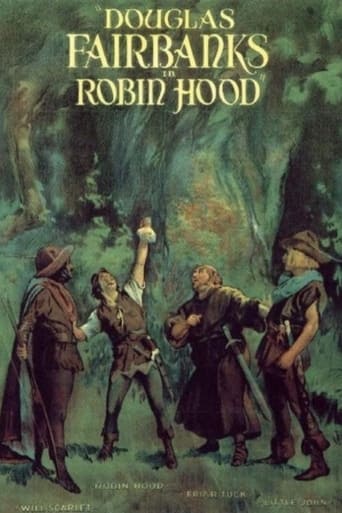
Preserved by the Academy Film Archive in 2012. This genre-defining swashbuckler adventure was the first movie version of The Mark of Zorro. Based on the 1919 story The Curse of Capistrano by Johnston McCulley, which introduced the masked hero, Zorro, the screenplay was adapted by Fairbanks and Eugene Miller.
Cast & crew
More films like this

More Western films
View all →

More from Fred Niblo
View all →
More about this film
About the production
Release dateNovember 27, 1920 (premiere), December 5, 1920 (general release)
Budget$109,000
Box officeOver $2 million worldwide (enormous success for its time)
ProductionDouglas Fairbanks Pictures Corporation, United Artists
Filmed inLos Angeles, California, San Juan Capistrano, California, Riverside, California
This was Douglas Fairbanks' first swashbuckling role and the film that established him as the premier adventure star of his era. Fairbanks personally oversaw every aspect of production, insisting on authentic costumes and props. The film featured groundbreaking stunt work with Fairbanks performing most of his own acrobatic sequences, including the famous scene where he leaps from a balcony onto his horse. The production utilized actual California missions and Spanish colonial architecture to create an authentic atmosphere, with some scenes filmed at the historic Mission San Juan Capistrano.
Themes
Themes & topics
masked vigilantesword fightingspanish californiaaristocrattyrannyromancerevengejusticesecret identityrevolution
Historical background
Production circa 1920 placed The Mark of Zorro within the technical habits of its era—intertitles, studio sets, and regional distribution networks.
Why this film matters
Archivists revisit The Mark of Zorro (1920) for performance styles and craft choices that later releases refined or replaced.
Making of
The production of 'The Mark of Zorro' marked a turning point in Douglas Fairbanks' career and in Hollywood filmmaking. Previously known for comedies, Fairbanks was seeking a new direction and was immediately drawn to McCulley's Zorro story. He purchased the film rights himself and took unprecedented creative control, overseeing every aspect from casting to final cut. Fairbanks insisted on performing his own stunts, a revolutionary approach that required months of intensive training in fencing, horsemanship, and acrobatics. The filming took place over six weeks in various California locations, with Fairbanks often working 16-hour days to perfect the action sequences. Director Fred Niblo, initially skeptical of Fairbanks' athletic approach, soon became an enthusiastic collaborator, developing innovative camera techniques to capture the dynamic action. The film's success was so immediate that Fairbanks and Mary Pickford used the profits to help establish United Artists, giving artists unprecedented control over their work. The production also pioneered the use of pre-planned storyboards for complex action sequences, a technique that would become standard in Hollywood.
What critics said
Trade papers near 1920 listed The Mark of Zorro among weekly program offerings rather than as a headline critical event.
Did you know?
- This was Douglas Fairbanks' first swashbuckling film, establishing the genre that would define his career and influence action cinema for decades.
- The film was based on Johnston McCulley's story 'The Curse of Capistrano,' which had been published only five months earlier in All-Story Weekly magazine.
- Fairbanks was so determined to perform his own stunts that he trained intensively in fencing and acrobatics for months before filming began.
- The character of Zorro was so popular that McCulley revived him in over 60 additional stories, making him especially enduring characters in pulp fiction.
- The film's massive success led Fairbanks to establish United Artists along with Charlie Chaplin, Mary Pickford, and D.W. Griffith the following year.
- The iconic Zorro costume (black mask, cape, and hat) was created specifically for this film and has remained the standard depiction of the character ever since.
- The film featured one of the first examples of the 'dual identity' trope that would become a staple of superhero stories.
- Fairbanks' athletic performance in this film directly influenced the creation of Batman, with Bob Kane citing Fairbanks' Zorro as a major inspiration for the character.
- The film was one of the first to feature extensive on-location shooting in California rather than relying entirely on studio sets.
- The famous 'Z' mark that Zorro leaves on his enemies was Fairbanks' own idea, not present in the original story.
Awards & recognition
- National Film Registry selection (2019) - Library of Congress
Visual style
The cinematography by William C. McGann and Arthur Edeson was groundbreaking for its time, featuring innovative techniques to capture the dynamic action sequences. The film employed extensive location shooting in natural light, giving it a visual authenticity that contrasted with the studio-bound productions typical of the era. The camera work emphasized Fairbanks' athletic prowess through low angles that enhanced the sense of height and movement, particularly in the famous balcony-jumping scene. The cinematographers developed new methods for tracking sword fights, using moving cameras to follow the action fluidly rather than the static shots common in earlier films. The use of shadows and lighting to create dramatic silhouettes of Zorro against the California landscape became an iconic visual element that influenced countless later films. The mission sequences utilized natural architecture to create depth and scale, while the night scenes employed innovative lighting techniques to enhance the mystery and romance of Zorro's appearances.
Innovations
The Mark of Zorro pioneered several technical innovations that would become standard in action filmmaking. The film featured some of the earliest examples of planned stunt choreography, with Fairbanks working closely with the stunt team to create sequences that were both spectacular and safe. The production developed new techniques for filming sword fights, including the use of multiple cameras to capture different angles of the same action sequence. The film also experimented with speed ramping, varying the camera speed during action sequences to enhance the sense of movement and impact. The balcony-jumping scene utilized a carefully timed combination of live action and matte work to create the illusion of a continuous leap. The production also pioneered the use of pre-visualization through detailed storyboards for complex action sequences, allowing for more efficient filming and better coordination between stunts, camera work, and editing.
Music
As a silent film, 'The Mark of Zorro' was originally presented with live musical accompaniment that varied by theater. The original score was composed by James Bradford, who created a series of musical cues that could be adapted by theater orchestras. The score featured Spanish-inspired melodies and martial themes that complemented the film's California setting and action sequences. Modern restorations have been accompanied by newly commissioned scores, most notably a 1995 version by composer Carl Davis that was performed by the London Philharmonic Orchestra. These modern scores attempt to recreate the spirit of the original accompaniment while utilizing contemporary orchestral arrangements. The film's most memorable musical motif was the 'Zorro theme,' a dramatic minor-key melody that signaled the hero's appearances and became synonymous with the character in later adaptations.
Famous quotes
My sword is my badge of honor! My mask is my shield!
Justice is not blind, but sometimes she wears a mask.
To the oppressed, I am hope. To the oppressor, I am fear.
A coward dies a thousand deaths, a hero dies but one.
The mark of Zorro is not a wound, but a promise of justice to come.
Memorable scenes
- The iconic scene where Zorro first appears, leaping from a balcony onto his horse while being pursued by soldiers, establishing his athletic prowess and mysterious nature.
- The climactic sword fight between Zorro and Captain Ramon in the governor's palace, featuring elaborate choreography and dramatic lighting that set the standard for cinematic duels.
- The transformation scene where Don Diego Vega changes from the effeminate fop to the dashing Zorro, creating the template for the secret identity reveal.
- The scene where Zorro carves his trademark 'Z' into his opponent's clothing, creating an iconic visual that would become synonymous with the character.
- The final revelation where Diego removes his mask to reveal his identity to Lolita and the people, combining romance and revolutionary triumph.
What audiences thought
The Mark of Zorro was an overwhelming commercial success, becoming one of the highest-grossing films of 1920 and solidifying Douglas Fairbanks' status as one of the era's biggest stars. Audiences were electrified by Fairbanks' athletic performance and the film's thrilling action sequences. The film ran for record-breaking engagements in major cities, with some theaters keeping it on their schedules for months. Contemporary audience reports describe standing ovations and repeated viewings, particularly among young people who were inspired by Zorro's heroism. The character became a cultural phenomenon, with children across America playing Zorro and demanding toy swords and masks. The film's success was so profound that it created a lasting association between Fairbanks and adventure films that would define the rest of his career. Even decades later, the film continues to find appreciative audiences through revival screenings and home video releases, with modern viewers still responding to its timeless appeal and Fairbanks' charismatic performance.
Film connections
Influenced by
- The Curse of Capistrano (1919 story by Johnston McCulley)
- Robin Hood legends
- The Three Musketeers by Alexandre Dumas
- Contemporary Zorro stage adaptations
This film influenced
- The Mask of Zorro (1998)
- Batman (1989)
- The Princess Bride (1987)
- Pirates of the Caribbean series
- V for Vendetta (2005)
- The Lone Ranger (2013)
- Zorro's Black Whip (1944)
- The Legend of Zorro (2005)
Film restoration
The film was preserved by the Academy Film Archive in 2012 and selected for preservation in the United States National Film Registry by the Library of Congress in 2019 for being 'culturally, historically, or aesthetically significant.' A restored version was released by the Museum of Modern Art and Kino International, featuring newly preserved film elements and a commissioned musical score. The restoration work involved sourcing multiple prints from archives around the world to create the most complete version possible. While some scenes remain lost, the restored version represents approximately 90% of the original film and is considered the definitive version for modern viewing.
Where to watch
- The Criterion Collection (Blu-ray/DVD)
- Kino Lorber (Blu-ray/DVD)
- The Museum of Modern Art's streaming service
- Amazon Prime Video (rental/purchase)
- YouTube Movies (rental/purchase)
- iTunes/Apple TV
- Google Play Movies
- Vudu
- Various classic film streaming services
- Film archives and museum screenings