Just Imagine
“The Most Amazing Spectacle Ever Filmed!”
About Just Imagine
In the futuristic New York City of 1980, technology has transformed society into a world where citizens are identified by alphanumeric codes, food is consumed in pill form, and marriage is strictly regulated by the state. The plot follows J-21, a young man who is denied the right to marry his beloved LN-18 because he lacks the 'distinction' required by the marriage tribunal, which favors his rival MT-3. Amidst this conflict, scientists successfully revive a man from 1930 who was killed by a lightning strike, now designated as 'Single O,' who struggles to adapt to the bizarre technological advancements of the future. Seeking to prove his worth and earn his marriage rights, J-21 agrees to pilot a rocket ship on a perilous mission to Mars, accompanied by his friend Z-4 and the stowaway Single O. Upon reaching the Red Planet, they discover a civilization of identical twins—one good and one evil—ruled by a decadent queen, leading to a series of musical numbers and comedic escapades before they return to Earth as heroes.
Cast & crew
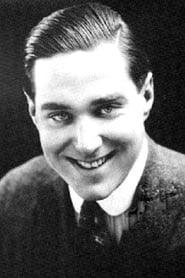
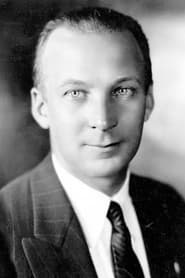



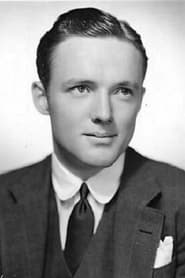
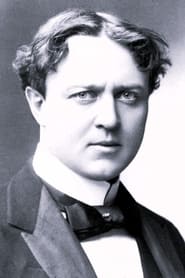


More films like this
More from David Butler
View all →


More about Just Imagine
Production
- Release date
- November 23, 1930
- Country
- USA
- Budget
- $1,100,000
- Box office
- null
- Production
- Fox Film Corporation
- Filmed in
- Fox Hills Studios, Los Angeles, California, New York City (miniature sets)
The film was one of the most expensive productions of its era, primarily due to the massive miniature set of New York City which cost $250,000 to construct. The set was 80 feet high and featured thousands of miniature lights and moving vehicles. Director David Butler and producer Buddy DeSylva intended the film to be a follow-up to their success with 'Sunny Side Up' (1929). The production utilized the Grandeur 70mm wide-screen process for certain sequences, though most prints were released in standard 35mm. The film faced significant challenges in balancing the science fiction elements with the vaudeville-style comedy of El Brendel, which was a staple of Fox's musical output at the time.
Themes & topics
Historical background
Released just one year after the 1929 stock market crash, 'Just Imagine' reflects a strange transition in American culture where optimism about the future collided with the onset of the Great Depression. It was made during the 'Pre-Code' era of Hollywood, allowing for suggestive dialogue and skimpy costumes that would soon be banned by the Hays Office in 1934. The film's fascination with technology and aviation mirrors the real-world obsession with Charles Lindbergh and the rapid industrialization of the late 1920s. It stands as a rare example of an early sound-era science fiction musical, a hybrid genre that virtually disappeared until the 1970s.
Why this film matters
While not a hit upon release, 'Just Imagine' is historically significant as the first big-budget science fiction 'talkie.' It established many of the visual tropes of the genre, particularly the aesthetic of the futuristic city and the laboratory of the 'mad scientist.' Its influence on the visual design of later films like 'Blade Runner' and 'The Fifth Element' is often noted by historians. It also serves as a cultural time capsule of 1930s humor, specifically the 'stage Swede' persona of El Brendel, which has since fallen out of fashion.
Making of
The production was a massive undertaking for Fox Film Corporation, aiming to capitalize on the 'talkie' craze with a genre-bending spectacle. Art director Stephen Goosson designed the futuristic city based on the 'City of the Future' concepts popular in architectural magazines of the late 1920s. The special effects team used complex pulley systems to move hundreds of miniature cars through the multi-level city streets. El Brendel, a popular vaudeville comedian who played a 'Swedish immigrant' character, was given top billing to ensure the film appealed to mainstream audiences, despite the high-concept sci-fi premise. The musical numbers were choreographed by Seymour Felix, who attempted to integrate the songs into the plot, though the Martian sequence feels like a separate stage revue.
What critics said
Initial reviews in 1930 were mixed; Variety praised the technical achievements and the 'staggering' sets but found the comedy and musical numbers to be uneven. Mordaunt Hall of The New York Times called it 'clever' but noted that the story was somewhat thin. Modern critics view it as a fascinating failure, often criticizing El Brendel's dated comedy while marveling at the visionary production design. It is frequently cited in retrospectives of science fiction cinema for its ambitious scope and its unintentional humor regarding its predictions for 1980.
What audiences thought
Audiences in 1930 were somewhat baffled by the film's mix of high-concept sci-fi and low-brow vaudeville comedy. While the spectacle of the futuristic New York drew crowds initially, the film failed to recoup its massive budget. Over the decades, it has gained a cult following among science fiction fans and film historians who appreciate its camp value and its place in cinematic evolution.
Visual style
The cinematography by Ernest Palmer is notable for its use of deep focus in the miniature shots to create a sense of scale. The film utilizes innovative matte paintings and double exposures to blend live actors with the massive miniature sets. The lighting in the Martian sequences is particularly expressionistic, using high contrast to emphasize the alien nature of the environment.
Innovations
The film's primary technical achievement is its pioneering use of miniatures and optical effects. The 'Strickfaden' electrical effects became the industry standard for science fiction and horror films for decades. It was also one of the first films to attempt a depiction of space travel using a multi-stage rocket concept, albeit a whimsical one.
Music
The film features songs by the famous songwriting team of DeSylva, Brown, and Henderson. Notable tracks include 'Old Fashioned Girl,' 'Never Swat a Fly,' and 'I Am the Monarch of Mars.' The music is typical of early 1930s operetta-style film musicals, with John Garrick providing a traditional tenor lead. The sound recording was a challenge due to the large sets, requiring hidden microphones in the futuristic furniture.
Film restoration
The film is preserved and was restored by the UCLA Film & Television Archive in conjunction with 20th Century Fox. It is available in its full length, though some of the original 70mm Grandeur footage is only available in 35mm reductions.
Did you know?
- The massive miniature set of 1980 New York was housed in a former dirigible hangar.
- The film features the first known depiction of a 'mad scientist' laboratory with sparking electrical equipment, created by Kenneth Strickfaden, who later used the same equipment for 'Frankenstein' (1931).
- The rocket ship used in the film was later reused in the 'Flash Gordon' serials of the 1930s.
- The film predicts several future technologies including television, automatic doors, and test-tube babies.
- The character 'Single O' is a reference to the brand of cigars popular in the 1920s.
- The film was a box office disappointment, which discouraged Hollywood from producing big-budget science fiction for nearly two decades.
- Maureen O'Sullivan was only 19 years old during filming and had just been discovered by director Frank Borzage.
- The Martian sequences feature a 'Queen of Mars' played by Joyzelle Joyner, who performs a provocative dance that was quite daring for 1930.
- The film's vision of 1980 includes 'traffic jams in the sky' with personal airplanes replacing cars.
- The names of the characters (J-21, LN-18) were intended to satirize the increasing dehumanization of the machine age.
Memorable scenes
- The opening pan across the massive, multi-leveled miniature city of New York in 1980.
- The revival of Single O in the laboratory filled with sparking Van de Graaff generators.
- The 'Never Swat a Fly' musical number which features bizarre, stylized choreography.
- The arrival on Mars and the encounter with the Martian Queen and her army of identical twins.
- The scene where Single O tries to understand the concept of 'test-tube babies' at a vending machine.
Influenced by
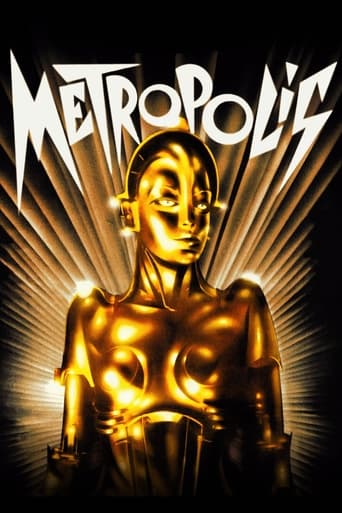
- Metropolis (1927)
- The works of Jules Verne
- Vaudeville theater
- 1920s architectural futurism
This film influenced
- Flash Gordon (1936)
- Frankenstein (1931)
- Things to Come (1936)
- Star Wars (visual echoes of the city)
Where else to watch
- Available on DVD via the Fox Cinema Archives
- Occasionally aired on Turner Classic Movies (TCM)
- Available for streaming on certain boutique classic film platforms
Famous quotes
Single O: 'Give me a pill that tastes like a steak and onions!'
J-21: 'In 1980, everything is done by machinery, even love.'
Single O: 'You mean to tell me that's a baby? It looks like a canned pineapple!'