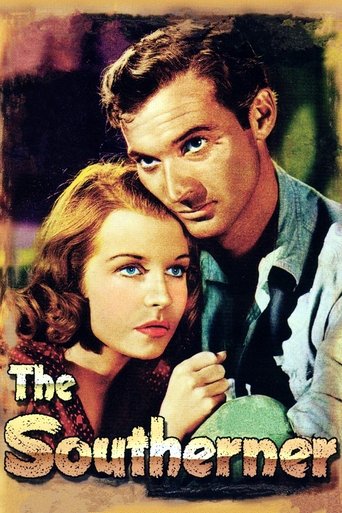
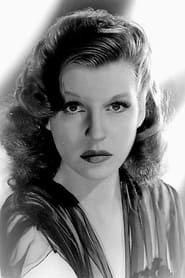
Betty Field
Actor
Born: February 8, 1913 in Boston, Massachusetts, USA Died: September 13, 1973 Active: 1934-1973
Films
1 film
About Betty Field
Accomplished American actress: over three decades, beginning with her Broadway debut in the 1930s before transitioning to Hollywood films. She made a significant impact with her portrayal of Curley's wife in the 1939 adaptation of John Steinbeck's 'Of Mice and Men,' establishing herself as a serious dramatic actress. Throughout the 1940s, Field delivered memorable performances in films such as 'King's Row' (1942) and 'The Southerner' (1945), where she played Sam Tucker's wife with remarkable authenticity. Her career was marked by a unique ability to portray complex, often troubled women with emotional depth and naturalism. Field successfully balanced her film career with regular returns to Broadway, where she continued to challenge herself with diverse roles. By the 1950s and 1960s, she had transitioned more toward television work while maintaining her stage presence, becoming a respected character actress. Her legacy endures through her performances that brought psychological complexity to female characters during Hollywood's Golden Age.
The Craft
On Screen
Betty Field was known for her naturalistic acting style that brought psychological depth and emotional authenticity to her characters. She employed a method-like approach before method acting became mainstream, often immersing herself completely in her roles. Field had a particular talent for portraying complex, troubled women with a raw vulnerability that was ahead of its time in Hollywood. Her performances were characterized by subtle facial expressions, controlled intensity, and an ability to convey inner turmoil through minimalist techniques. She rejected theatrical affectations in favor of grounded, realistic portrayals that influenced subsequent generations of actors.
Milestones
- Broadway debut in 'Three Men on a Horse' (1934)
- Breakthrough film role as Curley's wife in 'Of Mice and Men' (1939)
- Critical acclaim for 'The Southerner' (1945)
- Stage triumph in 'The Glass Menagerie' on Broadway
- Transition to television in the 1950s and 1960s
Best Known For
Iconic Roles
Must-See Films
Accolades
Won
- Theatre World Award for 'The Glass Menagerie' (1945)
- Sarah Siddons Award for Chicago theater work
Nominated
- Academy Award nomination consideration for 'The Southerner' (unofficial)
Special Recognition
- Inducted into the American Theatre Hall of Fame
- Star on the Hollywood Walk of Fame
Working Relationships
Worked Often With
Studios
Why They Matter
Impact on Culture
Betty Field made significant contributions to American cinema and theater by bringing psychological complexity and naturalism to female characters during an era when women's roles were often limited to stereotypes. Her portrayal of Curley's wife in 'Of Mice and Men' was groundbreaking for its time, presenting a nuanced interpretation of a character that could have easily been one-dimensional. Field's work helped pave the way for more realistic and sophisticated female performances in Hollywood. Her successful career in both theater and film demonstrated that serious dramatic actors could move between mediums without compromising their artistic integrity. Field influenced subsequent generations of actresses by proving that emotional authenticity and intellectual depth could coexist with commercial success.
Lasting Legacy
Betty Field's legacy endures through her influential performances that expanded the possibilities for women in American film and theater. She is remembered as a pioneer of naturalistic acting who brought unprecedented psychological depth to her roles, particularly in her interpretations of Steinbeck adaptations. Her work continues to be studied by actors and scholars interested in the evolution of American acting techniques. Field's career demonstrated that it was possible to maintain artistic integrity while working within the Hollywood studio system. Her influence can be seen in the work of subsequent actresses who embraced similar approaches to character development and emotional authenticity.
Who They Inspired
Betty Field influenced subsequent generations of actors through her naturalistic approach to performance and her willingness to tackle complex, challenging roles. Her work prefigured the method acting movement that would later dominate American theater and film. Many actresses who followed, including Kim Stanley and Geraldine Page, drew inspiration from Field's ability to convey deep emotion through subtle means. Her success in both classical and contemporary roles demonstrated the versatility that would become increasingly valued in actors. Field's commitment to psychological realism helped establish new standards for dramatic performance in American cinema.
Off Screen
Betty Field was married three times and had three children, all with her first husband, playwright Elmer Rice. Her personal life was marked by her dedication to both her family and her craft, often balancing motherhood with demanding stage and film schedules. Field was known for her intelligence and wit, maintaining close friendships with many prominent theatrical figures of her era. She was politically liberal and involved in various social causes throughout her life. Despite her success, she remained relatively private about her personal affairs, preferring to let her work speak for itself.
Education
Attended DePaul University in Chicago for drama studies, later trained at the Theatre Guild acting school in New York
Family
- Elmer Rice (1942-1956)
- Edwin J. Lukas (1957-1967)
- Raymond Olivere (1967-1973)
Did You Know?
- Was one of the first American actresses to study and incorporate Stanislavski's techniques into her work
- Turned down the lead role in 'Double Indemnity' (1944)
- Was a founding member of the Actors Studio
- Spoke fluent French and considered moving to Paris in the 1950s
- Her performance in 'The Southerner' was praised by French director Jean Renoir as 'perfectly American yet universally human'
- Appeared in over 200 television productions during the 1950s and 1960s
- Was a close friend of Tennessee Williams and originated roles in several of his plays
- Maintained a lifelong friendship with her 'Of Mice and Men' co-star Burgess Meredith
- Was offered a teaching position at Yale School of Drama but declined to continue acting
- Her final film appearance was in 'The Swimmer' (1968) opposite Burt Lancaster
In Their Own Words
Acting is not about becoming someone else, it's about finding the part of yourself that connects to the character.
The theater is my first love, but film pays the bills.
I never wanted to be a star, I wanted to be an actress.
Every character has a truth, and the actor's job is to find it.
Hollywood can make you famous, but only the stage can make you an artist.
Frequently Asked Questions
Who was Betty Field?
American actress known for her naturalistic acting style and memorable roles in both film and theater from the 1930s through the 1960s. She gained critical acclaim for her performances in 'Of Mice and Men' (1939) and 'The Southerner' (1945), establishing herself as a serious dramatic actress who brought psychological depth to her characters.
What films is Betty Field best known for?
Titles linked here include Of Mice and Men (1939), The Southerner (1945).
When was Betty Field born and when did she die?
Born February 8, 1913; died September 13, 1973.
What awards did Betty Field win?
Betty Field received the Theatre World Award for her performance in 'The Glass Menagerie' on Broadway in 1945 and was honored with the Sarah Siddons Award for her contributions to Chicago theater. She also received a star on the Hollywood Walk of Fame and was posthumously inducted into the American Theatre Hall of Fame for her significant contributions to American theater.
What was Betty Field's acting style?
Betty Field was known for her naturalistic acting style that emphasized psychological realism and emotional authenticity. She employed subtle techniques and minimal affectation to convey complex emotions, often portraying troubled or vulnerable women with remarkable depth. Her approach prefigured the method acting movement and influenced subsequent generations of American actors.
Was Betty Field married to anyone famous?
Yes, Betty Field was married to renowned playwright Elmer Rice from 1942 to 1956. Rice was a Pulitzer Prize-winning playwright known for works like 'Street Scene' and 'The Adding Machine.' Their marriage was notable both for its personal and professional dimensions, as Field appeared in several of Rice's theatrical productions.
Did Betty Field work in television?
Yes, Betty Field had an extensive television career during the 1950s and 1960s, appearing in over 200 television productions. She worked on dramatic anthology series like 'Playhouse 90' and 'Studio One,' as well as guest-starring roles in popular series of the era. Her television work allowed her to continue performing challenging dramatic roles while her film opportunities decreased.