





The Southerner
"Sam Tucker stakes his family's future on one hard season of cotton farming."
Keys: Space play/pause · ←/→ 10s · F fullscreen · M mute · </> speed
About this film
Sam Tucker, a cotton picker, moves his family onto farmland to grow their own crop and build a better life. Their first season brings disease, a flood, and a jealous neighbor determined to drive them off the land.
Cast & crew
More films like this
More Drama films
View all →







More from Jean Renoir
View all →
More about this film
About the production
Release dateAugust 29, 1945
Budget$500,000
Box officeNot widely reported, but considered modest performer for United Artists
ProductionUnited Artists, Jean Renoir Productions
Filmed inMadera, California, Fresno County, California, San Joaquin Valley, California
Filmed entirely in California's San Joaquin Valley to replicate the American South, as wartime restrictions made location shooting in the actual South impractical. The production faced challenges with weather conditions, as they needed both drought conditions for certain scenes and rain for the flood sequence. Jean Renoir insisted on using natural lighting wherever possible and filmed many scenes during the 'golden hour' to achieve authentic rural atmosphere. The cast and crew lived in temporary housing near the filming locations to immerse themselves in the farming environment. Renoir, known for his collaborative approach, encouraged improvisation from the actors, particularly Zachary Scott and Betty Field, to achieve more authentic performances.
Themes
The American Dream and its challengesHuman dignity in the face of adversityThe relationship between humans and natureFamily unity and resilienceSocial and economic inequality
Themes & topics
farmingcottonfamily strugglepovertynatural disasterrural lifeAmerican Southindependencedeterminationfloodillnessneighborhood conflictsharecroppingsurvivalhardship
Historical background
Made in 1945, in United States, under Jean Renoir, The Southerner belongs to drama film filmmaking as studio systems and national cinemas competed for audiences. The Southerner is a 1945 American drama film directed by Jean Renoir and based on the 1941 novel Hold Autumn in Your Hand by George Sessions Perry.
Why this film matters
Within drama film history, Jean Renoir's name attaches to the work; 1945 film by Jean Renoir; The film received Oscar nominations for Best Director, Original Music Score, and Sound..
Making of
Jean Renoir, fleeing Nazi-occupied France, arrived in Hollywood in 1940 and struggled to find projects that suited his humanistic vision. 'The Southerner' represented his most successful American film, allowing him to explore themes of human dignity and social justice within the studio system. Renoir fought with producers over the film's ending - he wanted a more ambiguous conclusion but was forced to provide a more hopeful resolution. The director insisted on extensive location filming, unusual for the time, to capture the authentic feel of rural life. He worked closely with cinematographer Lucien Andriot to develop a visual style that combined documentary realism with poetic lyricism. The cast underwent extensive preparation, spending time with actual farming families to understand their way of life. Renoir's characteristic use of deep focus and long takes creates a sense of immersion in the farming environment. The production was plagued by weather problems, with the California drought complicating the flood sequence and unexpected rains delaying other scenes. Despite these challenges, Renoir's humanistic approach shines through in every frame, making the film proof of his belief in the dignity of ordinary people.
What critics said
Renoir was named Best Director by the National Board of Review, which also named the film the third best of 1945.
Did you know?
- This was one of only four American films directed by the French director Jean Renoir during his Hollywood period.
- The film was nominated for three Academy Awards including Best Director for Renoir, making him one of the few foreign directors to receive this nomination for an American film at that time.
- Zachary Scott was cast against type - he was typically known for playing sophisticated villains in film noir, but Renoir saw his potential as an earnest Everyman.
- The film was based on the novel 'Hold Autumn in Your Hand' by George Sessions Perry, which won the National Book Award in 1941.
- Jean Renoir's son, Alain Renoir, served as a technical advisor on the film, bringing his knowledge of American rural life to the production.
- The flood sequence was achieved by building a special tank and using massive water pumps, among the costliest sequences in the film.
- The film was banned in several Southern states due to its realistic portrayal of poverty and difficult living conditions for sharecroppers.
- Betty Field, who played Nona Tucker, was one of the few actresses willing to appear without makeup for the role to achieve authenticity.
- The film's realistic approach to farming life influenced later films about rural America, including 'The Grapes of Wrath' and 'Places in the Heart'.
- Despite being set in Texas, the film never mentions the state by name, making it a universal story of American farming struggles.
Awards & recognition
- National Board of Review Award for Best Acting (J. Carrol Naish)
- National Board of Review Award for One of the Ten Best Films of 1945
Visual style
The cinematography by Lucien Andriot employs a naturalistic style that was revolutionary for Hollywood films of its era. Andriot and Renoir made extensive use of deep focus photography, allowing multiple planes of action to remain sharp and creating a sense of immersion in the farming environment. The film features extensive location shooting with natural lighting, particularly during the golden hour scenes that bathe the rural landscape in warm, authentic light. The camera work emphasizes the relationship between humans and their environment, with many compositions placing the characters as small figures against vast agricultural spaces. The flood sequence uses innovative camera techniques including underwater photography and dramatic tracking shots to convey the power of nature. Andriot's use of shadow and light creates a poetic quality that elevates the documentary-like realism. The cinematography avoids the glamour typical of Hollywood productions, instead embracing the rough textures of rural life - cracked earth, weathered wood, and worn clothing all become visual elements that tell the story.
Innovations
The film pioneered several technical innovations that would influence later American cinema. The production developed new techniques for creating realistic weather effects, particularly the flood sequence which required custom-built water tanks and sophisticated pumping systems. The sound recording team, led by Jack Whitney, developed new methods for capturing authentic outdoor audio while maintaining dialogue clarity, a significant challenge for location filming in the 1940s. The film's use of deep focus cinematography required innovations in lighting and camera equipment to achieve consistent sharpness across multiple planes. The makeup department, led by Ben Nye, created new techniques for 'de-glamorizing' the actors while still ensuring they remained recognizable on screen. The production design team built fully functional farm sets that could withstand the demands of filming agricultural work, including actual planting and harvesting sequences. These technical achievements were recognized with multiple Academy Award nominations and influenced how Hollywood approached realistic storytelling in subsequent years.
Music
The musical score by Werner Janssen was notable for its restrained approach, using folk-inspired melodies that complemented the film's realistic tone rather than overwhelming it. Janssen incorporated elements of American folk music and spirituals, creating a soundtrack that felt authentic to the Southern setting while avoiding stereotypical Hollywood treatments of rural music. The score's Academy Award nomination recognized its innovative approach to film music, particularly its use of silence and minimal instrumentation during key dramatic moments. Janssen's themes for the Tucker family emphasize their resilience and dignity, while the music for antagonist Devers has a more dissonant quality. The soundtrack makes effective use of natural sounds - wind, water, and farm equipment - as musical elements, blurring the line between score and sound design. This approach influenced later films seeking authenticity in their musical treatment of rural American stories. The score's restraint was unusual for Hollywood films of the 1940s, which typically used more lush, romantic orchestrations.
Famous quotes
We're Tuckers. We don't give up.
A man's got to do what's right, not what's easy.
This land... it's not just dirt. It's what we are.
You can't run away from trouble. There's always more waiting where you're going.
Farming ain't just about growing crops. It's about growing people too.
The good Lord gives us the strength to bear what we must, and the wisdom to know what we can change.
Some folks are born to follow, some to lead. I guess I'm just born to try.
Memorable scenes
- The devastating flood sequence where Sam desperately tries to save his cotton crop from the rising waters, filmed with remarkable realism and emotional power.
- The scene where Sam's son falls ill from contaminated water, and the family's frantic race to save him, showcasing their vulnerability and love.
- The final confrontation between Sam and his hostile neighbor Devers, where Sam stands his ground and refuses to be driven from his land.
- The opening sequence showing the backbreaking work of cotton picking, immediately establishing the physical toll of the characters' lives.
- The tender scene where Sam and Nona discuss their dreams for their children's future, revealing their hopes beneath the hardship.
What audiences thought
Upon its release in 1945, 'The Southerner' found modest success with audiences who appreciated its honest portrayal of American family values during a time of national transition. The film resonated particularly strongly with rural audiences and those who had experienced similar struggles during the Great Depression. However, some urban viewers found the film's stark realism and lack of Hollywood gloss challenging. The movie's box office performance was respectable but not spectacular, partly due to its unconventional style for the time and competition from more escapist wartime entertainment. Over the decades, the film has developed a cult following among cinema enthusiasts and is now regarded as a classic by those who discover it through revivals and home video. Audiences today often express surprise at the film's contemporary relevance, particularly its themes of economic hardship and environmental challenges. The film's reputation has grown significantly over time, with many modern viewers considering it ahead of its time in its realistic approach to American life.
Film connections
Influenced by
- Italian Neorealism (though made before the movement's peak, it shares its aesthetic)
- John Ford's 'The Grapes of Wrath' (1940)
- French Poetic Realism
- Documentary filmmaking techniques of the 1930s
- The novels of John Steinbeck
- Dorothea Lange's Depression-era photography
This film influenced
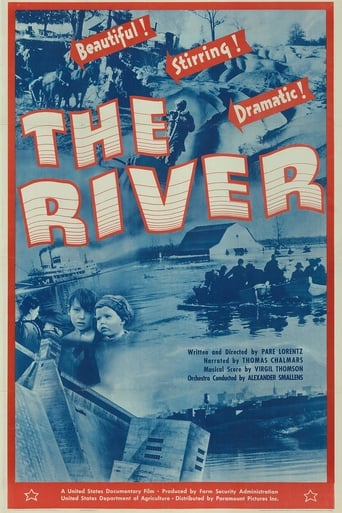
- The River (1951)
- Places in the Heart (1984)
- The River (1984)
- Country (1984)
- A Thousand Acres (1997)
- The Straight Story (1999)
- Winter's Bone (2010)
Film restoration
The film has been preserved by the UCLA Film and Television Archive and was selected for preservation in the United States National Film Registry in 2022 for its cultural, historical, and aesthetic significance. A restored version was released by The Criterion Collection in 2020, featuring a new 4K digital restoration from the original camera negative. The restoration revealed details and textures that had been lost in previous home video releases, particularly in the outdoor sequences. The original nitrate negatives are stored in climate-controlled facilities at the Academy Film Archive. The film's preservation was complicated by water damage to some elements from the flood sequence filming, but modern digital restoration techniques have successfully addressed these issues.
Where to watch
- The Criterion Channel (streaming)
- Criterion Collection Blu-ray/DVD
- Amazon Prime Video (for purchase/rent)
- Apple TV (for purchase/rent)
- Google Play Movies (for purchase/rent)
- Various library streaming services including Kanopy
- Film noir and classic film streaming services
- Occasionally broadcasts on Turner Classic Movies