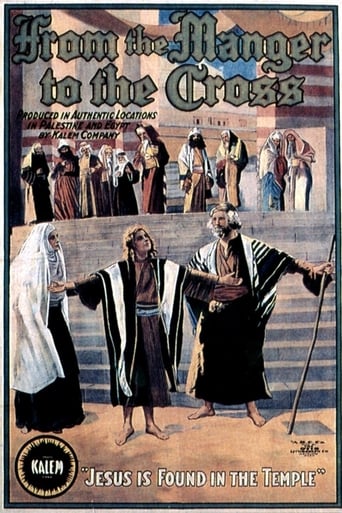
Robert Henderson-Bland
Actor
Born: 1861 in London, England Died: 1946 Active: 1912-1912
Films
1 film
About Robert Henderson-Bland
Made his mark on cinema history with his portrayal of Jesus Christ in the 1912 film 'From the Manger to the Cross. ' Prior to his film work, he had established himself as a respected theater performer, particularly known for his dramatic roles and commanding stage presence. His casting as Jesus in this ambitious Kalem Company production represented a significant moment in early cinema, as it was one of the first feature-length films to depict the life of Christ with such artistic and religious seriousness. The film's decision to shoot on location in Egypt and Palestine was revolutionary for its time, and Henderson-Bland's performance was central to its critical and commercial success. Despite the acclaim for his work in this landmark film, his film career appears to have been limited to this single cinematic endeavor, after which he returned to his primary focus on the stage. His portrayal of Jesus was noted for its dignity and spiritual depth, setting a standard for future biblical film performances.
The Craft
On Screen
Henderson-Bland brought a theatrical gravitas to his screen performance, utilizing the dramatic techniques honed during his stage career. His portrayal of Jesus emphasized quiet dignity, spiritual authority, and emotional restraint characteristic of the period's acting style. He employed measured gestures and solemn expressions to convey the divinity and humanity of his character, adapting stage techniques for the intimate medium of film.
Milestones
- Portrayal of Jesus Christ in 'From the Manger to the Cross' (1912)
- One of the first actors to play Jesus in a feature-length film
- Participated in revolutionary location filming in the Holy Land
- Established stage actor who successfully transitioned to silent film
Best Known For
Iconic Roles
Must-See Films
Accolades
Special Recognition
- Recognized as one of the earliest and most influential portrayers of Jesus in cinema history
Working Relationships
Worked Often With
Studios
Why They Matter
Impact on Culture
Robert Henderson-Bland's portrayal of Jesus Christ in 'From the Manger to the Cross' had a profound impact on the development of biblical cinema and religious films. His performance established many of the visual and dramatic conventions that would influence subsequent Jesus films for decades. The film's success, largely carried by his dignified performance, demonstrated that religious subjects could be treated with artistic seriousness in cinema, paving the way for future biblical epics. His work contributed to the legitimization of film as a medium for serious religious and artistic expression, helping cinema transition from novelty to art form.
Lasting Legacy
Henderson-Bland's legacy endures primarily through his groundbreaking portrayal of Jesus in one of cinema's earliest feature-length biblical films. While his film career was brief, his performance set a benchmark for dignity and spiritual authenticity in religious cinema that influenced countless subsequent actors who would tackle similar roles. His work represents an important milestone in the intersection of faith and film, demonstrating how cinema could serve as a medium for religious storytelling and spiritual contemplation.
Who They Inspired
His performance influenced the acting style and approach to religious roles in silent cinema and beyond. The gravitas and reverence he brought to the role of Jesus became a template for future actors portraying biblical figures, emphasizing the importance of combining spiritual authority with human accessibility in such performances.
Off Screen
Robert Henderson-Bland was primarily known as a stage actor before and after his brief film career. He maintained a private life away from the public eye, with most documentation focusing on his professional theatrical work rather than personal details. His active years covered the transition from Victorian theater to early cinema, making him a bridge between two important entertainment eras.
Education
Trained in classical theater and dramatic arts, typical of British actors of his generation who often began their careers through apprenticeship and stage experience rather than formal academic training.
Did You Know?
- 'From the Manger to the Cross' was one of the first feature-length films shot entirely on location in the Holy Land
- The film took over a year to complete due to the challenging location shooting conditions
- Henderson-Bland was reportedly chosen for the role due to his striking resemblance to traditional artistic depictions of Jesus
- The film was a critical and commercial success, unusual for religious films of the era
- Despite the film's success, Henderson-Bland returned to stage acting and made no other films
- The film was praised by religious leaders for its respectful and authentic portrayal of biblical events
- His performance was noted for its subtlety and restraint, contrasting with the more melodramatic acting style common in silent films
- The film's success helped establish the viability of religious films as a commercial genre
- Henderson-Bland was approximately 51 years old when he played Jesus, relatively young for the role at the time
- The film was preserved by the Library of Congress for its cultural and historical significance
Frequently Asked Questions
Who was Robert Henderson-Bland?
British stage with credits in this catalog.' While he had a substantial theater career, his lasting fame comes from this single but groundbreaking film performance.