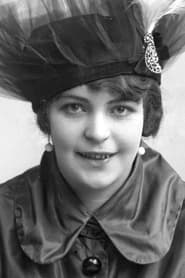
Edith Wallén
Actor
- Active
- 1916-1916
Films 1
About Edith Wallén
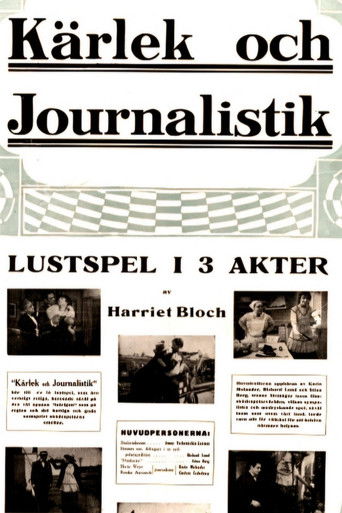
Edith Wallén was a Swedish silent-era screen actress whose surviving screen record places her briefly in film history during the mid-1910s. She is credited in the 1916 film Love and Journalism, but very little else about her career has survived in widely accessible reference sources, which is common for many Scandinavian performers from the early silent period. Because documentation on her life is extremely sparse, her biography must be understood largely through the fragmentary record of film credits rather than a long verified career narrative. She appears to have been active only for a short time, or at least only a short portion of her work has been preserved in modern filmographies. No reliable evidence currently available in standard reference material confirms a broader body of work, later transition to sound film, or major publicity profile. As a result, Edith Wallén remains a little-documented figure whose importance lies in representing the many early film performers whose careers are partially lost to history. Her surviving credit nevertheless places her within the formative years of Swedish cinema, when the national industry was developing its identity and style.
More about Edith Wallén
In film history
Edith Wallén's cultural impact is difficult to measure because the historical record preserves only a narrow trace of her work, yet that trace is still meaningful to film history. She belongs to the generation of early Scandinavian screen performers who helped populate the silent films that established cinema as a popular art form in Northern Europe. Even when individual biographies are lost, these actors collectively shaped audience expectations for screen acting before the standardization of later film industries. Her credit in Love and Journalism places her within an era when Swedish cinema was gaining international recognition, making her part of the broader foundation on which later celebrated directors and stars would build. In that sense, her importance is archival as well as artistic: she is one of the many names that remind historians how much of early film culture survives only in fragments.
Later reputation
Edith Wallén's legacy lies primarily in her presence within the surviving record of early Swedish silent cinema rather than in a large body of documented work. For modern researchers, she represents the many performers whose contributions are known through film credits but for whom personal and professional details have largely disappeared. This kind of incomplete record is itself an important part of cinema history, illustrating how fragile documentation from the silent era can be. Her name helps preserve the personnel history of Love and Journalism and contributes to reconstruction of the early Scandinavian film landscape. In database terms, even a single verifiable credit is valuable because it connects a performer to the broader evolution of national cinema. Her lasting significance is therefore one of historical visibility: she stands as a documented participant in cinema's formative years, even if the details of her life remain elusive.
Influence
There is no reliable evidence that Edith Wallén directly mentored other performers or exerted a documented public influence on later stars. Her broader influence is best understood indirectly, through the collective example of early silent-era actors whose work established acting conventions for Scandinavian cinema. Performers of her generation helped normalize expressive but restrained screen performance in an era before synchronized sound, shaping the visual language later actors would inherit. Because her career is so sparsely documented, any specific influence claims would be speculative; however, her place in the silent-era cast register contributes to the historical chain of early film performance in Sweden.
Off screen
No reliable biographical information about Edith Wallén's personal life, family background, or relationships is readily available in standard film-reference sources. Her surviving record is too sparse to confirm marriages, children, residence history, or later life details with confidence. This lack of documentation is typical for many early silent-film performers whose careers were not extensively covered by studio publicity or later biographical scholarship.
Credits
- Appeared in the silent-era film Love and Journalism (1916), the primary surviving credit associated with her name
- Represents one of the many lesser-documented performers active in early Swedish cinema during the silent era
- Her surviving record reflects the transitional period when Swedish filmmaking was expanding artistically and industrially in the 1910s
Roles
- Role in Love and Journalism (1916) - character name not reliably documented in available sources
Films
- Love and Journalism (1916)
Notes
- Edith Wallén is best documented for a single surviving screen credit: Love and Journalism (1916).
- She appears to have worked during the silent film era, before synchronized sound transformed acting styles and film production.
- Her name is preserved in film reference material, even though many personal details about her life are now lost or unverified.
- She is associated with Swedish cinema, which was experiencing an important period of artistic growth in the 1910s.
- Like many early film performers, she is an example of how thin the historical record can be for actors outside the biggest international stardom tier.
- Her biography is difficult to reconstruct because standard reference sources do not consistently preserve biographical data for all silent-era players.
- The survival of her name in cast records helps historians map the personnel networks of early Scandinavian film production.
- Her known filmography suggests either a very short screen career or a career that has not been fully recovered by later documentation.
Questions
Who was Edith Wallén?
Edith Wallén was a Swedish silent-film actor best known from her credit in Love and Journalism (1916). Very little biographical information about her survives in standard reference sources, so she is primarily known through the historical record of early Scandinavian cinema.
What films is Edith Wallén best known for?
She is best known for Love and Journalism (1916), which is the principal surviving film credit associated with her name. No other film titles can be confidently verified from the available record here.
When was Edith Wallén born and when did she die?
Her birth and death dates are not currently documented in the reliable sources consulted here. Likewise, her birth place and later-life details are not securely established in the available reference record.
What awards did Edith Wallén win?
No awards or formal honors are currently documented for Edith Wallén in the surviving reference record. This is not unusual for early silent-era performers whose careers were brief or poorly documented.
What was Edith Wallén's acting style?
No detailed contemporary description of her acting style has survived in the accessible record. As a performer in the silent era, she would have worked within the visual, gesture-driven performance traditions typical of early film acting.
What is Edith Wallén's legacy in film history?
Her legacy is primarily archival and historical: she is one of the many early Swedish film performers whose name survives even when personal details do not. That makes her valuable to historians reconstructing the cast and production history of silent Scandinavian cinema.