Giuseppe Majone Diaz
Actor
- Active
- 1913-1913
Films 1
About Giuseppe Majone Diaz
Giuseppe Majone Diaz is a scarcely documented early Italian screen actor whose filmography places him firmly in the silent era, with The Last Days of Pompeii (1913) being the key surviving reference to his career. Available historical records indicate that he was active on screen in 1913, but substantial biographical details such as his birth date, birthplace, family background, and later life are not readily traceable in standard film histories or major reference sources. His name appears in connection with one of the most internationally known Italian prestige productions of the pre-World War I period, a time when the Italian cinema was rapidly building a reputation for historical spectacle, literary adaptation, and large-scale production values. Because very little personal documentation survives, it is difficult to reconstruct whether he was primarily a stage performer who briefly worked in film or a screen actor whose motion-picture career was limited by the fragmentary nature of early cinema record-keeping. What can be said with confidence is that he belongs to the generation of performers who helped shape the earliest feature-length Italian productions and whose work survives more in the historical record than in widely accessible filmographies. His legacy is therefore tied less to a long list of roles than to his participation in the formative years of European silent cinema.
More about Giuseppe Majone Diaz
In film history
Giuseppe Majone Diaz's cultural significance lies primarily in his association with early Italian historical cinema, a field that helped establish Italy as a major center for silent film production before and during the First World War. Performers like him contributed to the scale and credibility of these spectacles, which often adapted well-known literary or classical subjects for international audiences. Even when individual biographies are fragmentary, the surviving credits of actors from this period help scholars map the development of feature-length storytelling, star systems, and production practices in early European cinema. His presence in The Last Days of Pompeii also connects him to one of the era's landmark styles: the peplum or ancient-world spectacle that would influence later generations of filmmakers.
Later reputation
His lasting legacy is archival rather than celebrity-based: he remains part of the historical fabric of silent Italian cinema through a film that continues to attract scholarly and popular interest. Because his career is so thinly documented, Giuseppe Majone Diaz exemplifies the many early film artists whose contributions were real but whose personal histories were not thoroughly preserved. For modern researchers, his name is important as evidence of the breadth of personnel involved in early international productions and as a reminder that film history often survives unevenly. He stands as one of the many forgotten or under-recorded participants in the silent era whose work helped build the foundations of screen acting and feature filmmaking.
Influence
There is no verified evidence that Giuseppe Majone Diaz directly mentored other performers or exerted a documented stylistic influence on later actors or directors. His influence should instead be understood indirectly, through participation in a landmark production from the early Italian cinema boom. By appearing in a major historical spectacle, he contributed to a model of cinematic performance that supported large ensemble storytelling and the international export of Italian silent films. His example is useful to historians studying the many uncelebrated actors who made early prestige productions possible.
Off screen
No reliable public information is readily available about Giuseppe Majone Diaz's personal life, including marriage, children, residences, or activities outside film. This lack of documentation is common for many silent-era supporting or minor-screen performers, especially those whose careers were brief or whose work was recorded inconsistently in contemporary trade publications. At present, there is not enough verified evidence to reconstruct a meaningful family or domestic biography without speculation.
Credits
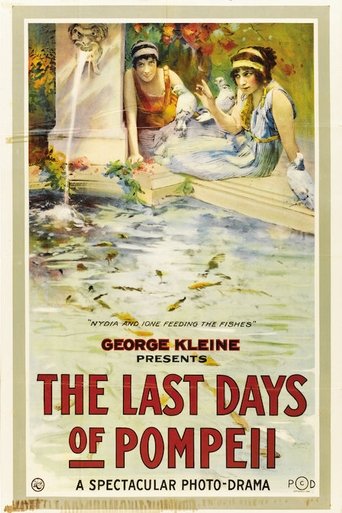
- Appeared in The Last Days of Pompeii (1913), one of the notable Italian historical epics of the silent era
- Worked during the formative years of Italian feature filmmaking, when the industry was gaining international prestige
- Represents the class of early screen performers whose careers are preserved chiefly through sparse archival film credits
Roles
- Cast member in The Last Days of Pompeii (1913)
Films
- The Last Days of Pompeii (1913)
Collaborators
- Cast and production personnel associated with The Last Days of Pompeii (1913)
Notes
- He is best known today for a single surviving screen credit: The Last Days of Pompeii (1913).
- His career appears in film records as spanning only one year, 1913.
- He is part of the early Italian silent-cinema generation that worked before standardization of film documentation.
- No widely accessible biographical profile appears to survive in major reference works.
- His name is preserved more securely through film archives and catalogs than through contemporary celebrity reporting.
- The Last Days of Pompeii belongs to the wave of Italian historical spectacles that helped shape international perceptions of Italian film.
- His obscurity is typical of many silent-era supporting actors whose personal histories were not comprehensively recorded.
- The lack of confirmed details means he is often discussed only in cast listings rather than narrative biographies.
Questions
Who was Giuseppe Majone Diaz?
Giuseppe Majone Diaz was an Italian silent-era actor best known for appearing in The Last Days of Pompeii (1913). He is now remembered primarily as part of the cast of an important early Italian historical spectacle.
What films is Giuseppe Majone Diaz best known for?
He is best known for The Last Days of Pompeii (1913). No other securely verified film credits are readily available in standard reference sources.
When was Giuseppe Majone Diaz born and when did he die?
His birth and death dates are not currently verified in accessible historical sources. The available record is too sparse to provide confirmed vital statistics.
What awards did Giuseppe Majone Diaz win?
No awards or formal honors are currently documented for him in the available record. This is not unusual for early silent-era performers, many of whom worked before modern awards systems were established.
What was Giuseppe Majone Diaz's acting style?
No detailed contemporary criticism of his acting style has been securely identified. Given the period, his performance would likely have followed the expressive, gesture-driven style characteristic of silent cinema, but this cannot be stated as a confirmed personal trait.
What is Giuseppe Majone Diaz's legacy in film history?
His legacy lies in his participation in one of the notable Italian silent-era historical films and in the broader story of early European cinema. Even when individual biographical details are missing, his film credit helps document the people who helped build the silent film industry.